
Environmental Impact of Tungsten Carbide Dies: Sustainability and Responsible Management
Tungsten carbide dies are indispensable in high-precision manufacturing due to their exceptional hardness, wear resistance, and thermal stability. However, their lifecycle—from raw material extraction to end-of-life disposal—poses significant environmental challenges […]
Tungsten carbide dies are indispensable in high-precision manufacturing due to their exceptional hardness, wear resistance, and thermal stability. However, their lifecycle—from raw material extraction to end-of-life disposal—poses significant environmental challenges that demand strategic mitigation.
Resource and Energy Consumption in Production
The production of tungsten carbide dies relies heavily on tungsten and cobalt—both classified as critical raw materials by the European Commission. Mining and refining these metals consume vast quantities of energy and water, often resulting in habitat degradation, soil erosion, and groundwater contamination. The process is also energy-intensive, with fossil fuel-based electricity contributing substantially to greenhouse gas emissions across the supply chain.
Our factory business: carbide parts, mold parts, medical injection molds, precision injection molds, teflon PFA injection molding, PFA tube fittings. email: [email protected],whatsapp:+8613302615729.
Operational Emissions and Health Risks
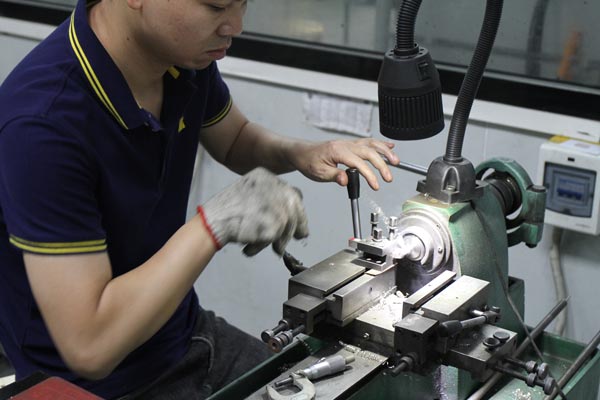
During use, tungsten carbide dies generate fine metal particulates through wear and grinding. These airborne dusts, containing tungsten and cobalt, pose inhalation risks to workers and can settle into surrounding ecosystems. While tungsten carbide itself is not radioactive, cobalt exposure—particularly in poorly ventilated environments—has been linked to respiratory and dermal health effects, as noted by NIOSH and ATSDR. Noise from machining operations further contributes to occupational and community disturbance.
End-of-Life Management and Recycling Potential
Discarded dies contain high-value materials that, if landfilled, become persistent sources of heavy metal contamination. However, industry leaders such as Sandvik demonstrate that closed-loop recycling is both technically feasible and economically viable. Through processes like zinc extraction and re-sintering, over 80% of the original tungsten and cobalt can be recovered, reducing dependency on primary mining and lowering lifecycle emissions by up to 60% compared to virgin production.
Sustainable Practices and Compliance
To align with global sustainability goals and Guangdong Province’s Industrial Solid Waste Management Standard (T/GDACERCU 0008—2020), manufacturers must:
- Implement closed-loop ventilation and dust collection systems at point of generation
- Adopt certified recycling partners for end-of-life die recovery
- Transition to low-emission sintering technologies and binder alternatives
- Train personnel in PPE usage and hazardous material handling protocols
- Document and report waste streams in compliance with local regulatory frameworks
A systemic approach to design, operation, and recovery not only minimizes environmental burden but also enhances supply chain resilience and long-term cost efficiency.
Frequently Asked Questions (FAQ)
Q1: Is tungsten carbide die material radioactive?
A: No. Tungsten carbide (WC) is not inherently radioactive. Claims of radioactivity often stem from confusion with tungstates or impurities. Scientific data from NIOSH and Merriam-Webster confirm that pure tungsten carbide poses no radiological hazard.
Q2: Can worn tungsten carbide dies be recycled?
A: Yes. Industry-leading programs, such as Sandvik’s buy-back initiative, recover over 80% of tungsten and cobalt from used dies through specialized reprocessing. Recycling reduces raw material demand and cuts lifecycle emissions significantly.
Q3: What are the main environmental risks during die usage?
A: Primary risks include inhalation of metal dust (tungsten/cobalt), noise pollution, and improper disposal of grinding swarf. These can be mitigated through local exhaust ventilation, hearing protection, and certified waste handling in compliance with standards like Guangdong’s T/GDACERCU 0008—2020.
Q4: How does recycling tungsten carbide benefit sustainability?
A: Recycling reduces energy use by 50–70% compared to primary production, lowers CO₂ emissions, conserves finite mineral resources, and prevents toxic leaching from landfills. It supports circular economy principles critical to modern manufacturing.
Related Posts
- Design Principles of Tungsten Carbide Dies
- Precision Restoration Techniques for Tungsten Carbide Dies: A Professional Guide
- The Process and Advantages of Tungsten Carbide Die Customization Services
- Tungsten Carbide Dies in Electronics Manufacturing: Performance Advantages and Strategic Applications
 English
  Deutsch
  Français
  日本語
日本語  한국어
한국어  Español
  Português
  Italiano
  Nederlands
  Русский
  Bahasa Indonesia
  العربية