
Market Trends and Development Prospects of Tungsten Carbide Dies: An In-Depth Analysis
Against the backdrop of continuous global manufacturing upgrades, tungsten carbide dies, with core performance attributes including high hardness, superior wear resistance, and excellent thermal stability, have become indispensable tooling in […]
Against the backdrop of continuous global manufacturing upgrades, tungsten carbide dies, with core performance attributes including high hardness, superior wear resistance, and excellent thermal stability, have become indispensable tooling in high-end manufacturing sectors such as aerospace, automotive, electronics, and precision machinery. This article examines the future trajectory of tungsten carbide dies from four perspectives: market trends, technological evolution, application expansion, and green transformation.
I. Market Landscape: Scale Expansion and Intensifying Competition
Steady Market Growth
Our factory business: carbide parts, mold parts, medical injection molds, precision injection molds, teflon PFA injection molding, PFA tube fittings. email: [email protected],whatsapp:+8613302615729.
The global manufacturing recovery and high-end transformation are directly driving demand for tungsten carbide dies. The rise of emerging industries and the shift toward intelligent manufacturing have made high-precision, high-performance dies a rigid requirement, and the tungsten carbide die market is expected to maintain sustained expansion.
Increasingly Fierce Competition
Market expansion has attracted a large number of domestic and international enterprises, intensifying industry competition. In this environment, companies must simultaneously excel in product quality, cost control, and service systems to secure a favorable market position.
Rising Demand for Customization
The trend toward personalized and diversified end products is accelerating demand for customized dies. Tungsten carbide dies, with their high precision and high performance, are naturally suited to customized production scenarios. The share of customization in the overall tungsten carbide die market is expected to continue rising.
II. Technological Evolution: Three Drivers of Industrial Upgrade
New Tungsten Carbide Material R&D
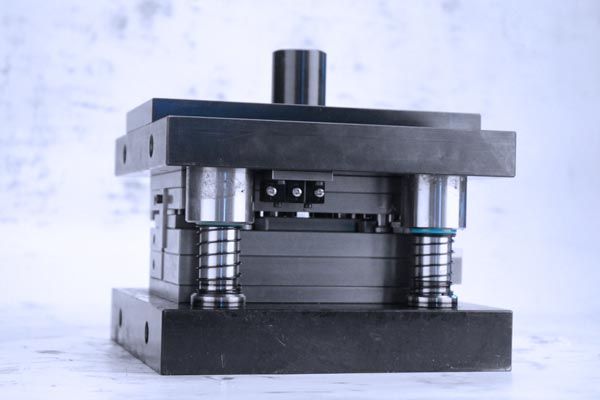
Material innovation is the core engine driving tungsten carbide die development. Next-generation tungsten carbide materials will achieve further breakthroughs in hardness, wear resistance, and thermal stability, meeting the demands of more advanced and complex machining scenarios while elevating overall die manufacturing processes.
Integration of Digital Design and Advanced Manufacturing
The deep application of digital tools such as CAD, CAM, and CAE has significantly improved die design efficiency and manufacturing precision. Combined with advanced processes like 3D printing and laser machining, dies can be rapidly delivered and individually customized, effectively shortening development cycles and reducing trial-and-error costs.
Empowerment through Intelligent Manufacturing and Industrial Internet
The introduction of IoT, big data, and cloud computing technologies enables real-time monitoring, data-driven decision-making, and intelligent scheduling in die manufacturing. Intelligent manufacturing not only enhances production efficiency and product consistency but also promotes cross-enterprise collaboration and resource sharing across the industrial chain.
III. Application Expansion: Three High-Growth Sectors
Aerospace
Demand for high-precision, high-reliability dies in the aerospace sector continues to climb. As new aerospace materials and manufacturing processes advance, the application depth of tungsten carbide dies in engine components and structural parts machining will expand further.
Automotive Manufacturing
Trends toward lightweight, electrified, and intelligent vehicles are placing higher demands on die precision and service life. Tungsten carbide dies will see deeper and broader application in stamping, die-casting, and injection molding processes, offering substantial market potential.
Electronics and Information
The miniaturization and high integration of electronic products impose extremely stringent requirements on die dimensional accuracy and surface quality. Tungsten carbide dies are accelerating penetration into connectors, semiconductor packaging, and precision structural components.
IV. Green Transformation: An Inevitable Path Driven by Compliance
Tightening global environmental regulations and rising corporate ESG awareness are reshaping the development logic of the tungsten carbide die industry. In the future, eco-friendly material substitution, energy-saving process adoption, and waste die recycling will become key components of enterprise competitiveness. Governments will also introduce stricter industry standards to drive the sector toward green and sustainable development.
V. Summary and Outlook
The market prospects for tungsten carbide dies are exceptionally broad. The convergence of material innovation, digital manufacturing, intelligent upgrading, and green transformation presents a new round of development opportunities for the industry. Die manufacturing enterprises must stay closely aligned with technological and market trends, continuously improving product quality and service capabilities, to build long-term competitive advantages in an intensifying market.
Related Posts
- Crack Prevention for Tungsten Carbide Dies: A Full-Chain Control Strategy from Material to Operation
- Title: Detailed Process of Tungsten Carbide Die Polishing Treatment
- Application Characteristics of Tungsten Carbide Dies in the Electronics Industry
- Fundamental Principles of Tungsten Carbide Die Design

 English
  Deutsch
  Français
  日本語
日本語  한국어
한국어  Español
  Português
  Italiano
  Nederlands
  Русский
  Bahasa Indonesia
  العربية