

Systematic Strategies and Practical Pathways for Extending Tungsten Carbide Die Service Life
Tungsten carbide dies, with their exceptional hardness, wear resistance, corrosion resistance, and high-temperature tolerance, have become indispensable core tooling in modern manufacturing. However, wear and corrosion remain the primary bottlenecks […]
Tungsten carbide dies, with their exceptional hardness, wear resistance, corrosion resistance, and high-temperature tolerance, have become indispensable core tooling in modern manufacturing. However, wear and corrosion remain the primary bottlenecks limiting their service life. This article systematically elaborates on feasible solutions for extending tungsten carbide die service life from four dimensions: rational usage, systematic maintenance, surface treatment technology, and material selection, providing reference for enterprises to reduce costs and improve efficiency.
1. Core Characteristics and Typical Applications of Tungsten Carbide Dies
Tungsten carbide dies, also known as cemented carbide dies, are precision-manufactured through powder metallurgy processes with tungsten as the primary component. Their comprehensive performance, including high hardness, high wear resistance, corrosion resistance, and high-temperature tolerance, makes them widely applicable in die manufacturing, machining, aerospace, automotive production, and electronic communications. The service life of tungsten carbide dies directly affects a company’s production efficiency and operational costs.
Our factory business: carbide parts, mold parts, medical injection molds, precision injection molds, teflon PFA injection molding, PFA tube fittings. email: [email protected],whatsapp:+8613302615729.
2. Scientific Usage: Reducing Die Wear from the Source
Optimizing Process Flow Design
The rationality of the process flow directly determines the wear rate of the die. During the design phase, full consideration should be given to factors such as die dimensions, cavity structure, and machining processes to develop a detailed process plan. Scientific process design can minimize unnecessary wear and extend die service life from the source.
Standardized Installation and Operation
Die installation must ensure firmness and stability, eliminating structural damage caused by improper installation. During operation, over-machining, violent bending, and other improper practices must be strictly avoided to prevent edge damage. Meanwhile, appropriate machining parameters and lubrication schemes should be selected according to the specific application and working environment to effectively control wear.
Avoiding Harsh Operating Conditions
The service life of tungsten carbide dies is highly correlated with their operating environment. When selecting dies, specific production conditions and requirements should be fully evaluated. Dies should be avoided from use in humid, high-temperature, or highly corrosive environments. Environmental factors must be incorporated as core considerations when selecting die material and specifications to ensure long-term stable operation.
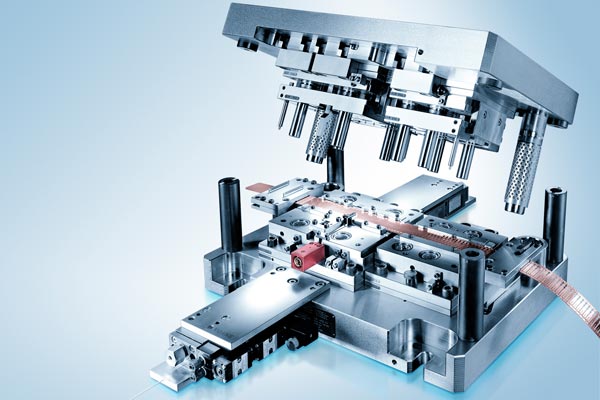
3. Systematic Maintenance: Ensuring Continuous and Stable Die Operation
Regular Cleaning and Polishing
Impurities and contaminants adhering to the die surface during use not only affect machining precision and product quality but also accelerate surface wear. A regular cleaning and polishing regimen should be established to remove surface contaminants and maintain the die in a clean, smooth condition.
Periodic Inspection and Repair
A periodic inspection schedule should be implemented to promptly assess die performance and operating status, replacing or repairing severely worn components in a timely manner. Routine maintenance, including lubrication and fastening, should be performed to ensure all die components operate in coordination.
Standardized Storage and Preservation
During storage, dies must be protected from impact and compression to prevent deformation or damage. The storage environment should remain dry, ventilated, and clean to effectively prevent moisture absorption, rusting, and other forms of corrosion.
4. Advanced Surface Treatment Technology: Breaking Through Service Life Bottlenecks
Beyond rational usage and maintenance, adopting advanced surface treatment technology is a critical approach to further extending tungsten carbide die service life.
Titanium Coating Technology
Titanium coating enhances die performance by depositing a titanium alloy thin film on the surface of tungsten carbide dies, significantly improving wear resistance, corrosion resistance, and high-temperature performance. This film possesses extremely high hardness, substantially reducing wear during machining operations. At the same time, the titanium alloy film offers excellent corrosion and high-temperature resistance, providing an effective protective barrier for dies under harsh working conditions. Titanium coating is currently one of the most widely applied surface treatment solutions in the industrial sector.
5. High-Performance Material Selection: Laying a Long-Term Foundation
The inherent performance of the material itself is the fundamental factor determining die service life. YG15 tungsten carbide plate, as a high-performance die material, combines high hardness, high wear resistance, high strength, high corrosion resistance, and high-temperature tolerance. Its chemical composition is primarily based on tungsten, supplemented by cobalt and carbon. Tungsten enhances hardness, wear resistance, and high-temperature performance; cobalt serves as an additive that improves toughness and crack resistance; carbon acts as a strengthening element that further increases hardness and wear resistance. Selecting YG15 tungsten carbide plate for die manufacturing establishes a solid material-level foundation for long-service-life operation.
6. Conclusion
Extending the service life of tungsten carbide dies is a systematic endeavor that requires coordinated efforts across scientific usage, systematic maintenance, surface treatment, and material selection. Enterprises should comprehensively apply the above strategies based on their actual production conditions to maximize die value and achieve the goals of cost reduction and efficiency improvement.
 English
  Deutsch
  Français
  日本語
日本語  한국어
한국어  Español
  Português
  Italiano
  Nederlands
  Русский
  Bahasa Indonesia
  العربية