

Key Points for the Maintenance of Tungsten Carbide Dies
I. Introduction In the field of die manufacturing, tungsten carbide dies hold a pivotal position due to their high hardness, excellent wear resistance, and outstanding thermal stability. They are widely […]
I. Introducción
In the field of die manufacturing, tungsten carbide dies hold a pivotal position due to their high hardness, excellent wear resistance, and outstanding thermal stability. They are widely applied in various high-precision and high-demand processing scenarios, providing strong support for the production and manufacturing of numerous industries. However, like any precise and complex equipment, tungsten carbide dies require proper maintenance to ensure long-term stable operation and extended service life. This article will delve into and systematically explore the key points of tungsten carbide die maintenance, aiming to assist relevant practitioners in accurately mastering die maintenance techniques and enhancing die performance.
II. The Importance of Tungsten Carbide Die Maintenance
The maintenance of tungsten carbide dies has a decisive impact on their performance and service life.
Nuestra actividad de fábrica: piezas de carburo, piezas de molde, moldes de inyección médica, moldes de inyección de precisión, moldeo por inyección de teflón PFA, accesorios de tubo PFA. correo electrónico: [email protected],whatsapp:+8613302615729.
From the perspective of production efficiency, scientific and reasonable maintenance can ensure that the dies are always in good working condition. This helps reduce the frequency of die failures during operation, minimize downtime caused by failures, and thereby safeguard the continuity and efficiency of the production process, significantly improving overall production efficiency.
In terms of cost control, regular maintenance enables the early detection of potential problems in the dies. By intervening and addressing these issues at an early stage, it can prevent minor problems from evolving into major failures, thus reducing maintenance costs. Additionally, effectively extending the service life of the dies and lowering the frequency of die replacement can save a substantial amount of capital investment for enterprises, bringing more considerable economic benefits.
III. Key Points for Tungsten Carbide Die Maintenance
1. Regular Inspection
Regular inspection is the cornerstone of tungsten carbide die maintenance. Through comprehensive and detailed inspections, various problems such as wear, cracks, and deformation in the dies can be promptly identified, and targeted measures can be taken immediately. It is recommended to conduct a thorough inspection of the dies once a week, covering aspects such as the die’s appearance for any damage, dimensional accuracy to ensure compliance with standards, and surface roughness to meet the requirements. Furthermore, a simple visual inspection should be carried out before and after each use of the dies to ensure they are in good working condition and guarantee the smooth progress of production.
2. Cleaning Maintenance
Cleaning maintenance is an indispensable and crucial part of the tungsten carbide die maintenance process. During the use of the dies, a large amount of oil stains, chips, and other impurities will inevitably accumulate on their surfaces. If these impurities are not cleaned in a timely manner, they will seriously affect the die’s performance and shorten its service life. Therefore, regular cleaning maintenance of the dies is necessary. When cleaning, be sure to use dedicated cleaning agents and tools, and avoid using overly rough tools or strongly corrosive chemical cleaning agents to prevent irreversible damage to the die surface. At the same time, pay special attention to thoroughly cleaning hard-to-reach areas such as the gaps and holes of the dies to ensure overall cleanliness.
3. Lubrication Maintenance
Lubrication maintenance plays a vital role in reducing die wear and extending its service life. During the operation of the dies, friction between various components generates heat and wear. Proper lubrication can effectively reduce the friction coefficient, minimize wear, and improve the die’s durability. When performing lubrication maintenance, select appropriate lubricants according to the specific conditions of the dies and strictly follow the prescribed lubrication cycle and method. Additionally, regularly check the working status of the lubrication system to ensure that the lubricant can be evenly and adequately applied to the die surface, providing good lubrication conditions for the normal operation of the dies.
4. Heat Treatment Maintenance
Given that tungsten carbide dies often operate in high-temperature environments and are prone to thermal stress and thermal deformation, heat treatment maintenance becomes a key factor in ensuring die stability. During die operation, strictly control the die temperature to prevent excessive temperature from causing damage to the dies. At the same time, conduct appropriate preheating and cooling treatments before and after die use to effectively reduce the impact of thermal stress and thermal deformation on the dies. Moreover, regular annealing treatment of the dies can eliminate internal stresses, further improving the die’s stability and durability and ensuring stable die performance during long-term use.
5. Repair and Replacement
During die use, if serious problems such as significant wear, cracks, or deformation that cannot be repaired through routine maintenance are found in the dies, timely repair or replacement is required. When repairing, select appropriate repair methods and materials according to the actual situation of the dies to ensure that the repaired dies can fully meet the usage requirements and restore their original performance and accuracy. If the dies are severely damaged and no longer meet the usage standards, promptly replace them with new dies to avoid production failures and quality issues caused by using unqualified dies, which could bring unnecessary losses to the enterprise.
6. Training and Education
Training and education are key factors in improving die maintenance levels. Enterprises should attach great importance to the training and education of die operators, regularly organize professional training courses to enable operators to have an in-depth understanding of the die’s structure, performance characteristics, and usage requirements, and master correct die operation methods and maintenance techniques. Through systematic training and education, the skill level and maintenance awareness of operators can be effectively improved, reducing die damage and failures caused by human operational errors or maintenance negligence and ensuring the normal use of the dies and the production benefits of the enterprise.
7. Storage and Safekeeping
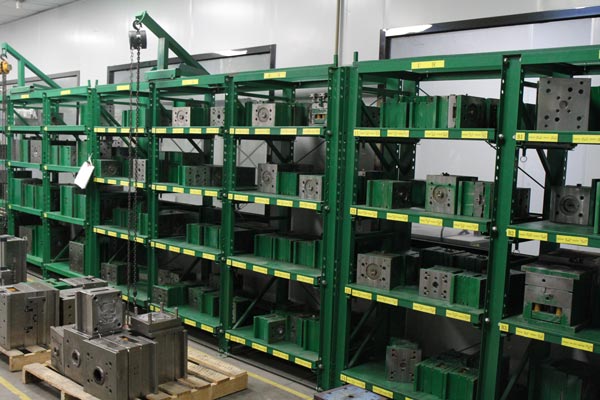
Many details also need to be considered during the storage and safekeeping of dies. Firstly, store the dies in a dry, well-ventilated environment free of corrosive gases to prevent moisture and corrosive gases from damaging the dies and affecting their performance and service life. Secondly, conduct scientific and reasonable classification management of the dies during storage to prevent different types and specifications of dies from colliding and squeezing each other, avoiding die damage caused by external forces. Finally, when the dies are needed for use, conduct a comprehensive inspection and test run in advance to ensure that the dies are in good working condition and can be smoothly put into production use.
IV. Conclusión
The maintenance of tungsten carbide dies is a complex and systematic task that requires comprehensive consideration of multiple factors. By comprehensively applying measures such as regular inspection, cleaning maintenance, lubrication maintenance, heat treatment maintenance, repair and replacement, training and education, and storage and safekeeping, the long-term stable operation of tungsten carbide dies can be comprehensively guaranteed, and their service life can be effectively extended. At the same time, enterprises should closely monitor the development trends of new technologies and new materials in the industry, actively introduce advanced die maintenance technologies and high-quality materials, and continuously improve die maintenance levels and actual effects, providing solid and powerful support for the enterprise’s production and development.
FAQ
Q: How can I determine if a tungsten carbide die needs immediate repair?
A: When a tungsten carbide die shows significant wear, such as when the dimensions of key parts exceed the tolerance range, has obvious cracks, especially through-cracks, or undergoes significant deformation that affects the normal assembly and use of the die, it usually requires immediate repair. Otherwise, it may lead to production accidents or product quality issues.
Q: Can alcohol be used as a cleaning agent for cleaning tungsten carbide dies?
A: Generally, it is not recommended to use alcohol to clean tungsten carbide dies. Alcohol has certain volatility and solubility, but it may not be effective in removing oil stains, chips, and other impurities on the die surface. Moreover, it may have potential impacts on the surface of some special-material dies. Dedicated cleaning agents designed for die cleaning should be used to ensure the cleaning effect and no damage to the die.
Q: How is the lubrication maintenance cycle for tungsten carbide dies determined?
A: The determination of the lubrication maintenance cycle needs to take into account multiple factors, including the frequency of die use, workload, operating environment temperature, and the performance of the lubricant used. Usually, enterprises can refer to the recommendations of the die manufacturer, combined with their own actual production situation, through a period of practice and observation, gradually determine the most suitable lubrication maintenance cycle for their enterprise and form a standardized operation process.
Q: What are the main performance improvements of tungsten carbide dies after annealing treatment?
A: Annealing treatment can eliminate the internal stresses generated in tungsten carbide dies during processing and use, making the die’s tissue structure more uniform and stable. This helps improve the die’s toughness, reduce the occurrence of cracks caused by stress concentration, enhance the die’s fatigue resistance, thereby extending the die’s service life. At the same time, it can improve the die’s dimensional stability and machining accuracy in high-temperature environments.
Q: How can enterprises ensure that die operators strictly comply with maintenance specifications?
A: Enterprises can establish a comprehensive training system, regularly organize operators to participate in professional training to enable them to deeply understand the importance of maintenance specifications and specific operation methods. At the same time, formulate a strict assessment system, incorporate maintenance work into the performance assessment scope, reward operators who comply with specifications and do a good job in maintenance, and punish violations. In addition, strengthen on-site supervision and management, promptly detect and correct non-standard behaviors of operators to ensure the effective implementation of maintenance work.



 English
  Deutsch
  Français
  日本語
日本語  한국어
한국어  Español
  Português
  Italiano
  Nederlands
  Русский
  Bahasa Indonesia
  العربية