
Stress Relief Methods for Tungsten Carbide Dies
Tungsten carbide dies, renowned for their high hardness, excellent wear resistance, and good impact resistance, play a crucial role in industrial production. However, during the use of dies, various factors […]
Tungsten carbide dies, renowned for their high hardness, excellent wear resistance, and good impact resistance, play a crucial role in industrial production. However, during the use of dies, various factors can lead to the generation of stress. If this stress is not eliminated in a timely manner, it will have a detrimental impact on the precision and service life of the dies. Therefore, exploring stress relief methods for tungsten carbide dies is of great significance for enhancing their performance and extending their service life. The following will elaborate on multiple stress relief methods, comprehensive application strategies, and relevant considerations for tungsten carbide dies.
Diverse Methods for Precise Stress Relief
Heat Treatment Method: Reshaping Internal Structure
Heat treatment is a commonly used method for eliminating die stress. Through reasonable heat treatment processes, the internal structure of the die material can be altered, thereby achieving the goal of stress relief. For tungsten carbide dies, tempering treatment is often employed to eliminate stress. Specifically, the quenched die is heated to a certain temperature, held for a period of time, and then cooled. During this process, the residual stress within the die material is released, significantly improving the stability and service life of the die.
Notre activité : pièces en carbure, pièces de moule, moules d'injection médicale, moules d'injection de précision, moulage par injection de téflon PFA, raccords de tubes PFA. email : [email protected],whatsapp:+8613302615729.
Mechanical Method: Altering Stress State
The mechanical method for stress relief mainly relies on mechanical processing means, such as vibratory stress relief and shot peening, to change the stress state of the die material. Among them, vibratory stress relief is highly effective. It utilizes the principle of resonance to make the die resonate at a specific frequency, thus eliminating internal residual stress. This method is simple to operate, has a significant effect, and has a minimal impact on the precision and surface quality of the die.
Chemical Method: Improving Material Properties
The chemical method achieves stress relief by altering the properties of the die material through chemical treatment. For example, chemical heat treatment methods like carburizing and nitriding can be used to increase the surface hardness and wear resistance of the die while reducing its internal residual stress. These treatment methods not only extend the service life of the die but also improve its fatigue resistance.
Natural Aging Method: Natural Stress Release
The natural aging method is a relatively simple stress relief approach. It involves placing the die in a natural environment and allowing the internal residual stress to be gradually released over a long period. Although this method takes a long time, it is an effective stress relief method for large or complex dies. Its advantages lie in its simple operation and low cost, while its drawback is the slow speed of stress relief.
Cryogenic Treatment: Low-Temperature Transformation for Stress Relief
Cryogenic treatment involves cooling the die to extremely low temperatures (such as -80°C to -196°C) to transform the residual austenite within the material into martensite, further releasing stress and stabilizing the die size. This method is particularly suitable for high-precision dies that require long-term dimensional stability. Cryogenic treatment can not only effectively eliminate residual stress but also enhance the hardness and wear resistance of the die.
Explosion Method: Shock Wave for Stress Elimination
The explosion method is a special stress relief method that uses the shock wave generated by an explosion to eliminate internal residual stress in the die. This method is mainly applied to large and heavy dies and has a rapid and significant effect. However, due to its complex operation and safety concerns, it is not commonly used in practical applications.
Electropolishing Method: Electrochemical Stress Relief
The electropolishing method removes tiny protrusions and burrs on the die surface through electrochemical means, achieving the goals of stress relief and improving surface quality. This method is mainly used for stress relief and surface treatment of precision dies. Electropolishing can not only effectively eliminate residual stress but also significantly improve the surface finish and corrosion resistance of the die.
Comprehensive Application for Enhanced Effectiveness
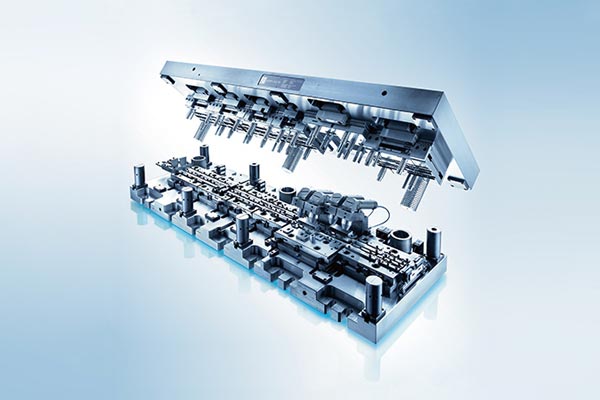
In practical production, a comprehensive application strategy that combines multiple methods is often adopted to more effectively eliminate stress in tungsten carbide dies. For example, heat treatment can be carried out first to eliminate most of the residual stress, and then mechanical or chemical methods can be used for further treatment to improve the performance and service life of the die. By comprehensively applying different methods, the internal residual stress of the die can be more comprehensively eliminated, thereby improving its overall performance and service effect.
Considerations for Ensuring Quality
Method Selection: Based on Actual Conditions
When eliminating stress in tungsten carbide dies, the appropriate method should be selected according to the specific material and usage conditions of the die. Different materials and uses of dies have different causes and characteristics of stress generation. Only by choosing the right method can the ideal stress relief effect be achieved.
Parameter Control: Precise and Strict Operation
Strict control of parameters such as temperature and time during the treatment process is crucial. These parameters directly affect the effectiveness of stress relief. Improper control may lead to incomplete stress relief or even new damage to the die. Therefore, during the treatment process, it is necessary to strictly follow the operating procedures and accurately control each parameter.
Comprehensive Inspection: Ensuring Quality Compliance
After treatment, a comprehensive inspection of the die should be carried out to ensure that its quality and performance meet the usage requirements. The inspection内容包括 die dimensional accuracy, surface quality, hardness, and other indicators. Only through a comprehensive inspection can it be guaranteed that the die will not have quality issues during subsequent use.
Daily Maintenance for Stress Prevention
Regular Detection and Maintenance: Prevention is Better than Cure
During the use of dies, regular stress detection should be carried out. Once excessive stress or cracks are detected, stress relief treatment should be carried out immediately. At the same time, daily maintenance of the die is also essential. Keeping the die clean and regularly applying appropriate lubrication can reduce the stress generated during use and extend the service life of the die.
Rational Use and Storage: Reducing Stress Accumulation
During the use of dies, overloading and overspeed operation should be avoided to reduce the generation of stress. When storing the die, it should be placed in a dry and ventilated place to avoid humid and corrosive environments and prevent stress accumulation. Rational use and storage methods can effectively reduce the risk of stress generation in dies.
Professional Operation: Ensuring Treatment Safety
The stress relief work of dies should be carried out by professional operators. They have rich experience and professional skills, which can ensure the effectiveness of stress relief and the safety of the die. Non-professional operation may lead to improper treatment and pose safety hazards.
In conclusion, stress relief for tungsten carbide dies is a comprehensive task that requires the combination of multiple methods and technical means. By reasonably selecting and applying stress relief methods, the performance and service life of dies can be effectively improved, providing strong support for enterprise production and development. Looking ahead, with the continuous progress and innovation of science and technology, more efficient and environmentally friendly stress relief methods will emerge, injecting new vitality into the development of the die industry.
 English
  Deutsch
  Français
  日本語
日本語  한국어
한국어  Español
  Português
  Italiano
  Nederlands
  Русский
  Bahasa Indonesia
  العربية