
Analysis of Causes and Solutions for Tungsten Carbide Die Sticking
In the field of metal processing, tungsten carbide dies are indispensable key tools in numerous production processes due to their exceptional hardness and excellent wear resistance, widely applied in various […]
In the field of metal processing, tungsten carbide dies are indispensable key tools in numerous production processes due to their exceptional hardness and excellent wear resistance, widely applied in various metal forming operations. However, during actual use, tungsten carbide dies occasionally experience die sticking. This issue acts as an obstacle in the production flow, not only significantly reducing production efficiency by extending production cycles and increasing costs but also potentially degrading product quality, resulting in surface defects and dimensional deviations. Moreover, it may cause irreversible damage to the dies themselves, affecting their service life and subsequent performance. Therefore, delving deeply into the root causes of tungsten carbide die sticking and exploring effective solutions are of paramount importance for enhancing production efficiency, ensuring product quality, and reducing production costs.
I. In – depth Analysis of the Causes of Tungsten Carbide Die Sticking
(I) Contamination by Molten Metal
During metal casting or die – casting processes, as the molten metal flows rapidly within the die cavity, it is highly prone to contaminating and adhering tiny metal particles to the die surface. These metal particles solidify and bond firmly with the die surface during cooling, leading to die sticking. Especially during high – speed filling, the high – temperature molten metal impacts the die surface with great force, making it easier for metal particles to embed into the die’s microstructure, greatly increasing the likelihood of die sticking.
O nosso negócio de fábrica: peças de metal duro, peças de molde, moldes de injeção médica, moldes de injeção de precisão, moldagem por injeção de teflon PFA, acessórios para tubos PFA. e-mail: [email protected],whatsapp:+8613302615729.
(II) Inadequate Surface Roughness of the Die
The surface roughness of the die is a crucial factor influencing die sticking. If the die surface has insufficient roughness, the material is likely to form tiny depressions on the die surface during the forming process. These depressions not only increase the actual contact area between the material and the die but also provide more “anchor points” for the molten metal to adhere, thus more easily triggering die sticking. In addition, a die surface with inadequate roughness has strong adsorptivity, attracting more gases and impurities, further exacerbating the severity of die sticking.
(III) Improper Die Temperature Control
Die temperature has a significant impact on die sticking. When the die temperature is too high, an oxide layer quickly forms on the die surface in contact with the molten metal. This oxide layer not only alters the physical and chemical properties between the molten metal and the die surface but also increases the adhesion force between them, significantly raising the risk of die sticking. At the same time, excessive temperature reduces the viscosity of the molten metal and enhances its fluidity, enabling the molten metal to more easily penetrate into the tiny cracks and pores of the die, forming a stubborn die – sticking layer that is difficult to remove.
(IV) Defective Lubrication Measures
In metal processing, lubricants play a vital role in effectively reducing the friction and adhesion between the die and the material. However, if the lubrication measures are improper, such as when the lubricant selection does not match the processing technology, uneven application leads to local insufficient lubrication, or the lubricant has poor quality and unstable performance, the lubrication effect will be weakened, resulting in die sticking.
II. Targeted Solutions for Tungsten Carbide Die Sticking
(I) Optimize Die Design and Manufacturing Processes
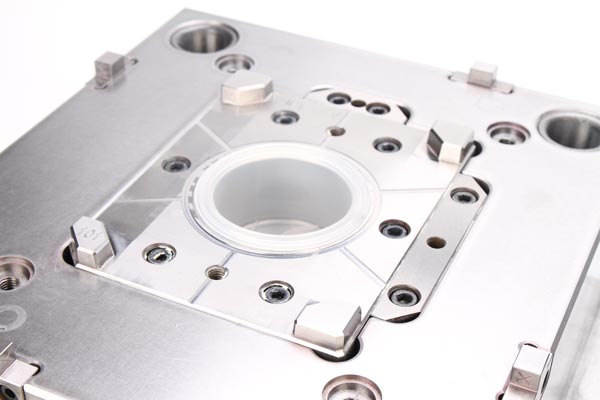
Reasonable die design and exquisite manufacturing processes are the foundation for preventing die sticking. During the design stage, the principle of simplicity and practicality should be followed, avoiding overly complex structures and dimensions to reduce the friction and interaction area between the die surface and the molten metal. Meanwhile, advanced manufacturing technologies and processes should be adopted to improve the manufacturing accuracy and surface roughness of the die, ensuring a smooth and flat die surface and reducing the opportunities for molten metal adhesion.
(II) Precisely Control Die Temperature
In metal processing, strict and precise control of die temperature is essential. According to the requirements of different metal materials and processing technologies, the parameters of the cooling system, such as the flow rate, temperature, and velocity of the cooling water, should be reasonably adjusted to ensure that the die temperature remains within an appropriate range. In addition, the die should be prevented from being exposed to high – temperature environments for a long time, and effective thermal insulation measures should be taken to reduce the formation of oxide layers and the penetration of molten metal, thereby lowering the risk of die sticking.
(III) Scientifically Select High – quality Lubricants
Selecting the right lubricant is a key step in reducing die sticking. Based on the characteristics of the metal material, the requirements of the processing technology, and the working conditions of the die, a lubricant with good lubrication performance, high – temperature resistance, and chemical stability should be chosen. When applying the lubricant, ensure uniform and comprehensive coverage to avoid local insufficient lubrication. At the same time, regularly replace the lubricant and maintain its cleanliness to prevent impurities from affecting the lubrication effect.
(IV) Strengthen Die Maintenance and Upkeep
Regular, comprehensive maintenance and upkeep of the die are important guarantees for reducing die sticking. Establish a sound die maintenance and upkeep system, regularly clean the die to remove surface dirt, grease, and metal filings; use professional polishing equipment and processes to polish the die surface, improving its smoothness and roughness; regularly inspect the die for wear and promptly replace damaged parts to ensure that the die is always in good working condition.
(V) Apply Advanced Coating Technologies
Applying a layer of coating material with excellent properties on the die surface is an effective way to reduce the risk of die sticking. For example, advanced coating technologies such as physical vapor deposition (PVD) or chemical vapor deposition (CVD) can be used to form a hard coating on the die surface with high hardness, good wear resistance, strong heat resistance, and excellent corrosion resistance. This coating can effectively isolate the direct contact between the molten metal and the die surface, reducing adhesion and chemical reactions, thus significantly lowering the possibility of die sticking.
III. Conclusão
Tungsten carbide die sticking is a complex issue involving multiple factors, with the causes interacting and influencing each other. To effectively solve this problem, a comprehensive consideration and systematic optimization from multiple dimensions such as die design, manufacturing processes, temperature control, lubrication measures, maintenance and upkeep, and coating technologies are required. With the continuous progress of science and technology and the continuous emergence of new materials and technologies, we have reason to believe that more innovative solutions will emerge in the future to address the challenge of tungsten carbide die sticking. By comprehensively applying various advanced methods and technical means, we can further improve production efficiency, reduce the scrap rate, enhance product quality, and inject strong impetus into the sustainable development of the metal processing industry, driving the industry to a higher level.


 English
  Deutsch
  Français
  日本語
日本語  한국어
한국어  Español
  Português
  Italiano
  Nederlands
  Русский
  Bahasa Indonesia
  العربية