
Development and Application of Wear-Resistant Coating Technology for Tungsten Carbide Dies
In the wave of rapid modern industrial development, tungsten carbide dies, as the core foundational equipment in manufacturing, are facing increasingly stringent performance requirements. Especially in terms of wear resistance, […]
In the wave of rapid modern industrial development, tungsten carbide dies, as the core foundational equipment in manufacturing, are facing increasingly stringent performance requirements. Especially in terms of wear resistance, dies need to maintain stable performance under harsh working conditions of long-term high-intensity friction and impact to avoid premature damage. To address this challenge, wear-resistant coating technology has emerged and has been widely applied in the field of tungsten carbide dies, becoming a key force driving technological upgrades and industrial transformations in the die industry. This article will systematically review the development process of wear-resistant coating technology for tungsten carbide dies, delve into its technical principles, and comprehensively elaborate on its practical application value in industrial production.
I. Evolution of Wear-Resistant Coating Technology
Initial Exploration: Overcoming Limitations of Electroplating and Chemical Plating
In the early stages of wear-resistant coating technology, electroplating and chemical plating were the primary methods. These techniques improved the wear resistance of dies to a certain extent by depositing metal or alloy layers on the die surface. However, due to the limitations of the process principles, the adhesion between the coating and the substrate was weak, making it prone to peeling under complex working conditions. As a result, the improvement in wear resistance was limited, and it was difficult to meet the demands of high-end manufacturing.
O nosso negócio de fábrica: peças de metal duro, peças de molde, moldes de injeção médica, moldes de injeção de precisão, moldagem por injeção de teflon PFA, acessórios para tubos PFA. e-mail: [email protected],whatsapp:+8613302615729.
Technological Leap: The Rise of PVD and CVD
With advancements in materials science and surface engineering technology, Physical Vapor Deposition (PVD) and Chemical Vapor Deposition (CVD) have gradually become mainstream techniques. PVD deposits material atoms onto the die surface through physical methods (such as sputtering and evaporation), forming dense and uniform coatings that significantly enhance the hardness and wear resistance of dies. CVD, on the other hand, generates compound coatings (such as titanium carbide and titanium nitride) on the die surface through chemical reactions, further strengthening the adhesion between the coating and the substrate. This enables dies to maintain stable performance even under extreme conditions like high temperatures and high pressures.
Cutting-Edge Breakthrough: The Revolutionary Application of Nano Coatings
In recent years, nano coating technology has become a research hotspot in the field of wear-resistant coatings due to its unique nanostructure advantages. By controlling the particle size of materials to the nanometer level, nano coatings achieve ultra-fine and uniform coating structures, greatly improving the hardness, wear resistance, and corrosion resistance of the coatings. Additionally, nano coatings exhibit excellent self-lubricating properties, effectively reducing the friction coefficient between dies and workpieces and further extending die service life.
II. Technical Principles of Wear-Resistant Coatings
The core principle of wear-resistant coatings is to construct a high-hardness, wear-resistant protective layer on the die surface, isolating the die substrate from direct exposure to harsh working conditions and thereby reducing wear and damage. Coating materials are typically selected from ceramics (such as aluminum oxide and silicon carbide), metals (such as chromium and titanium), or composite materials (such as metal ceramics). These materials possess excellent mechanical properties and chemical stability, enabling them to withstand high stresses, high temperatures, and erosive media. When the die surface is subjected to friction or impact, the coating absorbs energy through mechanisms such as plastic deformation and micro-crack propagation, protecting the substrate from damage. Meanwhile, self-healing mechanisms within the coating delay the failure process.
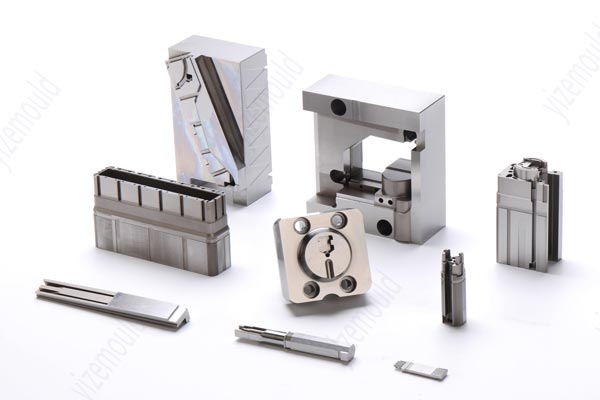
III. Application Scenarios of Wear-Resistant Coatings for Tungsten Carbide Dies
Stamping Dies: Dual Improvement in Precision and Service Life
In stamping processes, dies are subjected to high-speed stamping and frequent friction, which can easily lead to surface wear and dimensional inaccuracy. By applying wear-resistant coatings (such as PVD titanium nitride coatings) on tungsten carbide dies, the hardness and wear resistance of the dies can be significantly enhanced, reducing friction losses during stamping. This extends die service life while maintaining the dimensional accuracy of stamped products. Additionally, wear-resistant coatings reduce die replacement frequency, minimizing downtime and improving production efficiency.
Injection Molding Dies: Dual Protection Against High Temperatures and Corrosion
Injection molding dies operate under high temperatures, high pressures, and erosive media (such as plastic melts), making them prone to thermal fatigue, corrosion, and wear. Wear-resistant coatings (such as CVD tungsten carbide coatings) effectively isolate the die substrate from erosive media, improving the die’s high-temperature resistance and corrosion resistance. This extends die service life and enhances the surface quality of injection-molded products. Meanwhile, wear-resistant coatings reduce the sticking phenomenon on the die surface, lowering demolding forces and improving production efficiency.
Cutting Tools: A Powerful Tool for Efficient Machining
Tungsten carbide cutting tools are subjected to high stresses, high temperatures, and intense friction during machining, leading to tool wear and failure. By applying wear-resistant coatings (such as nanostructured coatings) on tool surfaces, the hardness and wear resistance of the tools can be significantly improved, reducing friction losses and thermal deformation during cutting. This extends tool service life and enhances machining accuracy. Additionally, wear-resistant coatings reduce cutting forces, lowering energy consumption and improving machining efficiency.
IV. Core Advantages of Wear-Resistant Coatings
Performance Enhancement: Dual Optimization of Wear Resistance and Precision
Wear-resistant coatings significantly improve the wear resistance of dies by constructing high-hardness protective layers, reducing dimensional changes caused by wear and maintaining the machining accuracy and stability of dies. This is particularly crucial in high-precision manufacturing fields (such as aerospace and automotive electronics), ensuring consistent and reliable product quality.
Cost Reduction: Dual Savings in Maintenance and Replacement
By extending die service life, wear-resistant coatings reduce the frequency of die maintenance and replacement, lowering die procurement costs and downtime losses. Meanwhile, wear-resistant coatings improve production efficiency and reduce scrap rates, further lowering production costs.
Environmental Friendliness: A Driver for Green Manufacturing
Wear-resistant coating technology reduces resource consumption and waste generation by improving die service life and machining efficiency, aligning with the development trend of green manufacturing. Additionally, with the research and application of environmentally friendly coating materials (such as chromium-free coatings and water-based coatings), the environmental friendliness of wear-resistant coating technology will further improve.
V. Future Outlook: Technology Integration and Innovation-Driven Development
Technology Integration: Synergistic Development of Nanotechnology and Intelligent Manufacturing
In the future, wear-resistant coating technology will deeply integrate with cutting-edge fields such as nanotechnology and intelligent manufacturing, driving further improvements in coating performance and the intelligentization of manufacturing processes. For example, optimizing coating performance through nanostructure design or achieving precise control of coating processes using intelligent manufacturing technology will bring higher production efficiency and product quality to the die industry.
Material Innovation: Environmentally Friendly and Sustainable Coating Solutions
With growing environmental awareness, the development of environmentally friendly and sustainable wear-resistant coating materials will become a key focus for future development. For instance, developing non-toxic, biodegradable coating materials or using renewable resources to prepare coatings will help reduce the environmental impact of coating technology and promote the green transformation of the die industry.
Application Expansion: Exploring Potential in Emerging Fields
The application scope of wear-resistant coating technology will further broaden, especially in emerging fields such as new energy and biomedicine. For example, in lithium battery manufacturing, wear-resistant coatings can improve the corrosion resistance and service life of dies; in medical device processing, wear-resistant coatings can ensure the hygiene, safety, and machining accuracy of dies.
VI. Conclusion: Wear-Resistant Coating Technology – A Transformer for the Die Industry
The development of wear-resistant coating technology for tungsten carbide dies has brought revolutionary changes to the die industry. By applying wear-resistant coating technology, the wear resistance, precision, and service life of dies have been significantly improved, while production costs and product quality have been effectively controlled. With continuous technological advancements and innovations, wear-resistant coating technology will play an even more crucial role in the future, driving the die industry toward high-performance, high-precision, and green development. We anticipate that this technology will achieve greater breakthroughs in the future, bringing more convenience and value to industrial production.
FAQ
Q1: Is wear-resistant coating technology applicable to all types of tungsten carbide dies?
A1: Wear-resistant coating technology has broad applicability, but specific applications need to be selected based on the working conditions of the die (such as temperature, pressure, and friction type) and the performance of the coating material. For example, high-temperature working conditions require the use of high-temperature-resistant coatings (such as CVD tungsten carbide), while highly corrosive working conditions require the use of corrosion-resistant coatings (such as PVD chromium nitride).
Q2: How is the service life of wear-resistant coatings evaluated?
A2: The service life of wear-resistant coatings is influenced by multiple factors, including coating material, thickness, process quality, and the working conditions of the die. Typically, the service life of coatings is evaluated through laboratory accelerated wear tests or actual working condition tests, and maintenance cycles are formulated based on empirical data.
Q3: Does wear-resistant coating technology increase the manufacturing costs of dies?
A3: Although wear-resistant coating technology increases the initial manufacturing costs of dies, it significantly reduces long-term usage costs by extending die service life and reducing maintenance and replacement frequencies. Additionally, wear-resistant coatings improve production efficiency and product quality, further offsetting initial investments.
Q4: Is wear-resistant coating technology environmentally friendly?
A4: Traditional wear-resistant coating technologies may involve hazardous substances (such as chromium), but modern technologies are gradually transitioning toward environmentally friendly coating materials (such as chromium-free coatings and water-based coatings). Moreover, wear-resistant coating technology aligns with the development trend of green manufacturing by improving resource utilization efficiency and reducing waste generation.
Q5: How do I choose a suitable wear-resistant coating supplier?
A5: When selecting a wear-resistant coating supplier, it is essential to consider their technical capabilities, process equipment, quality control systems, and industry experience. It is advisable to prioritize suppliers with research and development capabilities who can provide customized solutions and refer to their customer cases and industry reputation.
Publicações relacionadas
- Tungsten Carbide Die Frame Design: Principles, Key Points, Optimization, and Innovation
- In-depth Analysis of Temperature Control Technology for Tungsten Carbide Dies
- Key Points of Temperature Control Technology for Tungsten Carbide Dies
- Future Development Trends and Technological Innovation Points of Tungsten Carbide Die


 English
  Deutsch
  Français
  日本語
日本語  한국어
한국어  Español
  Português
  Italiano
  Nederlands
  Русский
  Bahasa Indonesia
  العربية