

Comprehensive Analysis of Hardness Standards for Tungsten Carbide Dies
I. Introduction Tungsten carbide dies are irreplaceable core tools in modern precision manufacturing. Their hardness standards directly determine the service life, machining accuracy, and production efficiency of the die. With […]
I. Introducción
Tungsten carbide dies are irreplaceable core tools in modern precision manufacturing. Their hardness standards directly determine the service life, machining accuracy, and production efficiency of the die. With high hardness, excellent wear resistance, and outstanding thermal stability, tungsten carbide has become the material of choice for high-end die manufacturing. This article provides a systematic elaboration on the hardness standards of tungsten carbide dies from the dimensions of hardness definition, testing methods, hardness value ranges, and influencing factors, offering professional reference for die material selection and process optimization.
II. Definition and Testing Methods of Tungsten Carbide Die Hardness
Definition of Hardness
Hardness is a physical indicator that measures a material’s ability to resist localized pressure deformation or destruction. It intuitively reflects the material’s capacity to withstand external mechanical forces. In the field of die manufacturing, hardness is one of the core parameters for evaluating the comprehensive performance of tungsten carbide dies, and it is directly correlated with the die’s wear resistance, service life, and machining precision.
Nuestra actividad de fábrica: piezas de carburo, piezas de molde, moldes de inyección médica, moldes de inyección de precisión, moldeo por inyección de teflón PFA, accesorios de tubo PFA. correo electrónico: [email protected],whatsapp:+8613302615729.
Mainstream Testing Methods
The hardness of tungsten carbide dies is typically tested using the following three standard methods:
Rockwell Hardness (HRC) is the most widely used testing method. It employs a diamond cone or steel ball as an indenter, which is pressed into the material surface under a specified load. The hardness value is determined by measuring the depth of the indentation. This method is convenient to operate and offers good repeatability.
Vickers Hardness (HV) uses a square-based diamond pyramid indenter, pressed into the material surface under a relatively small load. The hardness value is calculated by measuring the diagonal length of the indentation. This method is particularly suitable for precise measurement of thin-walled components and surface hardened layers.
Rockwell Hardness (HRA) employs steel ball indenters of different diameters, combined with varying loads and indentation depths for testing. It demonstrates high applicability in the detection of ultra-hard materials such as tungsten carbide.
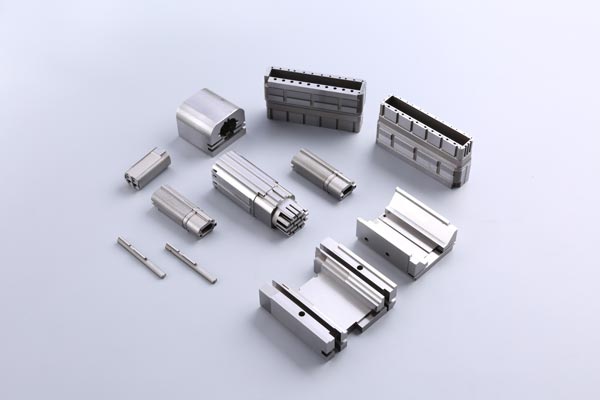
III. Hardness Value Range of Tungsten Carbide Dies
The hardness value of tungsten carbide dies needs to be reasonably selected according to specific application scenarios and process requirements. Generally, tungsten carbide can achieve a hardness of 89 to 95 HRA, equivalent to 69 to 81 HRC. Based on actual working conditions, tungsten carbide dies can be classified into the following three grades:
Low-Hardness Tungsten Carbide Dies, with hardness values between 60 and 70 HRC, are suitable for applications with modest hardness requirements, such as simple stamping dies and general-purpose plastic molds. These dies feature moderate hardness, are easy to machine and maintain, and have relatively low overall cost.
Medium-Hardness Tungsten Carbide Dies, with hardness values between 70 and 80 HRC, are suitable for applications requiring a certain level of hardness and wear resistance, such as dies that need to withstand significant cutting forces and friction. These dies offer high hardness and wear resistance, meeting most general machining requirements.
High-Hardness Tungsten Carbide Dies, with hardness values of 80 HRC and above, are suitable for applications with extremely demanding hardness and wear resistance requirements, such as dies operating under high-speed cutting and heavy-load stamping conditions. These dies possess exceptional hardness and wear resistance, capable of withstanding substantial cutting forces and friction, ensuring long-term stable operation of the die.
IV. Key Factors Influencing the Hardness of Tungsten Carbide Dies
Composición del material
The chemical composition of tungsten carbide plays a decisive role in its hardness. Generally speaking, the higher the tungsten content, the greater the hardness of the tungsten carbide. In addition, factors such as carbide content and grain size also significantly influence the final hardness.
Heat Treatment Process
Heat treatment is one of the key factors affecting the hardness of tungsten carbide dies. Through a scientific heat treatment process, the microstructure and phase transformation behavior of tungsten carbide can be adjusted, thereby modifying its hardness value. Common heat treatment processes include quenching, tempering, and annealing.
Machining Methods
Different machining methods also have varying degrees of impact on the hardness of tungsten carbide dies. For example, grinding can effectively remove surface burrs and oxide scale, improving surface finish and hardness. In contrast, electrical discharge machining creates a certain heat-affected zone on the die surface, which may lead to a localized reduction in hardness.
V. Summary
The hardness standards of tungsten carbide dies are one of the key factors determining their quality and performance. By understanding the hardness definition, testing methods, value ranges, and influencing factors of tungsten carbide dies, we can better grasp their hardness standards and application scenarios. In practical applications, it is essential to select the appropriate tungsten carbide die material and heat treatment process based on specific requirements, ensuring the die possesses sufficient hardness and wear resistance to meet production demands and improve overall efficiency.





 English
  Deutsch
  Français
  日本語
日本語  한국어
한국어  Español
  Português
  Italiano
  Nederlands
  Русский
  Bahasa Indonesia
  العربية