

In-depth Analysis of Key Steps in the Manufacturing Process of Tungsten Carbide Dies
I. Introduction In the modern industrial production system, tungsten carbide dies hold a pivotal position and can be regarded as key tools for industrial manufacturing. The level of sophistication in […]
I. Introducción
In the modern industrial production system, tungsten carbide dies hold a pivotal position and can be regarded as key tools for industrial manufacturing. The level of sophistication in their manufacturing process is just like the foundation of a building, directly determining the performance, precision, and service life of the dies. The manufacturing process of tungsten carbide dies is extremely complex, akin to a precise symphony performance, involving multiple interconnected key steps. This article will conduct an in-depth and detailed analysis of the manufacturing process of tungsten carbide dies, covering core aspects such as material selection, pre-treatment, rough machining, heat treatment, finish machining, polishing, and quality inspection, presenting readers with a complete picture of tungsten carbide die manufacturing.
II. Material Selection: Laying the Foundation for Die Quality
Material selection marks the starting point of the manufacturing process of tungsten carbide dies and is also a crucial step in determining the overall quality of the dies. Tungsten carbide, as an excellent hard alloy, possesses numerous outstanding properties such as high hardness, high wear resistance, high corrosion resistance, and good thermal conductivity. It is like an all-around player, making it an ideal choice for manufacturing high-precision, long-life dies.
Nuestra actividad de fábrica: piezas de carburo, piezas de molde, moldes de inyección médica, moldes de inyección de precisión, moldeo por inyección de teflón PFA, accesorios de tubo PFA. correo electrónico: [email protected],whatsapp:+8613302615729.
When selecting tungsten carbide materials, it is necessary to comprehensively consider various factors such as the specific application, working conditions, and precision requirements of the dies. This is similar to selecting appropriate equipment for athletes, which requires precise matching according to their competition events, venue environments, and personal characteristics to ensure that the selected materials can perfectly meet the usage requirements of the dies and lay a solid foundation for subsequent manufacturing processes.
III. Pre-treatment: Safeguarding the Machining Process
The pre-treatment stage plays a vital role in the manufacturing process of tungsten carbide dies, akin to the preparatory work before a well-planned performance. It mainly includes steps such as material cleaning, drying, cutting, and surface treatment.
The cleaning and drying processes aim to thoroughly remove oil stains, moisture, and impurities from the material surface, creating a clean and stable environment for subsequent machining processes and ensuring that the machining quality is not affected by external factors. Cutting involves precisely cutting the tungsten carbide material into blanks that meet specifications according to the precise requirements of the die drawings, providing suitable “raw materials” for subsequent machining. Surface treatment is like giving the material a fine “beauty treatment,” improving the surface finish and quality of the material through special processes, fully preparing for subsequent machining processes and ensuring the smooth progress of each step.
IV. Rough Machining: Shaping the Basic Outline of the Die
Rough machining is a fundamental step in the manufacturing process of tungsten carbide dies, similar to construction workers first building a rough framework when constructing a house. It mainly uses cutting tools to perform preliminary machining on the blanks, removing excess parts and gradually forming the approximate shape of the die.
There are various rough machining methods, including turning, milling, and drilling. In actual operations, it is necessary to carefully select appropriate machining methods according to the specific shape and requirements of the die, just as a chef selects suitable cooking methods according to the characteristics of ingredients. During rough machining, great attention should be paid to machining accuracy and quality to ensure that the basic shape and dimensions of the die meet the design requirements and lay a good foundation for subsequent finish machining.
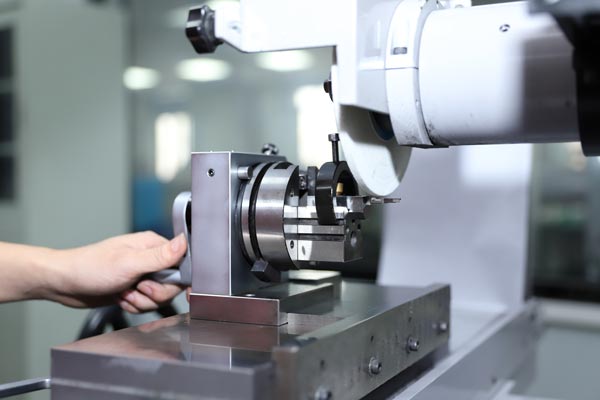
V. Heat Treatment: The Key to Enhancing Die Performance
Heat treatment is a core process in the manufacturing process of tungsten carbide dies, like a magical spell that changes the internal microstructure of the tungsten carbide material through heating and cooling processes, thereby significantly improving its key properties such as hardness, wear resistance, and toughness.
The heat treatment process consists of three stages: heating, holding, and cooling, each of which is like a different note in a musical piece, working together to play the melody of performance improvement. In actual operations, it is necessary to carefully formulate appropriate heat treatment processes according to the type of material and the usage requirements of the die. At the same time, key parameters such as heating temperature, holding time, and cooling rate should be strictly controlled, just as a chef precisely controls the heat and time, to ensure that the tungsten carbide material can achieve the best performance state and provide strong guarantees for the high-performance operation of the die.
VI. Finish Machining: Carving the Exquisite Details of the Die
Finish machining is a key step in the manufacturing process of tungsten carbide dies, similar to an artist meticulously carving a work of art in pursuit of ultimate perfection. It mainly includes processes such as grinding, electrical discharge machining (EDM), and precision grinding.
The grinding process, like a highly skilled craftsman, performs fine machining on the die after rough machining, removing burrs and uneven parts on the surface, significantly improving the surface finish and precision of the die. EDM cleverly utilizes the principle of electrical discharge, like a magical wizard, enabling easy machining of dies with complex shapes and small dimensions, providing greater freedom in die design. Precision grinding further fine-grinds the die on the basis of grinding, like giving a final polish to a work of art, enabling the surface quality and precision of the die to reach a higher level and meeting increasingly strict usage requirements.
VII. Polishing: Endowing the Die with a Perfect Appearance and Excellent Performance
Polishing is the final process in the manufacturing process of tungsten carbide dies, like placing a dazzling crown on a work of art, endowing the die with a perfect appearance and excellent performance. Through fine grinding and polishing of the die surface, tiny dents and protrusions on the surface are removed, achieving a mirror-like effect on the die surface, which is as smooth and bright as a mirror.
Polishing not only greatly improves the appearance quality of the die, making it more aesthetically pleasing and professional, but also effectively reduces the friction between the die and the workpiece, minimizing wear and thus significantly increasing the service life of the die. During the polishing process, it is necessary to carefully select appropriate polishing equipment and polishing materials and strictly control the polishing process parameters, just as a chef precisely grasps the amount of seasoning and cooking time, to ensure that the surface finish and quality of the die reach the best state.
VIII. Quality Inspection: Guarding the Final Line of Die Quality
Quality inspection is an essential step in the manufacturing process of tungsten carbide dies, like a strict goalkeeper guarding the final line of die quality. By comprehensively inspecting key indicators such as the dimensions, shape, hardness, and wear resistance of the die, it ensures that the quality of the die fully meets the usage requirements.
There are various quality inspection methods, including dimension measurement, hardness testing, and wear resistance testing. In actual operations, it is necessary to carefully formulate corresponding inspection plans according to the specific requirements and standards of the die. At the same time, high-precision measuring equipment and advanced testing methods should be adopted, just as a doctor uses precise instruments to diagnose patients, to ensure the accuracy and reliability of the inspection results and provide strong guarantees for the quality of the die.
IX. Conclusion
The manufacturing process of tungsten carbide dies is a complex and delicate systematic project, similar to a well-arranged large-scale performance, involving multiple key steps such as material selection, pre-treatment, rough machining, heat treatment, finish machining, polishing, and quality inspection. Each step is like an important program in a performance, requiring strict control of process parameters and quality requirements to ensure that the performance, precision, and service life of the die can meet the usage requirements.
With the continuous progress of science and technology and the continuous development of processes, the manufacturing process of tungsten carbide dies will also be continuously optimized and improved, like a constantly upgraded software system, providing more high-quality and efficient die support for the development of modern industry and promoting industrial manufacturing to a higher level.
FAQ
Q: How to determine whether tungsten carbide material is suitable for specific die manufacturing requirements?
A: To determine whether tungsten carbide material is suitable for specific die manufacturing requirements, multiple factors need to be comprehensively considered. First, clarify the specific application of the die, such as whether it is used for stamping, injection molding, or die-casting and other different processes. Different processes have different performance requirements for the material. Second, analyze the working conditions, including working temperature, pressure, and friction conditions. For example, in high-temperature environments, the material needs to have good thermal stability. Furthermore, based on the precision requirements, high-precision dies have higher requirements for the dimensional stability and machinability of the material. By comprehensively evaluating these factors and matching them with the properties of tungsten carbide materials, it can be determined whether they are applicable.
Q: What are the common surface treatment methods in the pre-treatment process and what are their respective functions?
A: Common surface treatment methods in the pre-treatment process include sandblasting, shot blasting, and chemical treatment. Sandblasting uses high-speed jetting sand particles to impact the material surface, removing oxide scale, rust, etc., increasing the surface roughness and improving the coating adhesion. Shot blasting throws shots onto the material surface through a high-speed rotating shot blaster, which not only cleans surface impurities but also generates compressive stress on the material surface, improving fatigue strength. Chemical treatment such as pickling can remove the oxide layer and rust products on the metal surface, providing a clean surface for subsequent machining. At the same time, it can also improve the chemical properties of the material surface and enhance its bonding ability with other materials.
Q: How to select appropriate cutting tools and machining parameters during rough machining?
A: Selecting cutting tools and machining parameters for rough machining should be comprehensively considered based on factors such as the die material, shape, and dimensions. For tungsten carbide dies, due to their high hardness, cutting tools with high hardness and good wear resistance, such as cemented carbide tools or diamond tools, should be selected. The shape of the cutting tool should be determined according to the machining part and shape of the die. For example, an end mill can be selected for machining a plane, and a drill bit or boring bar can be used for machining a hole. In terms of machining parameters, the cutting speed should be reasonably selected according to the tool material and die material. Generally, the cutting speed for tungsten carbide dies is relatively low. The feed rate should be determined according to the number of tool teeth and the workpiece material to ensure stable cutting. The cutting depth should be determined according to the machining allowance of the die and the rigidity of the tool. Under the premise of ensuring tool strength, the cutting depth should be increased as much as possible to improve machining efficiency.
Q: How to avoid defects such as cracking in tungsten carbide dies during the heat treatment process?
A: To avoid defects such as cracking in tungsten carbide dies during the heat treatment process, it is necessary to control multiple aspects. During the heating stage, control the heating rate to avoid excessive temperature differences between the inside and outside of the die caused by rapid heating, which generates thermal stress. For dies with complex shapes or large dimensions, segmented heating can be adopted. During the holding stage, ensure that the die is heated evenly to allow sufficient transformation of the internal microstructure. The cooling stage is crucial. Appropriate cooling media and cooling methods should be selected according to the material and shape of the die. For example, for some dies prone to cracking, methods such as stepped quenching or isothermal quenching can be adopted to slow down the cooling rate and reduce thermal stress. In addition, pre-treatment of the die before heat treatment, such as stress relief annealing, can also effectively reduce the risk of cracking.
Q: If there are still tiny flaws on the die surface after finish machining, how to further process them?
A: If there are still tiny flaws on the die surface after finish machining, multiple methods can be used for further processing. For small scratches or burrs, oilstones can be used for manual grinding. By selecting oilstones with appropriate particle sizes and using correct grinding techniques, the flaws can be gradually removed and the surface finish can be improved. If the flaws are relatively large or deep, processes such as super-finish machining or grinding and polishing can be adopted. Super-finish machining uses fine-grained abrasives to perform micro-cutting on the die surface under low pressure, effectively improving the surface quality. Grinding and polishing use the action of abrasives and polishing wheels to enable the die surface to achieve higher finish and precision, eliminating tiny flaws and meeting higher usage requirements.



 English
  Deutsch
  Français
  日本語
日本語  한국어
한국어  Español
  Português
  Italiano
  Nederlands
  Русский
  Bahasa Indonesia
  العربية