

Guide to Rapid Troubleshooting of Tungsten Carbide Die Failures
I. Introduction In the modern industrial production system, tungsten carbide dies are considered crucial tools. Their precision and performance play a decisive role in product quality and production efficiency. However, […]
I. Introduction
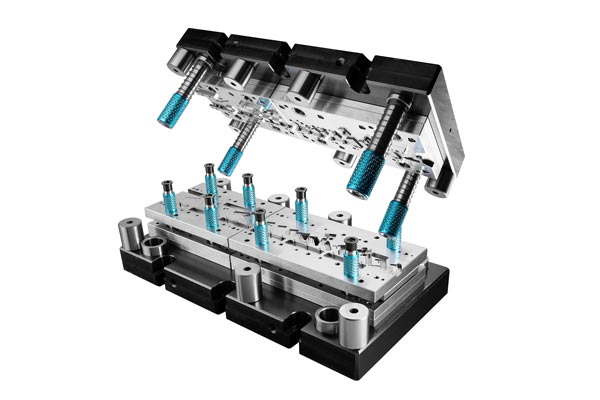
In the modern industrial production system, tungsten carbide dies are considered crucial tools. Their precision and performance play a decisive role in product quality and production efficiency. However, due to various factors, tungsten carbide dies inevitably encounter various types of failures during use, such as wear, fracture, and plastic deformation. To ensure smooth production, it is of great significance to rapidly and accurately troubleshoot tungsten carbide die failures. This article will delve into the common types and causes of tungsten carbide die failures and elaborate on rapid troubleshooting methods while providing preventive measures.
II. Common Types and Causes of Tungsten Carbide Die Failures
1. Wear Failures
Wear is the most common type of failure in tungsten carbide dies, mainly manifested as a gradual loss of material on the die surface, leading to a decrease in dimensional and shape accuracy. The main causes are as follows:
Notre activité : pièces en carbure, pièces de moule, moules d'injection médicale, moules d'injection de précision, moulage par injection de téflon PFA, raccords de tubes PFA. email : [email protected],whatsapp:+8613302615729.
- Relative Motion Wear: There is relative motion between the die and the workpiece, causing continuous wear of the surface material.
- Insufficient Material Hardness: The hardness of the die material itself is inadequate, making it difficult to effectively resist the wear from the workpiece material.
- Poor Lubrication: An imperfect lubrication system increases the friction between the die and the workpiece.
2. Fracture Failures
Fracture is a serious failure of tungsten carbide dies, usually characterized by the appearance of large cracks on the die or even its separation into two or more parts, resulting in a loss of working capacity. The main reasons are as follows:
- Material Defects: The die material itself has defects such as pores and inclusions.
- Unreasonable Design: The die design has issues such as stress concentration and structural weakness.
- External Impact: The die is subjected to excessive impact forces or vibrations during use.
3. Plastic Deformation Failures
Plastic deformation is a failure that occurs when a tungsten carbide die is subjected to relatively large stresses, manifested as a change in the die’s shape or dimensions. The main causes are as follows:
- Reduced High-Temperature Strength: The strength of the die material decreases at high temperatures, making it prone to plastic deformation.
- Design Flaws: Unreasonable die design leads to excessive local stresses.
- Excessive External Forces: The die is subjected to excessive pressures or tensile forces during use.
III. Rapid Troubleshooting Methods for Tungsten Carbide Die Failures
1. Troubleshooting Wear Failures
- Component Replacement: Regularly inspect the wear condition of die components and promptly replace severely worn parts such as punches and cavities.
- Lubrication Optimization: Improve the lubrication system to ensure good lubrication between the die and the workpiece, reducing friction.
- Material Upgrade: Select die materials with better wear resistance, such as those with added alloying elements to increase hardness.
- Gap Adjustment: Reasonably adjust the gap between the die and the workpiece to reduce wear caused by relative motion.
2. Troubleshooting Fracture Failures
- Material Inspection: Carefully check the die material for defects such as pores and inclusions and promptly replace unqualified materials.
- Design Optimization: Optimize the die design to reduce stress concentration and structural weakness.
- External Force Control: During use, avoid excessive impact forces or vibrations, such as adjusting the stamping speed and reducing the weight of the workpiece.
- Regular Inspection: Conduct regular inspections and maintenance on the die to promptly detect and address potential problems.
3. Troubleshooting Plastic Deformation Failures
- Temperature Control: Strictly control the working temperature of the die to avoid prolonged operation at high temperatures.
- Design Improvement: Optimize the die design to reduce local stresses and enhance the die’s resistance to deformation.
- Sélection des matériaux: Use die materials with high strength and toughness to improve the die’s deformation resistance.
- External Force Regulation: During use, avoid excessive pressures or tensile forces, such as adjusting the stamping pressure and reducing the thickness of the workpiece.
IV. Preventive Measures for Tungsten Carbide Die Failures
- Select High-Quality Die Materials: Choose die materials with excellent performance that meet the usage requirements.
- Optimize Die Design Scientifically: Scientifically optimize the die design to reduce stress concentration and structural weakness.
- Strengthen Lubrication and Cooling Systems: Enhance the lubrication and cooling systems of the die to ensure it is in good working condition during use.
- Conduct Regular Inspections and Maintenance: Regularly conduct comprehensive inspections and maintenance on the die to promptly detect and address potential problems.
- Follow Standardized Operations and Safety: Strictly adhere to operational norms during use to ensure safety and avoid unnecessary damage to the die.
V. Conclusion
Rapid troubleshooting of tungsten carbide die failures is of great significance for ensuring smooth production. By gaining an in-depth understanding of the common types and causes of tungsten carbide die failures and adopting targeted troubleshooting methods and preventive measures, the failure rate of dies can be significantly reduced, and production efficiency and product quality can be improved. Meanwhile, enterprises should attach great importance to the training of die management and maintenance personnel, enhancing their understanding and handling capabilities of die failures, and laying a solid foundation for the sustainable development of the enterprise.



 English
  Deutsch
  Français
  日本語
日本語  한국어
한국어  Español
  Português
  Italiano
  Nederlands
  Русский
  Bahasa Indonesia
  العربية