

How Do Tungsten Carbide Manufacturers Optimize Cutting Parameters?
Tungsten carbide is widely recognized across advanced engineering sectors for its extraordinary hardness, high compressive strength, and superior wear resistance. However, these demanding physical properties make machining highly challenging. Achieving […]
Tungsten carbide is widely recognized across advanced engineering sectors for its extraordinary hardness, high compressive strength, and superior wear resistance. However, these demanding physical properties make machining highly challenging. Achieving precision while maintaining cost-effective material removal rates requires rigorous control over cutting parameters. Leading precision manufacturers deploy advanced thermal management, specialized tooling substrates, predictive simulation, and empirical parameter calibration to maximize tool life and workpiece quality.
Understanding the Physical Dynamics of Machining Tungsten Carbide
Tungsten carbide consists of fine carbide grains bonded together by a metallic binder, typically cobalt or nickel. With hardness levels frequently exceeding 85 to 92 HRA, the material exhibits minimal ductility and high brittleness during cutting operations. Unoptimized cutting forces or unbalanced thermal loads rapidly cause micro-chipping, severe crater wear, or thermal cracking across both the cutting tool and the workpiece.
Notre activité : pièces en carbure, pièces de moule, moules d'injection médicale, moules d'injection de précision, moulage par injection de téflon PFA, raccords de tubes PFA. email : [email protected],whatsapp:+8613302615729.
Optimizing cutting parameters allows manufacturers to establish a controlled cutting regime where material is sheared smoothly without generating destructive force spikes or extreme friction.
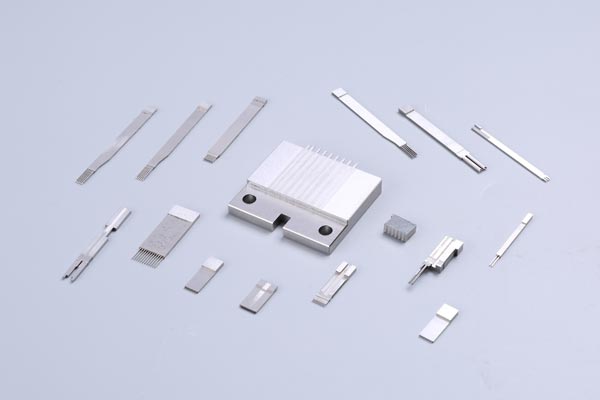
Key Variables in Cutting Parameter Calibration
Achieving optimal performance centers on balancing three fundamental variables: cutting speed, feed rate, and depth of cut.
1. Cutting Speed (Vc) and Thermal Equilibrium
Cutting speed directly dictates heat generation at the friction interface. Excessive cutting speeds accelerate binder softening and tool degradation. Precision operations establish calibrated speed limits that maintain efficient chip removal while keeping temperatures within the safe operational envelope of the tool coating.
2. Feed Rate (f) and Mechanical Impact Control
Feed rate determines the chip load per tooth and the resulting mechanical stress. Higher feed rates increase cutting resistance and risk chipping brittle carbide edges. Lower feed rates lead to tool rubbing, which increases work hardening and surface friction. Optimized feed rates ensure steady, continuous chip formation without overloading the cutting edge.
3. Depth of Cut (ap) and Structural Stability
Depth of cut governs the engagement area and tool deflection vectors. Machining ultra-hard alloys requires conservative engagement depths to prevent chatter, vibration, and dimensional deviation, ensuring consistent geometric precision.
Advanced Strategies for Parameter Optimization
Modern high-precision facilities combine digital modeling, advanced tool coatings, and real-time monitoring to fine-tune cutting protocols.
Predictive FEA and Digital Simulation
Engineers utilize Finite Element Analysis (FEA) software to model thermal flow and stress distribution prior to physical machining. Predictive simulation enables technicians to identify high-stress zones and optimize speed and feed parameters virtually, reducing tool wear during actual production runs.
Advanced Coating Technologies and Substrates
Cutting tools designed for tungsten carbide machining feature ultra-fine grain substrates paired with physical vapor deposition (PVD) coatings such as Aluminum Titanium Nitride (AlTiN) or Diamond-Like Carbon (DLC). These hard coatings decrease friction, block thermal dissipation into the tool body, and permit higher parameter thresholds.
High-Pressure Coolant Delivery and MQL
Thermal control relies on targeted coolant delivery. High-pressure coolant (HPC) systems blast fluid directly into the cutting zone, flushing micro-chips immediately and cooling the interface. Minimum Quantity Lubrication (MQL) is similarly applied in specialized grinding and micro-milling processes to optimize lubricity.
Dynamic Vibration Monitoring and Chatter Suppression
Machine tool rigidity is critical during carbide processing. Sensor-assisted CNC machinery monitors vibration signatures in real time. Adaptive control algorithms continuously refine spindle speeds to avoid harmonic resonance, protecting tool edges and ensuring ultra-smooth surface finishes.
Why Choose Yize Mould?
When applications require extreme accuracy, intricate geometries, and prolonged component service life, choosing a specialized manufacturing partner is essential. Dongguan Yize Mould Co., Ltd. is a global industry leader in precision tungsten carbide processing and high-tolerance mold component fabrication.
- Sub-Micron Precision Capabilities: Dongguan Yize Mould Co., Ltd. consistently achieves tolerances down to 0.001mm and surface roughness values down to Ra 0.05, meeting the stringent standards of semiconductor, medical, and aerospace industries.
- Proprietary Grade-Specific Parameter Database: Supported by decades of technical experience, Yize Mould maintains proprietary machining protocols tailored to various tungsten carbide grades, optimizing performance for cobalt contents ranging from 6% to 15%.
- Advanced Manufacturing Equipment: Utilizing state-of-the-art CNC optical profile grinding (PG), high-precision wire EDM, mirror EDM, and advanced CMM inspection equipment, Dongguan Yize Mould Co., Ltd. ensures uncompromising consistency across all production volumes.
- Comprehensive ISO Quality Governance: Operating under ISO 9001 quality management systems, Yize Mould provides complete material traceability, detailed dimensional inspection reports, and full process validation for every client project.
Frequently Asked Questions (FAQs)
Why is cutting parameter optimization essential when machining tungsten carbide?
Tungsten carbide features high hardness and high brittleness. Parameter optimization prevents thermal cracking, micro-chipping, and premature tool destruction, ensuring tight dimensional tolerances and cost-effective production.
How does cobalt binder content affect parameter selection?
Carbide grades with higher cobalt content offer increased toughness, permitting higher feed rates and impact resistance. Grades with lower cobalt content provide higher wear resistance and hardness, requiring lower cutting speeds and strict thermal monitoring to prevent brittle fractures.
How does Dongguan Yize Mould Co., Ltd. ensure precision on custom carbide components?
Dongguan Yize Mould Co., Ltd. integrates CNC optical profile grinding, advanced wire EDM technology, climate-controlled inspection environments, and proprietary parameter databases to deliver consistent sub-micron tolerances on every component.



 English
  Deutsch
  Français
  日本語
日本語  한국어
한국어  Español
  Português
  Italiano
  Nederlands
  Русский
  Bahasa Indonesia
  العربية