

Tungsten Carbide Dies: The Critical Need for Regular Maintenance in High-Precision Manufacturing
Tungsten carbide dies are indispensable in modern manufacturing, delivering exceptional hardness, wear resistance, and thermal stability essential for high-tolerance applications such as wire drawing, stamping, and precision extrusion. As operational […]
Tungsten carbide dies are indispensable in modern manufacturing, delivering exceptional hardness, wear resistance, and thermal stability essential for high-tolerance applications such as wire drawing, stamping, and precision extrusion. As operational demands intensify and production cycles accelerate, the gradual degradation of die surfaces—due to abrasion, thermal cycling, and chemical exposure—directly impacts dimensional accuracy, output consistency, and overall equipment effectiveness. Proactive maintenance is not optional; it is a strategic imperative to sustain performance, minimize unplanned downtime, and ensure compliance with ISO 9001 and industry-specific quality benchmarks.
Key Characteristics of Tungsten Carbide Dies
Notre activité : pièces en carbure, pièces de moule, moules d'injection médicale, moules d'injection de précision, moulage par injection de téflon PFA, raccords de tubes PFA. email : [email protected],whatsapp:+8613302615729.
Tungsten carbide dies are composed of tungsten and carbon in a cobalt-bonded matrix, engineered to withstand extreme mechanical stress and elevated temperatures. Their microstructure provides superior resistance to deformation under load, making them ideal for continuous high-volume production. However, prolonged exposure to abrasive feedstocks, inadequate lubrication, or improper handling leads to surface micro-cracking, edge chipping, and bore enlargement—all of which compromise part tolerances and increase scrap rates.
The Strategic Value of Preventive Maintenance
Extended Service Life: Systematic inspection and surface restoration prevent minor wear from escalating into catastrophic failure, effectively doubling or tripling die lifespan.
Enhanced Operational Efficiency: A well-maintained die reduces friction coefficients and material flow resistance, enabling higher line speeds and lower energy consumption per unit.
Consistent Product Quality: Dimensional stability is preserved through regular bore inspection and surface polishing, ensuring conformity to tight engineering tolerances critical in automotive, aerospace, and medical component manufacturing.
Essential Maintenance Procedures
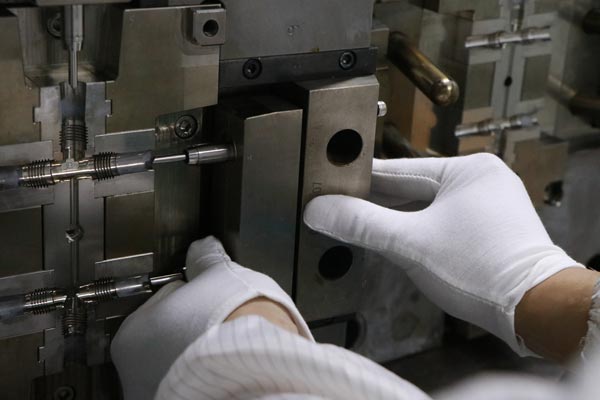
Cleaning: After each production run, remove residual material using non-abrasive brushes and solvent-based cleaners compatible with carbide surfaces. Avoid steel wool, wire brushes, or acidic agents that may etch or contaminate the substrate.
Inspection: Conduct visual and dimensional checks using optical comparators or profilometers to detect early signs of wear, such as surface roughness (Ra > 0.4 μm), taper, or out-of-roundness. Document findings in a digital maintenance log.
Lubrication: Apply high-performance, non-reactive lubricants—such as molybdenum disulfide-based compounds—to contact zones during operation. Re-lubricate at intervals aligned with material abrasiveness and cycle frequency.
Storage: Store dies in climate-controlled environments (40–60% RH) with desiccants and protective caps. Use padded, labeled storage racks to prevent impact damage and cross-contamination.
Recommended Maintenance Schedule
Daily: Wipe down die surfaces post-operation; verify lubricant levels and absence of debris.
Weekly: Perform detailed visual inspection; measure critical bore dimensions if production exceeds 5,000 cycles.
Monthly: Conduct full surface profiling and replace worn inserts or liners. Calibrate measurement tools used for inspection.
Quarterly: Engage certified service providers for professional regrinding and coating rejuvenation (e.g., TiN or DLC coatings) to restore original tolerances.
Event-Based: Increase frequency when processing abrasive materials (e.g., carbon steel, ceramics) or operating above 200°C ambient temperatures.
Implementing a Sustainable Maintenance Program
Standardize Protocols: Develop a die-specific maintenance manual aligned with OEM recommendations and internal quality audits. Assign clear ownership for each task.
Train Personnel: Certify maintenance staff in carbide handling, metrology, and failure mode analysis. Integrate training into onboarding and annual competency reviews.
Leverage Digital Tracking: Utilize CMMS (Computerized Maintenance Management Systems) to log inspections, track wear trends, and trigger predictive replacement alerts based on cycle counts and performance decay curves.
FAQ
Q1: Can tungsten carbide dies be repaired, or must they always be replaced?
A: Minor surface wear can be restored through precision regrinding and recoating. However, if bore distortion exceeds manufacturer tolerances or micro-cracks penetrate the substrate, replacement is required to avoid catastrophic failure during operation.
Q2: How does improper lubrication affect tungsten carbide die performance?
A: Inadequate lubrication increases friction, accelerating abrasive wear and generating localized heat that can induce thermal cracking. Residue buildup also interferes with material flow, leading to inconsistent part dimensions and increased rejection rates.
Q3: Why is maintenance frequency higher for manufacturers in Dongguan compared to other regions?
A: Dongguan’s high-density manufacturing environment often involves extended shift operations, aggressive production targets, and exposure to humid coastal conditions. These factors accelerate oxidation and particulate contamination, necessitating more frequent inspections and cleaning cycles to maintain ISO compliance and yield targets.
Articles connexes
- Manufacturing Process of Tungsten Carbide Dies
- Selecting Optimal Wear-Resistant Coatings for Tungsten Carbide Dies
- Professional Business-Style English Revision: Fundamental Principles and Applications of Tungsten Carbide Dies
- Performance Stability Management Strategy for Tungsten Carbide Dies Under High-Load Conditions



 English
  Deutsch
  Français
  日本語
日本語  한국어
한국어  Español
  Português
  Italiano
  Nederlands
  Русский
  Bahasa Indonesia
  العربية