

What Core Content Is Covered by Tungsten Carbide Die Customization Services
1. Introduction Tungsten carbide dies occupy an irreplaceable core position in high-end manufacturing, thanks to their high hardness, excellent wear resistance, outstanding thermal stability, and corrosion resistance. As the manufacturing […]
1. Introduction
Tungsten carbide dies occupy an irreplaceable core position in high-end manufacturing, thanks to their high hardness, excellent wear resistance, outstanding thermal stability, and corrosion resistance. As the manufacturing industry continues to evolve toward higher precision and greater efficiency, customers are placing increasingly demanding requirements on dies in terms of accuracy, durability, and personalized adaptability. Against this backdrop, tungsten carbide die customization services have become a critical bridge connecting design requirements with mass production execution. This article systematically outlines the complete content framework of tungsten carbide die customization services and provides an in-depth analysis of key considerations throughout the customization process.
2. Overview of Tungsten Carbide Die Customization Services
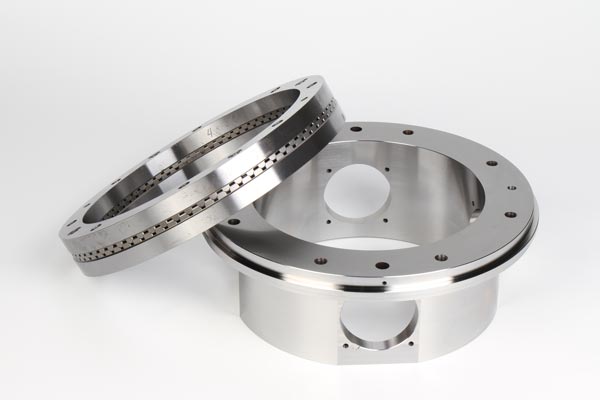
Tungsten carbide die customization services refer to the end-to-end process of tailoring tungsten carbide dies according to the specific product characteristics, technical parameters, and production scenarios of each customer. This service spans all core stages, including die design, material selection, precision machining, quality verification, and post-delivery maintenance, with the objective of delivering high-quality, high-efficiency die solutions through a professional and systematic service model.
Notre activité : pièces en carbure, pièces de moule, moules d'injection médicale, moules d'injection de précision, moulage par injection de téflon PFA, raccords de tubes PFA. email : [email protected],whatsapp:+8613302615729.
3. Core Content of Tungsten Carbide Die Customization Services
3.1 Die Design
Die design is the starting point of the customization service and the most critical phase that determines the final product quality. A professional design team must develop a scientifically sound die design scheme based on product drawings, technical specifications, and mass production requirements provided by the customer. During the design process, a comprehensive evaluation of the product’s geometric shape, dimensional accuracy, and surface quality requirements must be conducted, while simultaneously considering die structural rationality, material suitability, and heat treatment feasibility, ensuring that the design is executable from both technical and production perspectives.
3.2 Material Selection
Material selection directly determines the overall performance and service life of the die. In the customization service, the supplier will recommend the appropriate tungsten carbide material grade based on the customer’s product characteristics, production conditions, and performance requirements. Key performance parameters such as hardness, wear resistance, toughness, and thermal stability must all be carefully considered. At the same time, material cost and machining difficulty must also be factored in to achieve the optimal balance between performance and economy.
3.3 Precision Machining and Manufacturing
Precision machining is the core execution phase of the customization service. The supplier must carry out precision machining and assembly strictly in accordance with the design scheme, ensuring that the dimensional accuracy and surface quality of the die fully meet the specified requirements. In addition, post-process treatments such as heat treatment and precision grinding must be performed to further enhance the die’s hardness and wear resistance. Throughout the manufacturing process, strict process control and quality standards must be enforced to ensure that every die meets delivery specifications.
3.4 Quality Inspection
Quality inspection is a critical line of defense for guaranteeing the delivered quality of tungsten carbide dies. After machining is complete, the supplier must conduct a comprehensive quality inspection of the die, covering dimensional accuracy, surface quality, hardness, wear resistance, and other core parameters. Through systematic inspection, potential defects can be identified and rectified in a timely manner, ensuring that die performance fully complies with technical specifications. Moreover, thorough inspection reports also provide customers with reliable quality assurance, effectively enhancing cooperation trust.
3.5 Post-Delivery Maintenance
Post-delivery maintenance is an important extension of the customization service value. During long-term use, dies may experience performance degradation or failure due to wear, micro-deformation, and other factors. The supplier must provide customers with timely and professional repair and maintenance services to ensure the continuous and stable operation of the dies. Maintenance activities include die cleaning, damage repair, and precision adjustment, all of which must be handled with targeted solutions based on the actual operating condition of the die.
4. Key Considerations for Tungsten Carbide Die Customization Services
Thorough Requirement Communication
Before initiating the tungsten carbide die customization service, the customer should engage in in-depth communication with the supplier to clearly define requirements and expectations, including technical specifications such as product shape, dimensions, accuracy, and surface quality, as well as operational information such as the die’s working environment, production cycle, and mass production scale. The more thoroughly the customer’s needs are understood, the higher the alignment between the design scheme and the manufacturing plan.
Selecting a Professional Supplier
The professional capability of the supplier is the fundamental guarantee of die quality. Customers should prioritize suppliers with rich industry experience and mature technical systems, focusing on their design capability, machining equipment, inspection methods, and delivery track record. At the same time, service responsiveness, delivery lead times, and after-sales support systems are also important evaluation dimensions.
Strict Quality Control
Throughout the customization process, the customer should establish clear quality acceptance standards. From design review and machining process monitoring to final product inspection, every stage must be executed in accordance with industry norms and contractual agreements. It is recommended that customers conduct on-site assessments of the supplier’s core equipment and technical team to ensure they possess the comprehensive capability to consistently deliver high-quality tungsten carbide dies.
Emphasizing Post-Delivery Maintenance
After the die is put into production, regular cleaning, inspection, and maintenance are effective means of extending service life and reducing repair costs. Customers should establish a long-term maintenance collaboration mechanism with the supplier and also acquire basic die care knowledge and techniques to better protect and utilize the die.
5. Conclusion
Tungsten carbide die customization services are a systematic engineering effort covering die design, material selection, precision machining, quality inspection, and post-delivery maintenance. Through thorough requirement communication, professional supplier selection, full-process quality control, and sustained post-delivery maintenance, enterprises can ensure that tungsten carbide dies fully meet requirements in terms of precision, durability, and production efficiency, thereby securing a competitive advantage in the market.
Frequently Asked Questions (FAQ)
Q: What is the typical lead time for tungsten carbide die customization?
A: The customization lead time depends on the complexity and size of the die. Simple dies typically require three to four weeks, moderately complex dies approximately six to eight weeks, and high-precision or large-scale dies may require ten weeks or more. It is recommended to confirm detailed milestones with the supplier at the project kickoff stage.
Q: How can I evaluate whether a tungsten carbide die supplier is professional?
A: Assessment can be conducted across the following dimensions: whether the supplier has independent design capability, whether their machining equipment covers precision grinding and wire EDM, whether they possess a comprehensive quality inspection system, whether they offer systematic after-sales maintenance plans, and what their past project portfolio and customer reputation look like.
Q: What is the typical service life of a tungsten carbide die?
A: Under normal usage and with regular maintenance, tungsten carbide dies can achieve service lives ranging from several hundred thousand to over one million stamping or injection cycles. The specific lifespan depends on multiple factors, including material grade, product structure, production rhythm, and maintenance standards.
Q: How can costs be effectively controlled during the customization process?
A: The key to cost control lies in precise requirement definition at the early stage and rational material selection. Avoid over-design, choose materials that match performance needs rather than blindly pursuing high-specification options, and establish long-term partnerships with suppliers to secure more favorable pricing and service support.


 English
  Deutsch
  Français
  日本語
日本語  한국어
한국어  Español
  Português
  Italiano
  Nederlands
  Русский
  Bahasa Indonesia
  العربية