
Why Heat Treatment Matters for Tungsten Carbide Dies
Tungsten carbide dies are essential in high-wear manufacturing environments. Their hardness and durability make them ideal for precision forming. But their full potential only emerges after proper heat treatment. The […]
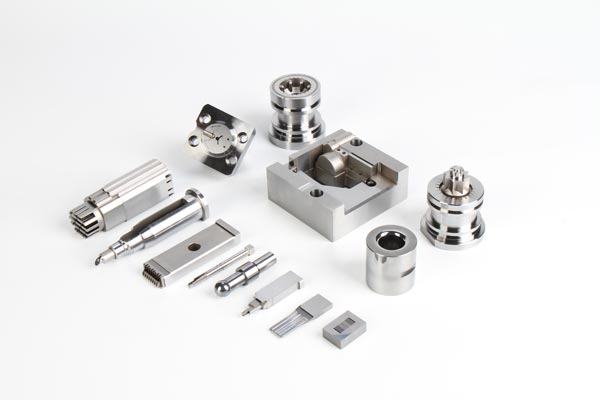
Tungsten carbide dies are essential in high-wear manufacturing environments. Their hardness and durability make them ideal for precision forming. But their full potential only emerges after proper heat treatment.
The Value of Heat Treatment
Heat treatment transforms raw tungsten carbide dies into high-performance tools. It removes internal stress from sintering. It increases surface hardness without sacrificing toughness. It improves resistance to thermal deformation under pressure. This leads to longer service life and consistent part quality.
Notre activité : pièces en carbure, pièces de moule, moules d'injection médicale, moules d'injection de précision, moulage par injection de téflon PFA, raccords de tubes PFA. email : [email protected],whatsapp:+8613302615729.
Key Heat Treatment Steps
Recuit
Heat the die to 800–900°C. Hold for several hours. Cool slowly in the furnace. This softens the material. It prepares the die for further processing.
Trempe
Heat the die above its critical temperature. Rapidly cool it in oil or salt bath. This forms a hard martensitic structure. It boosts wear resistance significantly.
Tempering
Reheat the quenched die to 150–650°C. Hold for 1–4 hours. Cool in air. This reduces brittleness. It balances hardness with impact resistance.
Each step must be controlled precisely. Temperature, time, and cooling rate determine final performance.
Why Choose Yize Mould?
Yize Mould, based in Dongguan, China, specializes in heat-treated tungsten carbide dies. We control every stage—from material sourcing to final inspection. Our processes follow ISO 9001 standards. We provide batch traceability for every die. We tailor heat treatment cycles to your specific alloy and application. Our team supports custom geometries and tight tolerances. We deliver dies ready for immediate production use.
FAQ (Frequently Asked Questions)
Q1: How do I know if a tungsten carbide die has been properly heat treated?
A: Check for consistent hardness across the surface. Request a material certification. Verify that the supplier uses controlled furnace environments and post-treatment inspection.
Q2: Can heat treatment fix cracks or defects in a raw die?
A: No. Heat treatment enhances properties but cannot repair structural flaws. Always start with defect-free blanks.
Q3: What is the typical lead time for custom heat-treated dies?
A: Standard heat treatment takes 5–7 working days. Complex geometries or special alloys may require 10–14 days. We provide timelines upfront.
Articles connexes
- Applications and Advantages of Tungsten Carbide Dies in Manufacturing
- Tungsten Carbide Die Performance in High-Stress Environments
- Avoiding Damage Risks in Tungsten Carbide Die Operation – Yize Mould
- What Environmental Standards Apply to Tungsten Carbide Molds? — A Professional Guide for Dongguan Manufacturers



 English
  Deutsch
  Français
  日本語
日本語  한국어
한국어  Español
  Português
  Italiano
  Nederlands
  Русский
  Bahasa Indonesia
  العربية