

Effective Strategies for Eliminating Stress in Tungsten Carbide Dies
In the die manufacturing sector, tungsten carbide dies are long established at the core of high-end applications, valued for their exceptional hardness, high strength, outstanding wear resistance, and corrosion resistance. […]
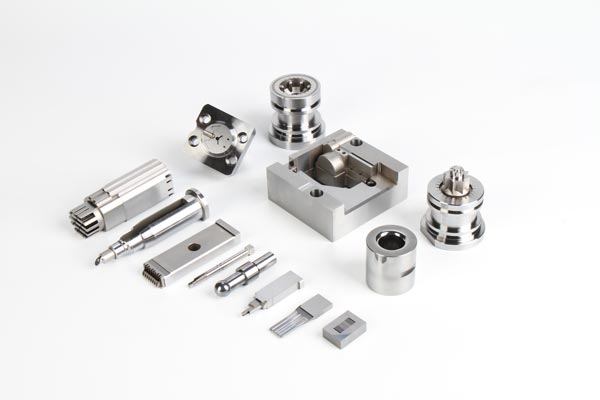
In the die manufacturing sector, tungsten carbide dies are long established at the core of high-end applications, valued for their exceptional hardness, high strength, outstanding wear resistance, and corrosion resistance. However, throughout the manufacturing and service lifecycle, tungsten carbide dies inevitably develop internal stresses due to a range of influencing factors. These stresses not only compromise dimensional accuracy and shape stability, but may also trigger cracking, deformation, and other critical failures, directly shortening die service life and degrading product quality. Therefore, the systematic and effective elimination of internal stress in tungsten carbide dies is a core prerequisite for ensuring die quality and extending operational lifespan. This article provides an in-depth analysis from three dimensions: stress origins, detection methods, and elimination strategies.
1. Origins of Stress in Tungsten Carbide Dies
The sources of internal stress in tungsten carbide dies are diverse and can be categorized into three primary stages:
O nosso negócio de fábrica: peças de metal duro, peças de molde, moldes de injeção médica, moldes de injeção de precisão, moldagem por injeção de teflon PFA, acessórios para tubos PFA. e-mail: [email protected],whatsapp:+8613302615729.
Stress generated during heat treatment. Tungsten carbide dies undergo multiple heat treatment processes during manufacturing, including sintering, quenching, and tempering. Significant temperature gradients form within the material during these processes, producing thermal stress. Simultaneously, the phase transformation of the material’s internal structure during quenching generates additional transformation stress. Together, these two types constitute the primary components of heat treatment residual stress.
Stress generated during machining. During machining operations such as cutting and grinding, the cutting forces and grinding forces exerted by the tooling induce mechanical stress within the material. Upon completion of machining, this stress does not fully dissipate but remains trapped inside the material as residual stress, becoming a latent risk during subsequent service.
Stress generated during service. During actual operation, tungsten carbide dies are continuously subjected to load and temperature variations, producing working stress. When the working stress exceeds the yield strength of the material, plastic deformation occurs, causing the internal stress to redistribute and further intensifying the risk of stress concentration.
2. Detection Methods for Stress in Tungsten Carbide Dies
Accurately understanding the internal stress distribution within a tungsten carbide die is a prerequisite for formulating an effective elimination plan. The following four detection methods are most commonly used in the industry:
X-ray diffraction method. This method infers the presence and magnitude of stress by measuring changes in the material’s internal lattice spacing. It offers high precision and strong reliability, though the equipment cost is relatively high.
Magnetic measurement method. This method detects stress by leveraging changes in the material’s magnetization characteristics within a magnetic field. It is simple to operate but is significantly affected by the magnetic properties of the material, limiting its applicability.
Ultrasonic method. This method detects stress based on changes in the propagation speed and direction of ultrasonic waves within the material. It applies to a wide range of materials and offers high sensitivity.
Blind hole method. A small hole is drilled into the material surface, and the strain released around the hole is measured to infer the magnitude and direction of the stress. This method is simple and low-cost but causes a certain degree of damage to the material surface.
3. Stress Elimination Methods for Tungsten Carbide Dies
Based on the stress origins and detection methods outlined above, the following five systematic measures can be adopted to effectively eliminate internal stress in tungsten carbide dies:
Optimize heat treatment process parameters. Fine-tune critical parameters such as heating rate, holding time, and cooling rate to reduce thermal stress and transformation stress generated during heat treatment. Concurrently, applying an appropriate tempering process can effectively release residual stress within the material.
Improve machining approaches. Adopt reasonable cutting parameters and tool geometries to minimize the impact of cutting and grinding forces on internal stress. In terms of machining sequence, following the principle of rough machining before finish machining and surface machining before hole machining can further control the accumulation of machining-induced residual stress.
Apply external forces to balance stress. For tungsten carbide dies that already contain residual stress, external intervention can be used to redistribute and balance the internal stress. Vibratory stress relief applies vibration at a specific frequency and amplitude to the die, enabling the internal stress to redistribute naturally until equilibrium is reached. Thermal stress relief heats the die to a set temperature and holds it for a defined period, allowing stress to be fully released. Each method has its own applicable scenarios and can be selected flexibly based on die size and stress conditions.
Adopt advanced processing technologies. As processing technology continues to evolve, advanced techniques such as laser machining and electron beam machining are increasingly being applied to tungsten carbide die manufacturing. These technologies feature high precision, high efficiency, and low thermal impact, effectively reducing stress introduced during the manufacturing process.
Plan usage and maintenance rationally. In production scheduling, avoid prolonged exposure of tungsten carbide dies to extreme conditions such as high temperature and high pressure. Establish a regular inspection and maintenance regimen to promptly identify and address surface cracks, wear, and other early-stage defects, preventing localized damage from triggering stress deterioration.
4. Conclusion
The effective elimination of internal stress in tungsten carbide dies is a critical factor in ensuring die precision and extending service life. Through heat treatment optimization, machining improvement, external stress relief, adoption of advanced technologies, and rational usage and maintenance management, internal stress can be systematically reduced or even eliminated, significantly enhancing the overall performance and operational stability of the die. Equally important is the selection of an appropriate stress detection method to continuously monitor the internal stress state, providing reliable data support for full lifecycle die management.


 English
  Deutsch
  Français
  日本語
日本語  한국어
한국어  Español
  Português
  Italiano
  Nederlands
  Русский
  Bahasa Indonesia
  العربية