

Analysis of the Optimal Cooling Method for Tungsten Carbide Dies
In the precision machining field of the manufacturing industry, tungsten carbide dies hold an indispensable position in key processes such as die-casting, injection molding, and stamping due to their excellent […]
In the precision machining field of the manufacturing industry, tungsten carbide dies hold an indispensable position in key processes such as die-casting, injection molding, and stamping due to their excellent characteristics of high hardness, high strength, wear resistance, and corrosion resistance. However, the dies will inevitably heat up during continuous use. If they are not cooled in a timely and effective manner, serious problems such as die deformation and cracking are likely to occur, which will have a negative impact on product quality and production efficiency. Therefore, selecting the optimal cooling method is of crucial importance for ensuring the normal operation of tungsten carbide dies and improving production benefits. This article will conduct an in-depth analysis of the optimal cooling method for tungsten carbide dies and comprehensively compare the advantages and disadvantages of different cooling methods, aiming to provide valuable references for the manufacturing industry.
The Importance of Cooling Methods for Tungsten Carbide Dies
After being put into use, tungsten carbide dies will experience a rapid temperature rise due to the unique thermal conductivity and plastic deformation characteristics of metal materials. If cooling is not carried out in a timely manner, thermal stress will inevitably be generated inside the dies. Once this thermal stress accumulates to a certain extent, it will lead to die deformation, cracking, and other failures, seriously affecting the service life of the dies. In addition, excessively high die temperatures will also have various adverse effects on product quality, such as causing bubbles and shrinkage cavities on the product surface, reducing the overall quality of the products. It can be seen that selecting an appropriate cooling method is of great significance for ensuring the normal operation of tungsten carbide dies, improving product quality, and guaranteeing production efficiency.
Наш завод занимается: твердосплавные детали, детали пресс-форм, медицинские пресс-формы для литья под давлением, прецизионные пресс-формы для литья под давлением, литье тефлона PFA, фитинги для труб PFA. e-mail: [email protected],whatsapp:+8613302615729.
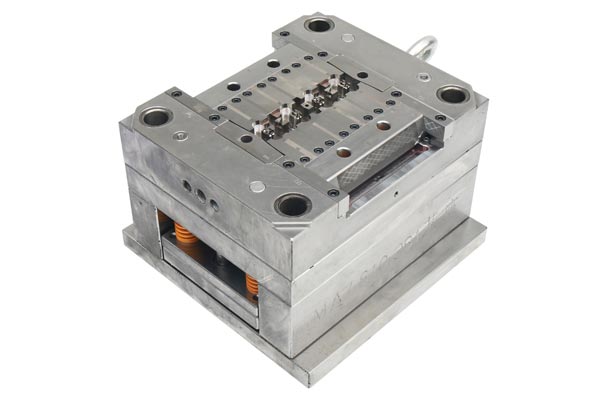
Cooling Methods for Tungsten Carbide Dies
Water Cooling
Water cooling is a widely used cooling method with outstanding advantages such as fast cooling speed and excellent heat dissipation effect. By precisely spraying water onto the interior or exterior of the die, the temperature of the die can be rapidly reduced to meet the requirements of efficient production. However, the water cooling method also has some significant drawbacks. For example, during long-term use, water is prone to forming scale on the die surface, which affects the heat dissipation efficiency of the die. At the same time, water may also cause corrosion to the die surface, shortening the service life of the die. In addition, during the cooling process, if the water flow rate and water temperature are not precisely controlled, it may lead to uneven temperature distribution in the die, thereby generating thermal stress and causing damage to the die.
Oil Cooling
Oil cooling is another common cooling method. It works by injecting circulating oil into the interior or exterior of the die and using the flow of the oil to carry away the heat generated by the die, thus achieving the cooling purpose. Compared with water cooling, oil cooling has better thermal conductivity and can more efficiently transfer heat. At the same time, oil has lower corrosivity and can better protect the die surface, extending the service life of the die. However, the oil cooling method also has some disadvantages. The cost of oil is relatively high, increasing the production cost of enterprises. Moreover, during long-term use, oil is prone to forming sludge, which affects the cooling effect. In addition, the cooling speed of oil cooling is relatively slow, and it may not be able to meet the cooling requirements in some high-temperature working conditions on time.
Air Cooling
Air cooling is a cooling method that uses compressed air. By blowing compressed air onto the die surface, the heat on the die surface can be carried away, thus achieving die cooling. The air cooling method has significant advantages such as uniform cooling and no corrosivity, making it especially suitable for occasions with high requirements for the die surface quality. For example, in some precision machining processes, air cooling can effectively avoid surface defects on the die caused by uneven cooling and ensure product quality. However, the air cooling method also has some limitations. Its cooling speed is relatively slow, and it may be difficult to achieve the ideal cooling effect for rapid cooling requirements in some high-temperature working conditions. In addition, the cost of air cooling equipment is relatively high, and it requires the configuration of a compressed air source and corresponding pipeline systems, increasing the equipment investment and operating costs of enterprises.
Spray Cooling
Spray cooling is a newly developed efficient cooling method in recent years. It achieves rapid cooling by atomizing the cooling liquid and evenly spraying it onto the die surface. Due to the large contact area between the droplets and the die surface and high heat transfer efficiency, spray cooling has the advantages of fast cooling speed, excellent heat dissipation effect, and no corrosivity. It is suitable for dies of various complex shapes. Whether it is a die with a fine structure or an irregularly shaped die, spray cooling can achieve uniform cooling and ensure that all parts of the die are effectively cooled. However, the spray cooling method also has some issues that need to be addressed. The cost of spray cooling equipment is relatively high, increasing the initial investment of enterprises. Moreover, the cooling liquid needs to be replaced regularly, which to a certain extent increases the operating costs and maintenance workload of enterprises.
How to Select the Optimal Cooling Method
When selecting the optimal cooling method for tungsten carbide dies, the following key factors need to be comprehensively considered:
Die Material and Shape
Dies of different materials and shapes have different requirements for cooling methods. For example, for dies with complex shapes, since the heat dissipation conditions of different parts are different, the spray cooling method can ensure uniform cooling and avoid die damage caused by local overheating or overcooling. For large dies, due to their large volume and significant heat accumulation, the water cooling or oil cooling method can improve the cooling efficiency and rapidly reduce the die temperature.
Production Process Requirements
Different production processes have different requirements for die temperature. In the die-casting process, it is necessary to strictly control the die temperature to ensure the quality and performance of the castings. If the die temperature is too high, it may lead to defects such as porosity and shrinkage in the castings. If the die temperature is too low, it will affect the fluidity of the molten metal and make it difficult for the castings to be formed. In the injection molding process, the control of die temperature plays a crucial role in the fluidity and curing speed of plastics. By adjusting the die temperature, the filling effect of plastics can be optimized, and the surface quality of products can be improved. Therefore, when selecting the cooling method, it is necessary to fully consider the specific requirements of the production process for die temperature.
Cost Factors
The equipment and operating costs required for different cooling methods vary greatly. When selecting the optimal cooling method, enterprises need to comprehensively consider factors such as equipment purchase cost, operating cost, and maintenance cost. For example, the purchase cost of water cooling equipment is relatively low, but the cost of water treatment and die corrosion prevention during operation needs to be considered. The cost of oil cooling equipment is relatively high, but it can better protect the die surface and extend the service life of the die. The cost of air cooling equipment is relatively high, but it is suitable for occasions with high requirements for die surface quality. The cost of spray cooling equipment is the highest, but it has the advantages of fast cooling speed and excellent heat dissipation effect. Enterprises should choose the most cost-effective cooling method according to their own economic strength and production needs.
Taking all the above factors into consideration, we can draw the following conclusions:
For large tungsten carbide dies with simple shapes, water cooling or oil cooling methods are relatively suitable choices. Water cooling has the advantages of fast cooling speed and excellent heat dissipation effect, which can meet the rapid cooling requirements of large dies. However, attention should be paid to the problems of scale and corrosion, and the dies should be cleaned and maintained regularly. Oil cooling has better thermal conductivity and lower corrosivity, which can better protect the die surface, but its cost is relatively high. Enterprises can make a trade-off according to their specific production needs and cost budgets.
For small tungsten carbide dies with complex shapes, the spray cooling method has significant advantages. Spray cooling can rapidly and uniformly reduce the die temperature and is suitable for dies of various complex shapes, ensuring that all parts of the die are effectively cooled. However, the cost of spray cooling equipment is relatively high, and enterprises need to comprehensively consider cost factors to ensure that costs are reasonably controlled while meeting production needs.
In addition, in some special occasions, such as high-temperature working conditions or occasions with high requirements for die surface quality, the air cooling method can be used as an alternative. Air cooling has the advantages of uniform cooling and no corrosivity, which can meet the cooling requirements in special occasions. However, its cooling speed is relatively slow and the equipment cost is relatively high. Enterprises should evaluate and make decisions according to the actual situation when selecting.
In conclusion, when selecting the optimal cooling method for tungsten carbide dies, it is necessary to comprehensively and systematically consider factors such as die material, shape, production process requirements, and cost factors. Through scientific and reasonable selection, the normal use of tungsten carbide dies can be ensured, product quality and production efficiency can be improved, and greater economic benefits can be created for enterprises.
FAQ
Q: If the water cooling method is adopted, how can the problems of scale and corrosion be effectively solved?
A: To solve the scale problem, water treatment equipment can be installed to soften the cooling water, reduce the content of calcium and magnesium ions in the water, and minimize scale formation. For the corrosion problem, die materials with strong corrosion resistance can be selected, or surface coating treatments such as chromium plating and nickel plating can be carried out on the die surface to improve the corrosion resistance of the die. At the same time, the dies should be cleaned and maintained regularly to remove scale and impurities in a timely manner.
Q: How to deal with the sludge produced by the oil cooling method?
A: The cooling oil can be replaced regularly to reduce sludge accumulation. At the same time, oil filtration equipment can be installed to filter the cooling oil and remove impurities and sludge in it, keeping the cooling oil clean. In addition, sludge dispersants can be added to prevent sludge formation and sedimentation.
Q: What are the requirements for the selection of cooling liquid for spray cooling?
A: The cooling liquid for spray cooling should have good cooling performance, heat transfer performance, and stability. At the same time, it should be non-corrosive and environmentally friendly to avoid causing damage to the die and the environment. In addition, parameters such as the viscosity and boiling point of the cooling liquid should also be selected according to the specific production process and die requirements.
Q: The cooling effect of the air cooling method is not good in high-temperature working conditions. What improvement measures can be taken?
A: The flow rate and pressure of the compressed air can be increased to improve the cooling capacity of air cooling. At the same time, the design of the compressed air nozzles can be optimized to ensure that the compressed air is evenly blown onto the die surface and improve the cooling efficiency. In addition, a hybrid cooling method can be adopted, such as combining air cooling with water cooling or oil cooling, to meet the cooling requirements in high-temperature working conditions.
Related Posts
- New Technologies for Mold Temperature Control of Tungsten Carbide Dies
- What Safety Regulations Should Be Followed When Using Tungsten Carbide Dies
- How to Effectively Improve the Cutting Efficiency of Tungsten Carbide Dies
- Multidimensional Benefits of Wear-Resistant Coatings for Tungsten Carbide Dies




 English
  Deutsch
  Français
  日本語
日本語  한국어
한국어  Español
  Português
  Italiano
  Nederlands
  Русский
  Bahasa Indonesia
  العربية