

In-depth Analysis of Temperature Control Technology for Tungsten Carbide Dies
In the field of industrial manufacturing, die temperature control is a core factor that significantly impacts product quality and production efficiency. Especially for dies made of high-performance materials like tungsten […]
In the field of industrial manufacturing, die temperature control is a core factor that significantly impacts product quality and production efficiency. Especially for dies made of high-performance materials like tungsten carbide, the precise application of temperature control technology is of utmost importance. This article will comprehensively and in-depth analyze the temperature control technology for tungsten carbide dies, covering its principles, methods, and diverse applications in actual production.
I. The Key Significance of Tungsten Carbide Dies and Temperature Control
Tungsten carbide dies are widely used in various molding processes such as injection molding and die-casting due to their excellent high hardness, high wear resistance, and good thermal stability. However, these outstanding advantages also bring more stringent requirements for temperature control. Excessively high or low die temperatures can not only lead to a decline in product quality but also reduce production efficiency and even cause die damage. Therefore, precisely controlling the temperature of tungsten carbide dies has become a key factor in ensuring product quality and improving production efficiency.
Наш завод занимается: твердосплавные детали, детали пресс-форм, медицинские пресс-формы для литья под давлением, прецизионные пресс-формы для литья под давлением, литье тефлона PFA, фитинги для труб PFA. e-mail: [email protected],whatsapp:+8613302615729.
II. Multiple Factors Affecting Die Temperature
Before delving into temperature control technology, it is crucial to have a comprehensive understanding of the various factors that influence die temperature. These factors include, but are not limited to, the type and properties of the cooling medium, the cooling method, the type of injection molding machine, as well as the design of the gating system and the position of the gate. For example, water generally has a better cooling effect than oil or air when used as a cooling medium; and there are also differences in temperature control between screw-type injection molding machines and plunger-type injection molding machines. A deep understanding of these influencing factors helps us formulate more precise and effective temperature control strategies.
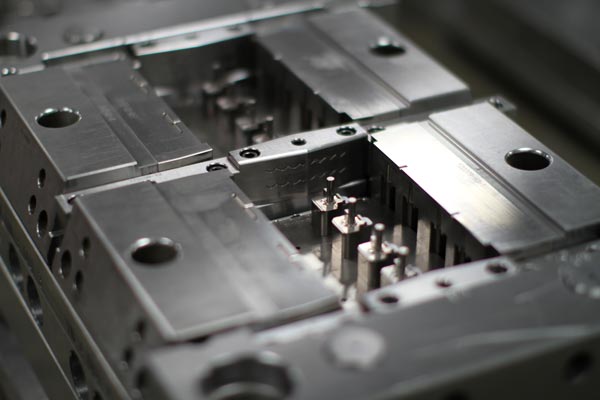
III. Detailed Description of Temperature Control Methods
Closed-loop Control System
The closed-loop control system is an efficient method for die temperature control. It can precisely set reasonable heating and cooling times according to process requirements, thereby ensuring that the products have excellent dimensional accuracy and surface quality. Although this system has a relatively complex structure and requires a higher initial cost investment, its high precision and stability have made it widely used in high-end manufacturing fields.
Thermocouple Temperature Measurement Method
The thermocouple temperature measurement method is a simple, direct, and practical way to measure die temperature. It cleverly utilizes the thermoelectric effect to directly convert heat into electrical energy, thus achieving indirect temperature measurement. Although this method may be slightly less accurate than the closed-loop control system, it is cost-effective and easy to operate, making it very suitable for small and medium-sized enterprises and laboratory environments.
Infrared Sensor Detection
Infrared sensor detection adopts a non-contact temperature measurement method. It determines the temperature by sensing the infrared radiation emitted by the object. This method does not require the installation of any temperature measurement elements on the die, which not only avoids damaging the die but also effectively prevents measurement errors caused by the thermal resistance between the temperature measurement element and the die.
Temperature Controller
The temperature controller integrates temperature measurement and control functions. Users can set appropriate programs to automatically control the heating and cooling processes. Temperature controllers usually feature high precision and high stability, and can also provide a variety of alarm and protection functions to ensure that the die always operates within a safe temperature range.
IV. Diverse Applications of Temperature Control Technology in Tungsten Carbide Dies
Preheating and Cooling
Before using a tungsten carbide die for production, it is usually necessary to preheat the die to ensure that the internal temperature is uniform and reaches the optimal working state. At the same time, continuous cooling of the die during the production process is also essential to prevent die damage or a decline in product quality due to high temperatures. By precisely controlling the temperature and time during the preheating and cooling processes, the service life of the die and product quality can be significantly improved.
Temperature Compensation and Adjustment
Tungsten carbide dies are subject to various factors during the production process, such as changes in ambient temperature and fluctuations in injection molding machine pressure. Therefore, real-time temperature compensation and adjustment of the die are required. With the help of temperature sensors and temperature control systems installed on the die, the die temperature can be monitored in real time and adjusted according to the actual situation, thus ensuring the stability and consistency of product quality.
Fault Diagnosis and Prevention
Temperature control technology also plays an important role in fault diagnosis and prevention. For example, when the temperature control system detects an abnormal increase or decrease in the die temperature, it can immediately issue an alarm signal and take corresponding protective measures, such as shutting down the machine for inspection or replacing damaged parts, effectively avoiding serious impacts on production caused by potential faults.
V. Заключение
The temperature control technology for tungsten carbide dies is one of the key factors in ensuring product quality and improving production efficiency. By thoroughly analyzing the factors affecting die temperature and mastering various temperature control methods, we can better cope with the challenges in the production process and enhance the overall competitiveness of enterprises. With the continuous advancement of technology and the advent of the Industry 4.0 era, we believe that temperature control technology will play an even more crucial role in the future, injecting a continuous stream of new vitality into the sustainable development of the manufacturing industry.
FAQ
Q1: What are the main advantages of the closed-loop control system in temperature control for tungsten carbide dies?
A1: The closed-loop control system has significant advantages. It can precisely set heating and cooling times according to process requirements, ensuring that products meet high standards in terms of dimensional accuracy and surface quality. Moreover, its high precision and stability enable it to effectively cope with complex production environments and are widely used in high-end manufacturing, greatly enhancing the controllability of the production process and the consistency of product quality.
Q2: What factors affect the accuracy of thermocouple temperature measurement when measuring the temperature of tungsten carbide dies?
A2: The accuracy of thermocouple temperature measurement is affected by multiple factors. Firstly, the material and performance of the thermocouple itself play a role. Different materials have different response sensitivities and accuracies to temperature. Secondly, the installation position and method also impact the measurement results. Improper installation or an incorrect position can lead to measurement errors. Additionally, external factors such as ambient temperature and electromagnetic interference may also affect the measurement accuracy to some extent.
Q3: How can the accuracy of infrared sensor detection be ensured when measuring the temperature of tungsten carbide dies?
A3: To ensure the accuracy of infrared sensor detection, several aspects need to be considered. First, select an infrared sensor with an appropriate wavelength to match the radiation characteristics of the tungsten carbide die. Second, keep the sensor and the die surface clean to avoid the influence of dust and oil on radiation transmission. Third, regularly calibrate the sensor to eliminate errors caused by long-term use or environmental changes. At the same time, set the measurement distance and angle reasonably to ensure accurate reception of the infrared radiation emitted by the die.
Q4: What are the specific functions of the alarm and protection features of the temperature controller in temperature control for tungsten carbide dies?
A4: The alarm and protection functions of the temperature controller are of great importance. When the die temperature exceeds the set safe range, the alarm function can immediately issue an alert, reminding operators to take measures to prevent the problem from worsening. The protection function can automatically take protective actions when the temperature is abnormal, such as shutting down the machine or cutting off the heating power supply, preventing die damage due to excessively high or low temperatures and ensuring production safety and equipment stability.
Q5: How can an appropriate temperature control method be selected for tungsten carbide dies according to different product requirements during production?
A5: Selecting an appropriate temperature control method requires comprehensive consideration of multiple factors. For high-end products with extremely strict requirements on dimensional accuracy and surface quality, the closed-loop control system is an ideal choice due to its high precision and stability. For small and medium-scale production with relatively low precision requirements and cost sensitivity, the thermocouple temperature measurement method combined with simple temperature control means can reduce costs. If the die structure is complex and it is inconvenient to install temperature measurement elements, infrared sensor detection is more suitable. And the temperature controller is applicable to production scenarios that require automated control and rich protection functions. Appropriate methods can be flexibly selected and combined according to specific product characteristics and production requirements.
Related Posts
- Key Points of Temperature Control Technology for Tungsten Carbide Dies
- Future Development Trends and Technological Innovation Points of Tungsten Carbide Die
- A Comprehensive Analysis of the Heat Treatment Process for Tungsten Carbide Dies
- How to Effectively Prevent the Sticking Phenomenon of Tungsten Carbide Dies

 English
  Deutsch
  Français
  日本語
日本語  한국어
한국어  Español
  Português
  Italiano
  Nederlands
  Русский
  Bahasa Indonesia
  العربية