
Performance Analysis of Tungsten Carbide Die in High-Intensity Working Environments
In the era of rapid development of modern industrial technology, the requirements for die materials in the manufacturing industry are becoming increasingly stringent. Tungsten carbide die, with its outstanding properties […]
In the era of rapid development of modern industrial technology, the requirements for die materials in the manufacturing industry are becoming increasingly stringent. Tungsten carbide die, with its outstanding properties such as high hardness, high strength, excellent wear resistance, and good corrosion resistance, occupies a pivotal position in the manufacturing field. Especially in high-intensity working environments, the performance of tungsten carbide die has become a focal point and attracted widespread attention. This article will conduct an in-depth and detailed exploration of the performance of tungsten carbide die in high-intensity working environments, aiming to provide valuable references for engineers and technicians in relevant fields.
I. Basic Characteristics of Tungsten Carbide Die
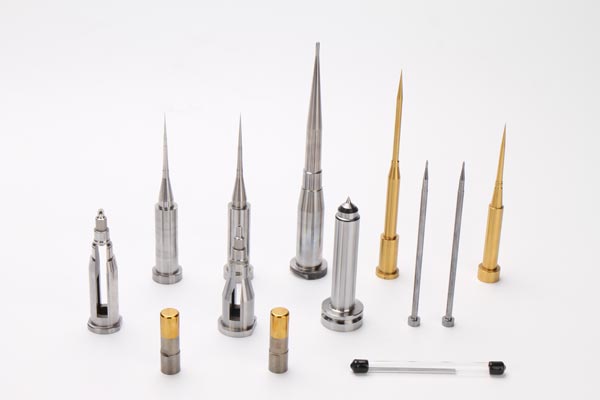
Tungsten carbide, also known as hard alloy, is a high-speed alloy steel with tungsten as the main alloying element. Tungsten, as a high-melting-point metal, endows its alloy with a series of remarkable characteristics, including high hardness, high strength, excellent wear resistance, and good corrosion resistance. These outstanding properties have led to the wide application of tungsten carbide die in the manufacturing industry, especially in fields that require withstanding extremely harsh working environments such as high intensity, high pressure, and high temperature, where tungsten carbide die demonstrates its irreplaceable advantages.
Наш завод занимается: твердосплавные детали, детали пресс-форм, медицинские пресс-формы для литья под давлением, прецизионные пресс-формы для литья под давлением, литье тефлона PFA, фитинги для труб PFA. e-mail: [email protected],whatsapp:+8613302615729.
II. Requirements for Tungsten Carbide Die in High-Intensity Working Environments
High-intensity working environments typically mean that the die has to withstand significant pressure, impact force, and frictional force during use, often accompanied by complex conditions such as high temperature and high-speed operation. In such harsh environments, the performance of the die faces tremendous challenges. It must possess good wear resistance to resist frequent friction and wear; excellent impact resistance to prevent deformation or damage when subjected to large impact forces; outstanding high-temperature resistance to maintain stable performance under high-temperature conditions; and high fatigue resistance to withstand long-term continuous operation without performance degradation.
III. Performance of Tungsten Carbide Die in High-Intensity Working Environments
1. Wear Resistance
In high-intensity working environments, the surface of the die is frequently subjected to friction and wear. Tungsten carbide die, with its high hardness and excellent wear resistance, can maintain a relatively long service life under such harsh conditions. Moreover, the wear resistance of tungsten carbide die is also reflected in its ability to effectively resist the wear caused by the processing of workpieces of different materials, thereby consistently maintaining the precision and stability of the die and providing a solid guarantee for high-quality production.
2. Impact Resistance
In high-intensity working scenarios, the die is inevitably subjected to large impact forces. Tungsten carbide die has high strength and good toughness, enabling it to strongly resist the influence of such impact forces and ensuring that it is not prone to deformation or damage when impacted. This excellent impact resistance makes tungsten carbide die an ideal choice for processes such as stamping and forging, where it performs exceptionally well.
3. High-Temperature Resistance
High-temperature environments have a significant impact on the performance of the die. Tungsten carbide die has good high-temperature resistance and can maintain relatively high hardness and strength under high-temperature conditions. This allows tungsten carbide die to continue to perform stably in high-temperature working environments, ensuring the smooth progress of the production process and avoiding production interruptions or quality issues caused by performance degradation of the die.
4. Fatigue Resistance
In high-intensity working environments, the die often needs to operate continuously for long periods. Tungsten carbide die has high fatigue resistance and can maintain stable performance during long-term continuous operation. This fatigue resistance gives tungsten carbide die a significant advantage in high-intensity working scenarios such as automated production lines, effectively improving production efficiency and reducing production costs.
IV. Factors Affecting the Performance of Tungsten Carbide Die
Although tungsten carbide die performs excellently in high-intensity working environments, its performance is still influenced by several factors. The following are some of the main influencing factors:
1. Tungsten Content
Tungsten, as the main alloying element of tungsten carbide, has a crucial impact on the performance of tungsten carbide. Generally speaking, the higher the tungsten content, the better the hardness and wear resistance of tungsten carbide. However, an excessively high tungsten content may lead to a decrease in the toughness of tungsten carbide, thereby affecting its impact resistance. Therefore, when determining the tungsten content, it is necessary to comprehensively consider the usage scenario and performance requirements of the die to achieve the best performance balance.
2. Alloying Elements
In addition to tungsten, tungsten carbide also contains other alloying elements such as cobalt and carbon. The content and proportion of these alloying elements have an important impact on the performance of tungsten carbide. For example, the addition of cobalt can improve the toughness and crack resistance of tungsten carbide, enhancing the reliability of the die in complex working environments; while carbon can improve the hardness and wear resistance of tungsten carbide, further extending the service life of the die. By reasonably adjusting the content and proportion of these alloying elements, the performance of tungsten carbide die can be optimized.
3. Heat Treatment Process
The heat treatment process has a profound impact on the performance of tungsten carbide. Through a reasonable heat treatment process, the microstructure and properties of tungsten carbide can be precisely adjusted to make it better adapt to high-intensity working environments. Different heat treatment processes, such as quenching and tempering, have different effects on the hardness, toughness, and wear resistance of tungsten carbide. Therefore, selecting an appropriate heat treatment process is crucial for improving the performance of tungsten carbide die.
4. Usage Conditions
Usage conditions are an important factor affecting the performance of tungsten carbide die. In high-intensity working environments, the die has to withstand significant pressure, impact force, frictional force, etc., often accompanied by complex conditions such as high temperature and high-speed operation. These conditions have varying degrees of impact on the performance of the die. For example, long-term high-temperature environments may lead to a decrease in the hardness of the die, while frequent impact forces may cause fatigue cracks in the die. Therefore, when using tungsten carbide die, it is necessary to fully consider the usage conditions and take corresponding measures to protect the die and extend its service life.
V. Заключение
In conclusion, tungsten carbide die demonstrates excellent performance in high-intensity working environments, possessing outstanding properties such as wear resistance, impact resistance, high-temperature resistance, and fatigue resistance. These remarkable properties have led to the wide application of tungsten carbide die in the manufacturing industry, especially in fields that require withstanding harsh working environments such as high intensity, high pressure, and high temperature, where it plays an irreplaceable role. However, the performance of tungsten carbide die is still influenced by factors such as tungsten content, alloying elements, heat treatment process, and usage conditions. Therefore, when selecting and using tungsten carbide die, it is essential to fully consider these factors and conduct scientific and reasonable selection and process design to ensure that the performance of the die is fully utilized. Meanwhile, with the continuous development of manufacturing technology, the performance requirements for tungsten carbide die will also continue to increase. In the future, research and development of tungsten carbide die will focus more on improving its performance stability and adaptability to meet increasingly complex and demanding working requirements and provide stronger support for the development of the manufacturing industry.
FAQ
1. How long can the wear resistance of tungsten carbide die last?
The duration of the wear resistance of tungsten carbide die is influenced by multiple factors, such as the severity of the working environment, the material of the processed workpiece, and the frequency of die use. Under normal working conditions, a reasonably selected and used tungsten carbide die can maintain wear resistance for a relatively long time, and the specific duration needs to be evaluated according to the actual situation.
2. How can I determine whether a tungsten carbide die is suitable for a specific impact-resistant scenario?
To determine whether a tungsten carbide die is suitable for a specific impact-resistant scenario, it is necessary to comprehensively consider factors such as the impact toughness index of the die, the magnitude and frequency of impact forces in the usage scenario, etc. Professional material testing and simulation experiments can be conducted to evaluate the performance of the die under expected impact conditions and thus determine its suitability.
3. What are the repair methods when the performance of a tungsten carbide die degrades in a high-temperature environment?
When the performance of a tungsten carbide die degrades in a high-temperature environment, the repair method depends on the specific situation. If only the surface performance degrades, surface treatment methods such as coating and carburizing can be considered; if the internal structure changes, heat treatment repair may be required, but it is necessary to pay attention to the selection of the heat treatment process to avoid further affecting the performance of the die.
4. How do different alloying elements affect the fatigue resistance of tungsten carbide die?
Different alloying elements have different effects on the fatigue resistance of tungsten carbide die. For example, cobalt can improve the toughness of tungsten carbide, reducing the generation of fatigue cracks; while some other elements may affect the crystal structure of tungsten carbide, having positive or negative effects on fatigue resistance. Reasonably adjusting the content and proportion of alloying elements can effectively improve the fatigue resistance of tungsten carbide die.




 English
  Deutsch
  Français
  日本語
日本語  한국어
한국어  Español
  Português
  Italiano
  Nederlands
  Русский
  Bahasa Indonesia
  العربية