
Polishing Techniques for Tungsten Carbide Dies: A Comprehensive Guide and Practical Manual
In the current booming manufacturing industry, tungsten carbide dies stand out among numerous die materials due to their high hardness, high strength, excellent wear resistance, and corrosion resistance, and are […]
In the current booming manufacturing industry, tungsten carbide dies stand out among numerous die materials due to their high hardness, high strength, excellent wear resistance, and corrosion resistance, and are widely applied in various production scenarios. However, the surface roughness of dies is like a double – edged sword, having a profound impact on the service life of dies and the quality of products. A rough die surface not only reduces the aesthetic appeal of products but may also lead to a series of quality issues, thus affecting the product’s market competitiveness. Therefore, polishing treatment, as a crucial link in enhancing the performance of tungsten carbide dies, is of great significance. This article will conduct an in – depth exploration of the polishing techniques for tungsten carbide dies, presenting a practical and comprehensive reference guide for relevant practitioners.
The Importance of Polishing Treatment
In the actual use of tungsten carbide dies, their surface quality serves as the “first business card” of products, directly determining the appearance and quality of products. A rough die surface is like a hidden “time bomb” in products, which is highly likely to cause flaws, scratches, and other problems on the product surface, greatly reducing the product’s aesthetic appeal and putting it at a disadvantage in the fierce market competition. Through well – executed polishing treatment, not only can the surface finish of dies be significantly improved, making the die surface as smooth as a mirror, but also the service life of dies can be effectively extended, reducing the production costs caused by frequent die replacement. At the same time, it can enhance product quality and help enterprises win more market share.
Наш завод занимается: твердосплавные детали, детали пресс-форм, медицинские пресс-формы для литья под давлением, прецизионные пресс-формы для литья под давлением, литье тефлона PFA, фитинги для труб PFA. e-mail: [email protected],whatsapp:+8613302615729.
Pre – polishing Preparations: Laying the Foundation for Successful Polishing
Sufficient preparations before polishing are the key to ensuring the polishing effect. First, a comprehensive “cleaning campaign” should be carried out on the die. Special cleaning agents or solvents should be used to thoroughly remove oil stains, impurities, and oxides on the die surface, ensuring that the die surface is clean and dust – free, providing a good foundation for subsequent polishing treatment. Second, the die should be inspected in detail, just like a doctor diagnosing a patient’s illness, to check for cracks, defects, and other problems. Once issues are found, they should be repaired in a timely manner to prevent the defects from expanding during the polishing process and affecting the overall quality of the die. Finally, appropriate polishing tools and polishing agents should be carefully selected according to the material and usage conditions of the die. Different die materials and polishing requirements require different combinations of tools and agents. Only by choosing the right “partners” can the ideal polishing effect be achieved.
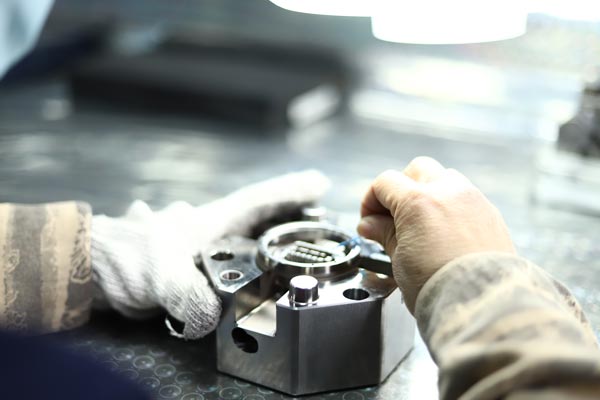
Polishing Techniques: Precise Control for Perfect Die Surfaces
Selecting the Right Tools for Enhanced Efficiency
The choice of polishing tools is an important factor affecting the polishing effect. For tungsten carbide dies, commonly used polishing tools include grinding wheels, abrasive belts, and polishing cloths, each with its own characteristics and suitable for different scenarios. When selecting polishing tools, factors such as the shape, size, and surface roughness of the die should be comprehensively considered. For example, for small dies or areas requiring fine polishing, polishing cloths act like delicate craftsmen, gently polishing the die surface to achieve a high level of finish. For large dies or situations where rapid removal of surface roughness is required, grinding wheels or abrasive belts are like strong workers, efficiently completing the polishing task and saving time and effort.
Choosing the Appropriate Agents for Optimal Results
The selection of polishing agents is also of crucial importance. Common polishing agents include aluminum oxide, silicon oxide, and silicon carbide, which play different roles in the polishing process. Generally, aluminum oxide polishing agents are suitable for rough and semi – fine polishing stages, as they can quickly remove larger flaws and rough parts on the die surface. Silicon oxide and silicon carbide polishing agents are more suitable for fine polishing stages, as they can further refine the die surface and achieve a mirror – like finish. In addition, the particle size of the polishing agent is also a key factor affecting the polishing effect. The finer the particle size, the higher the surface finish after polishing, but the polishing speed may be relatively slower. Therefore, in actual selection, the particle size of the polishing agent should be reasonably selected according to the specific situation of the die and the polishing requirements.
Employing the Correct Methods for Ideal Effects
The correct polishing method is the guarantee for obtaining the ideal polishing effect. During the polishing process, it is necessary to ensure uniform contact between the polishing tool and the die surface, just like giving the die surface a gentle massage, to avoid local overheating or excessive wear. At the same time, the amount of polishing agent and the polishing time should be strictly controlled. Excessive use of the polishing agent may lead to the residue of too many chemicals on the die surface, causing damage to the die. Excessive polishing time may cause excessive wear on the die surface, affecting the accuracy and service life of the die. In actual operation, the polishing parameters should be flexibly adjusted according to the specific situation of the die and the polishing requirements, and the most suitable polishing method should be found through continuous trial and optimization.
Post – polishing Treatment for a Perfect Finish
After polishing is completed, a comprehensive cleaning and inspection of the die are essential. During the cleaning process, special cleaning agents should be used to thoroughly remove the residual polishing agent and impurities, ensuring that the die surface is clean and free of pollution. At the same time, the die should be inspected in detail to check for situations such as insufficient polishing or excessive polishing. If insufficient polishing is found, supplementary polishing can be carried out in a timely manner. If excessive polishing is found, the causes should be analyzed and corresponding repair measures should be taken. In addition, to prevent the die surface from rusting or being contaminated by other substances, anti – rust treatment or the application of protective agents can be carried out on the die after polishing, providing a “protective coat” for the die and extending its service life.
Problem Solving: Dealing with Polishing Issues Head – on
During the polishing treatment process, problems such as poor polishing effect and scratches on the die surface are inevitable. The following solutions can be adopted for these problems:
Poor Polishing Effect: Precise Diagnosis and Targeted Solutions
When the polishing effect is not ideal, it may be caused by improper selection of polishing tools, insufficient amount of polishing agent, or insufficient polishing time. At this time, we should analyze the root cause of the problem like a doctor diagnosing an illness. If the polishing tool is improperly selected, replace it with a suitable one in a timely manner. If the amount of polishing agent is insufficient, increase it appropriately. If the polishing time is insufficient, extend the polishing time. By adjusting the polishing parameters or replacing appropriate polishing tools and polishing agents, the polishing effect can be gradually improved.
Scratches on the Die Surface: Prevention First and Careful Handling
The appearance of scratches on the die surface is a common problem, which may be caused by the presence of impurities on the surface of the polishing tool or severe wear of the polishing tool. To avoid this situation, the polishing tool should be regularly inspected and replaced to ensure that its surface is flat and free of impurities. At the same time, a stable operating technique should be maintained during the polishing process, avoiding sudden changes in the polishing direction or force, just like a skilled dancer performing gracefully on the stage with smooth movements. Through these measures, the occurrence of scratches on the die surface can be effectively reduced.
Conclusion: The Path of Polishing: Striving for Excellence
The polishing treatment of tungsten carbide dies is a meticulous and complex task, which is related to the surface quality and service life of dies and has a significant impact on product quality and market competitiveness. By selecting appropriate polishing tools and polishing agents, mastering the correct polishing methods, and paying attention to post – polishing treatment, we can achieve the ideal polishing effect. At the same time, adopting corresponding solutions for possible problems is also an important means to ensure polishing quality. It is hoped that the exploration in this article can provide some reference and help for relevant practitioners, enabling us to continuously explore and strive for excellence on the road of tungsten carbide die polishing and contribute to the development of the manufacturing industry.


 English
  Deutsch
  Français
  日本語
日本語  한국어
한국어  Español
  Português
  Italiano
  Nederlands
  Русский
  Bahasa Indonesia
  العربية