
Factors Influencing Tungsten Carbide Mold Pricing: A Professional Guide for Global Manufacturers
Raw Material Volatility: The Primary Cost DriverTungsten carbide molds derive over 60% of their cost from raw materials—tungsten powder and cobalt. Between 2025 and 2026, global tungsten powder prices surged […]
Raw Material Volatility: The Primary Cost Driver
Tungsten carbide molds derive over 60% of their cost from raw materials—tungsten powder and cobalt. Between 2025 and 2026, global tungsten powder prices surged by over 470%, driven by China’s mining quota restrictions, declining high-grade ore yields, and rising demand from aerospace and defense sectors. This structural shift has made material cost the most unpredictable variable in mold pricing, requiring long-term supply agreements and strategic inventory buffers.
Design Complexity and Engineering Precision
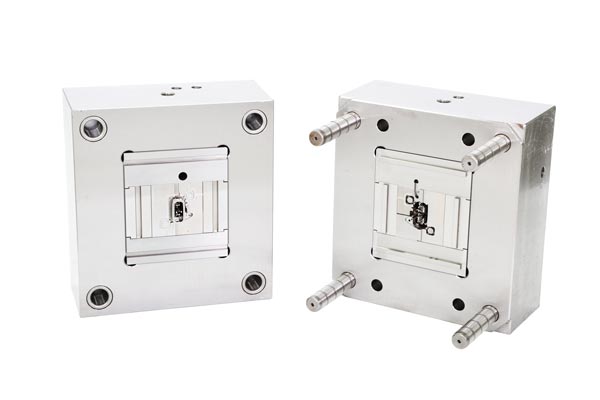
Molds with multi-cavity layouts, micro-features, or integrated cooling channels demand advanced CAD/CAE simulation and multi-axis CNC machining. Each additional design layer increases engineering hours by 20–40% and requires specialized tooling. Precision tolerances of ±0.001 mm, as maintained by Yize Mould, directly correlate with increased machining time and quality assurance costs.
Notre activité : pièces en carbure, pièces de moule, moules d'injection médicale, moules d'injection de précision, moulage par injection de téflon PFA, raccords de tubes PFA. email : [email protected],whatsapp:+8613302615729.
Size, Weight, and Logistics Constraints
Large-format molds (exceeding 500 kg) require heavy-duty forging, extended heat treatment cycles, and reinforced handling systems. Transportation of oversized molds to international clients—particularly to Europe and North America—adds 15–25% to total landed cost due to specialized crating, customs clearance, and inland freight.
Advanced Manufacturing Processes
The choice of process—whether vacuum sintering, hot isostatic pressing (HIP), or precision EDM—directly impacts hardness, density, and wear resistance. Yize Mould employs Japanese sintering furnaces and ISO 13485-compliant heat treatment protocols to achieve 60–62 HRC hardness with minimal distortion, extending mold life to 1–2 million cycles.
Accuracy, Longevity, and Total Cost of Ownership
High-precision molds reduce scrap rates and downtime. A mold with 0.002 mm coaxiality and Ra 0.025 surface finish may cost 30% more upfront but can reduce per-part cost by 18–22% over 1 million cycles. Yize Mould designs all molds for 1 million+ cycles, with full dimensional traceability and post-production validation reports.
Global Supply-Demand Dynamics
China produces over 80% of the world’s tungsten carbide, yet export demand from automotive, medical device, and electronics OEMs continues to outpace supply. This imbalance, compounded by geopolitical trade filters, has stabilized pricing at premium levels since Q4 2025. Competitive pricing now hinges on reliability, not discounting.
Technical Expertise as a Value Multiplier
Molds incorporating gas-assisted injection, overmolding, or multi-material integration require proprietary engineering knowledge. Yize Mould’s team, with over 15 years of experience serving Japanese and German OEMs, applies DIN and JIS standards to translate complex product requirements into manufacturable tooling—turning technical risk into predictable output.
Why Choose Yize Mould?
Dongguan Yize Mould Co., Ltd., established in 2005 and headquartered in Chang’an, Dongguan, specializes in high-precision tungsten carbide mold components for automotive, medical, and semiconductor industries. Certified under ISO 9001 and ISO 13485, we operate a Class 1,000 cleanroom facility with machining tolerances of ±0.001 mm and surface finishes down to Ra 0.025. Our global clients rely on us for consistent quality, on-time delivery, and full technical documentation—backed by 20+ years of export experience to the U.S., Germany, Japan, and beyond.
Frequently Asked Questions (FAQ)
Q1: What is your minimum order quantity (MOQ) for tungsten carbide mold components?
A: We accept orders as low as 1 piece for custom components. For standard inserts or wear parts, MOQ is 5–10 units, depending on geometry and material grade.
Q2: Do you use standardized mold components (e.g., DME, HASCO)?
A: Yes. We design to DME, HASCO, LKM, and PARKER standards unless otherwise specified. All standard components are sourced from certified suppliers with full material traceability.
Q3: What steel grades do you recommend for high-wear mold inserts?
A: For extreme abrasion resistance, we recommend YG8, YG15, or WC-10Co tungsten carbide grades. For corrosion resistance in medical applications, we use 440C stainless steel with nitride coating.
Q4: How do you ensure dimensional accuracy across large production batches?
A: Every mold component undergoes 100% inspection using Nikon CMM, laser scanners, and optical comparators. We provide a full dimensional report with each shipment, including GD&T analysis and surface roughness data.
Q5: What is your typical lead time for custom tungsten carbide molds?
A: Standard components: 10–14 days. Complex custom molds: 25–35 days, including design review, heat treatment, and final validation. Expedited options available upon request.
Q6: Do you offer post-sale technical support and spare parts?
A: Yes. We provide lifetime technical consultation, wear analysis reports, and replacement part kits. All critical components are stocked in our Dongguan warehouse for rapid global shipment.
 English
  Deutsch
  Français
  日本語
日本語  한국어
한국어  Español
  Português
  Italiano
  Nederlands
  Русский
  Bahasa Indonesia
  العربية