

Innovation and Development Trends of Tungsten Carbide Mold Technology
I. Introduction Tungsten carbide molds serve as indispensable tooling in modern manufacturing, where their technical capability and quality directly determine product precision, overall quality, and production efficiency. With continuous advancements […]
I. Introduction
Tungsten carbide molds serve as indispensable tooling in modern manufacturing, where their technical capability and quality directly determine product precision, overall quality, and production efficiency. With continuous advancements in technology and the rapid evolution of the manufacturing sector, tungsten carbide mold technology is undergoing constant innovation to meet increasingly complex production demands and intensifying market competition. This article explores the latest innovations and development trends in tungsten carbide mold technology, aiming to provide actionable reference for relevant enterprises and research professionals.
II. Innovations in Tungsten Carbide Mold Technology
Innovation matérielle
The mold material forms the foundation of mold performance. In recent years, breakthroughs in materials science have driven significant evolution in tungsten carbide mold materials. New-generation tungsten carbide compositions deliver superior hardness, wear resistance, and thermal stability, better fulfilling the demands of high-precision, high-efficiency, and long-lifecycle production. Furthermore, composite materials are increasingly being integrated into tungsten carbide mold manufacturing. By optimizing material combinations and synergistic performance, these composites further elevate the overall capability of the mold.
Notre activité : pièces en carbure, pièces de moule, moules d'injection médicale, moules d'injection de précision, moulage par injection de téflon PFA, raccords de tubes PFA. email : [email protected],whatsapp:+8613302615729.
Manufacturing Process Innovation
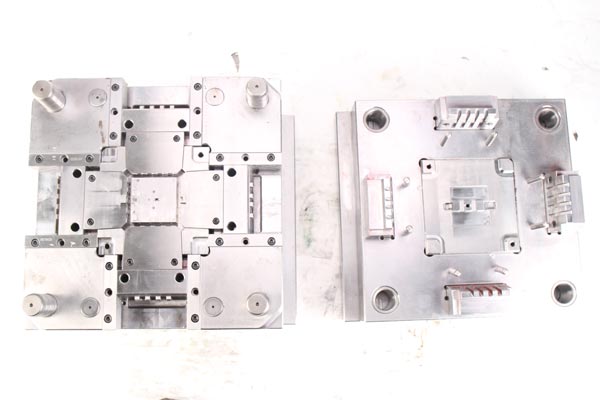
Manufacturing processes directly govern mold precision and surface quality. Conventional tungsten carbide mold production involves forging, heat treatment, and mechanical machining. However, the emergence of advanced technologies has expanded the process landscape. High-precision methods such as laser machining and electrical discharge machining have markedly improved both dimensional accuracy and surface finish. In addition, additive manufacturing (3D printing) has opened new pathways for rapid mold prototyping and short-run production.
Polishing Technology Innovation
Polishing is a critical stage in tungsten carbide mold fabrication, exerting a decisive influence on surface quality and functional performance. Traditional polishing methods are often characterized by low efficiency and inconsistent results, falling short of the requirements for high-precision, high-throughput production. Recent innovations have introduced more effective alternatives. For example, fluid polishing technology leverages the flushing and compressive action of fluid abrasives to achieve efficient, uniform surface finishing on tungsten carbide molds, significantly enhancing both polishing productivity and surface quality.
III. Development Trends in Tungsten Carbide Mold Technology
Intelligent Development
With the rapid advancement of artificial intelligence and the Internet of Things, intelligent manufacturing has become a defining direction for the industry. Tungsten carbide mold technology is progressively moving toward intelligent operations. The integration of smart sensors and big data analytics enables real-time monitoring and intelligent control throughout the mold manufacturing process, elevating both precision and efficiency. Meanwhile, intelligent systems can be deployed for mold maintenance and condition monitoring, providing real-time status tracking and early warning capabilities that extend mold service life.
Green and Sustainable Development
As environmental awareness intensifies, sustainability has become a core priority in manufacturing. Tungsten carbide mold technology is also trending toward greener practices. By optimizing manufacturing processes and material selection, energy consumption and waste emissions can be substantially reduced, minimizing environmental impact. Additionally, green technologies are being applied to mold recycling and remanufacturing, enabling resource circulation and conservation.
Customized Development
Intensified market competition and diversifying customer demands have made customization a dominant trend in manufacturing. Tungsten carbide mold technology is evolving accordingly, with molds increasingly tailored to specific client requirements and product characteristics. Customized development not only enhances mold applicability and production efficiency but also strengthens enterprise competitiveness and customer satisfaction.
High-Precision Development
The manufacturing sector’s continuous evolution has driven ever-higher standards for product precision and surface quality. Tungsten carbide mold technology is advancing in parallel, leveraging high-precision machining methods, refined manufacturing processes, and optimized material selection to achieve superior dimensional accuracy and surface finish. This high-precision trajectory enables the production of increasingly demanding products while improving overall quality and performance.
IV. Conclusion
The innovation and development of tungsten carbide mold technology constitute a vital component of manufacturing advancement. Through material innovation, manufacturing process innovation, and polishing technology innovation, the performance and quality of tungsten carbide molds are being continuously elevated to meet increasingly complex production requirements and competitive pressures. Looking ahead, the convergence of intelligent, green, customized, and high-precision development trends will open an even broader horizon for tungsten carbide mold technology.
FAQ
Q: What are the key advantages of new-generation tungsten carbide materials over conventional grades?
A: New-generation tungsten carbide materials offer significantly higher hardness, superior wear resistance, and enhanced thermal stability compared to conventional grades. These improvements translate directly into longer mold life, higher dimensional consistency during extended production runs, and the ability to process harder or more abrasive workpiece materials without premature degradation.
Q: How does additive manufacturing (3D printing) benefit tungsten carbide mold production?
A: Additive manufacturing enables rapid prototyping and short-run production of tungsten carbide molds, drastically reducing lead times compared to traditional subtractive methods. It is particularly valuable for producing molds with complex internal geometries, conformal cooling channels, or customized features that would be difficult or costly to achieve through conventional machining alone.
Q: Why is intelligent monitoring important for tungsten carbide mold maintenance?
A: Intelligent monitoring systems equipped with sensors and data analytics provide real-time visibility into mold condition during operation. This allows for early detection of wear, thermal anomalies, or performance deviations, enabling predictive maintenance rather than reactive repairs. The result is reduced unplanned downtime, extended mold service life, and more stable production output.
Q: How does fluid polishing technology compare to traditional polishing methods for tungsten carbide molds?
A: Traditional polishing methods are often labor-intensive, time-consuming, and prone to inconsistent results. Fluid polishing technology uses fluid-borne abrasives to uniformly treat the mold surface through flushing and compressive action, delivering higher efficiency, more consistent surface quality, and better reproducibility across large production volumes.
Articles connexes
- In-Depth Analysis of Common Failures in Tungsten Carbide Dies and Systematic Troubleshooting Solutions
- What Core Content Is Covered by Tungsten Carbide Die Customization Services
- Comprehensive Analysis of Hardness Standards for Tungsten Carbide Dies
- How to Accurately Inspect the Precision of Tungsten Carbide Dies



 English
  Deutsch
  Français
  日本語
日本語  한국어
한국어  Español
  Português
  Italiano
  Nederlands
  Русский
  Bahasa Indonesia
  العربية