

Manufacturing Process and Optimization Strategies of Tungsten Carbide Die
I. Introduction In the grand landscape of modern manufacturing, tungsten carbide die holds a pivotal position and can be regarded as an indispensable key tool. The level of sophistication in […]
I. Introduction
In the grand landscape of modern manufacturing, tungsten carbide die holds a pivotal position and can be regarded as an indispensable key tool. The level of sophistication in its manufacturing process is just like the foundation of a building, directly determining the performance, precision, and service life of the die. With the rapid development of the manufacturing industry, the market has placed increasingly stringent requirements on tungsten carbide die. It not only demands high precision but also expects a long service life. Against this backdrop, delving deeply into the manufacturing process of tungsten carbide die and exploring feasible optimization strategies are of immense significance for enhancing die manufacturing capabilities, reducing production costs, and strengthening the core competitiveness of enterprises in the fierce market competition. This article will start with the manufacturing process of tungsten carbide die, analyze its key steps in detail, and then propose targeted optimization strategies.
II. Manufacturing Process of Tungsten Carbide Die
1. Material Selection
The selection of materials for tungsten carbide die is the starting point of the entire manufacturing process and a crucial step that determines the success or failure of the die. As an outstanding representative of cemented carbides, tungsten carbide boasts numerous excellent properties such as high hardness, high wear resistance, high corrosion resistance, and good thermal conductivity, making it an ideal choice for manufacturing high-precision and long-life dies. When selecting tungsten carbide materials, it is necessary to comprehensively consider factors such as the specific purpose of the die, complex working conditions, and strict precision requirements. For example, for dies working in high-load and high-wear environments, tungsten carbide materials with higher hardness and stronger wear resistance should be selected to ensure that the die can operate stably and persistently to meet production needs.
Notre activité : pièces en carbure, pièces de moule, moules d'injection médicale, moules d'injection de précision, moulage par injection de téflon PFA, raccords de tubes PFA. email : [email protected],whatsapp:+8613302615729.
2. Pretreatment
The pretreatment stage plays a crucial connecting role in the manufacturing process of tungsten carbide die, mainly covering steps such as material cleaning, drying, cutting, and surface treatment. Cleaning and drying are like a “cleaning ceremony” for the materials, aiming to thoroughly remove oil stains, moisture, and impurities from the material surface, laying a solid quality foundation for subsequent processing and ensuring processing stability. Cutting involves using professional equipment to cut the tungsten carbide material into blanks that meet specifications according to the precise requirements of the die drawings, providing suitable “rough blanks” for subsequent processing. Surface treatment is like a “beauty treatment” for the materials, improving the surface finish and quality of the materials through specific processes, fully preparing for the smooth implementation of subsequent processing steps.
3. Rough Machining
Rough machining is the basic step in the manufacturing of tungsten carbide die, just like building the framework of a building. It mainly uses cutting tools to perform preliminary processing on the blanks, removing excess parts and shaping the general die shape. Rough machining methods are diverse, including turning, milling, drilling, etc. The appropriate processing method needs to be carefully selected according to the specific shape and requirements of the die. During rough machining, the requirements for processing accuracy and quality cannot be underestimated. It is essential to ensure that the basic shape and dimensions of the die are accurate, laying a solid foundation for subsequent fine machining.
4. Heat Treatment
Heat treatment is a key process step in the manufacturing process of tungsten carbide die, acting as a “magic wand” for improving die performance. By precisely controlling the heating and cooling processes, the internal microstructure of the tungsten carbide material is changed, thereby significantly improving its key properties such as hardness, wear resistance, and toughness. The heat treatment process consists of three stages: heating, holding, and cooling, just like a well-choreographed “dance.” Each stage needs to formulate a scientific and reasonable heat treatment process according to the type of material and the usage requirements of the die. During heat treatment, parameters such as heating temperature, holding time, and cooling rate must be precisely controlled, just as a chef controls the heat, to ensure that the tungsten carbide material can achieve the best performance state and provide a guarantee for the high-performance operation of the die.
5. Finish Machining
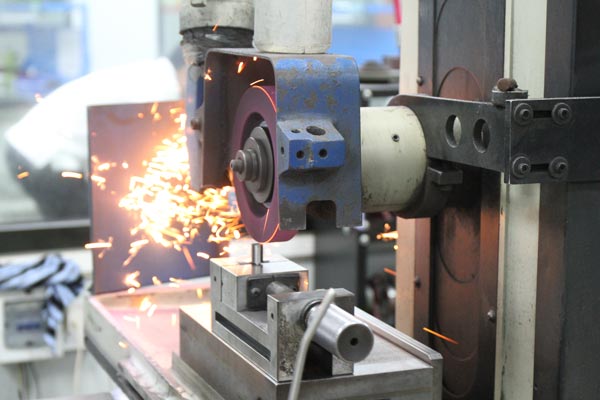
Finish machining is the core step in the manufacturing of tungsten carbide die, just like a master sculptor finely carving an artwork. It mainly includes processes such as grinding, electrical discharge machining (EDM), and fine grinding. Grinding involves fine polishing of the die after rough machining to remove burrs and uneven parts on the surface, greatly improving the surface finish and precision of the die, making the die surface as smooth as a mirror. EDM relies on the unique principle of electrical discharge to perform high-precision processing on the die, especially suitable for processing dies with complex shapes and small dimensions, providing a powerful means for the refined manufacturing of dies. Fine grinding further refines the surface quality and precision of the die on the basis of grinding to meet higher-standard usage requirements.
6. Polishing
Polishing is the final “beauty treatment” step in the manufacturing of tungsten carbide die. Through detailed grinding and polishing of the die surface, tiny dents and protrusions on the surface are removed, achieving a mirror effect on the die surface, just like a fine artwork. Polishing not only greatly improves the appearance quality of the die, making it more aesthetically pleasing, but also effectively reduces the friction between the die and the workpiece, reducing wear and thus significantly improving the service life of the die. During polishing, appropriate polishing equipment and polishing materials need to be carefully selected, and the polishing process parameters must be strictly controlled, just as a painter mixes pigments, to ensure that the surface finish and quality of the die reach the best state.
7. Quality Inspection
Quality inspection is the “guardian angel” in the manufacturing process of tungsten carbide die and a key step to ensure that the die quality meets requirements. By comprehensively inspecting key indicators such as the dimensions, shape, hardness, and wear resistance of the die, it safeguards the quality of the die. Quality inspection methods are diverse, including dimension measurement, hardness testing, wear resistance testing, etc. A scientific and reasonable inspection plan needs to be formulated according to the specific requirements and standards of the die. During quality inspection, high-precision measuring equipment and advanced testing methods must be used to ensure the accuracy and reliability of the inspection results, just as a doctor diagnoses a disease accurately, providing a solid basis for the qualified delivery of the die.
III. Optimization Strategies for the Manufacturing Process of Tungsten Carbide Die
1. Introducing Advanced Processing Technologies
With the rapid development of science and technology, new processing technologies are emerging like bamboo shoots after a rain. To improve the manufacturing precision and efficiency of tungsten carbide die, enterprises should actively introduce advanced processing technologies such as laser processing and high-speed cutting. These advanced technologies, like sharp “blades,” have significant advantages of high precision, high efficiency, and low cost, effectively breaking through the limitations of traditional processing technologies and significantly improving the manufacturing level of tungsten carbide die, enabling enterprises to gain an advantageous position in market competition.
2. Optimizing Heat Treatment Processes
As a key step in the manufacturing of tungsten carbide die, heat treatment plays a decisive role in improving die performance. To further tap the performance potential of tungsten carbide materials, enterprises can optimize and upgrade the heat treatment process, such as adopting advanced technologies like vacuum heat treatment and ion nitriding. These technologies, like magical “catalysts,” can improve the microstructure of the tungsten carbide material, making its internal structure more uniform and dense, thereby improving its properties such as hardness, wear resistance, and toughness, providing stronger support for the high-performance operation of the die.
3. Strengthening Quality Inspection and Monitoring
Quality inspection is the last line of defense to ensure the quality of tungsten carbide die. To improve inspection efficiency and accuracy, enterprises should strengthen the construction of quality inspection and monitoring systems. By introducing advanced inspection equipment and software technologies, automation and intelligence can be achieved in quality inspection and monitoring, just like equipping quality inspection with a “smart brain.” It can monitor the quality status of the die in real time and accurately, promptly identify potential problems and take effective measures to solve them, ensuring that the quality of each die meets usage requirements and winning the trust of customers and market recognition for the enterprise.
4. Implementing Lean Manufacturing Concepts
The lean manufacturing concept is an advanced manufacturing concept that pursues excellence and continuous improvement, acting like a beacon guiding the manufacturing process of tungsten carbide die. During the manufacturing process of tungsten carbide die, enterprises should actively implement lean manufacturing concepts and achieve refined management of the production process and maximum utilization of resources through a series of measures such as optimizing production processes, reducing waste, and improving efficiency. Just like a smart housekeeper, it can reasonably allocate resources, reduce production costs, while improving the performance and service life of the die, creating greater economic and social benefits for the enterprise.
5. Cultivating High-Quality Technical Talents
High-quality technical talents are the core force in the manufacturing of tungsten carbide die and a valuable asset for enterprise development. To improve manufacturing capabilities and competitiveness, enterprises should attach great importance to the cultivation and introduction of technical talents. By carrying out systematic training, organizing technical exchange activities, and introducing high-end talents, the professional qualities and skill levels of technical personnel can be comprehensively improved, just like injecting fresh blood into the enterprise’s technical team. A high-quality and innovative technical talent team can be built to provide solid technical support and talent guarantee for the manufacturing of tungsten carbide die.
IV. Conclusion
The manufacturing process of tungsten carbide die is a systematic project that is interconnected and intricate, involving multiple key steps. Each step is like a link in a chain, closely connected and indispensable. Through the implementation of a series of strategies such as introducing advanced processing technologies, optimizing heat treatment processes, strengthening quality inspection and monitoring, implementing lean manufacturing concepts, and cultivating high-quality technical talents, enterprises can further improve the manufacturing level of tungsten carbide die, reduce production costs, and enhance their core competitiveness in the market. With the continuous progress of science and technology and the continuous changes in the market, the manufacturing process of tungsten carbide die will also keep pace with the times and continuously optimize and innovate, providing more high-quality and efficient die support for the development of modern manufacturing and pushing the manufacturing industry to new heights.
FAQ
Q: Besides considering the purpose, working conditions, and precision requirements, what other factors need to be considered when selecting materials for tungsten carbide die?
A: Factors such as material cost, supply stability, and compatibility with subsequent processing technologies also need to be considered. Cost affects the production efficiency of the enterprise, supply stability ensures production continuity, and compatibility is related to the difficulty of processing and the final quality of the die.
Q: What are the consequences of improper control of the heating temperature during the heat treatment process?
A: If the heating temperature is too high, it may cause overburning of the tungsten carbide material, damaging its internal microstructure, reducing properties such as hardness and wear resistance, and making the die prone to deformation and cracking. If the heating temperature is too low, the expected heat treatment effect cannot be achieved, and the material properties cannot be effectively improved, affecting the service life of the die.
Q: What types of die processing are electrical discharge machining (EDM) suitable for in finish machining?
A: EDM is suitable for processing dies with complex shapes and small dimensions, such as dies with irregular holes, narrow grooves, and microstructures, as well as for processing parts of dies with high hardness that are difficult to achieve with traditional cutting processing.
Q: How to determine whether the polishing effect of tungsten carbide die meets the standard?
A: The polishing effect can be evaluated by observing the surface finish of the die and using professional instruments to detect the surface roughness value. Generally, a mirror effect is required, and the roughness value should be within the specified range. At the same time, check whether there are defects such as scratches and orange peel on the surface. If there are no defects and the finish meets the requirements, it is considered to meet the standard.
Q: What are the key training contents for cultivating high-quality technical talents for tungsten carbide die in enterprises?
A: The key training contents include knowledge of the properties of tungsten carbide materials, advanced manufacturing processes and technologies, quality inspection and monitoring methods, application of die design and programming software, as well as lean manufacturing concepts and team collaboration abilities, comprehensively improving the comprehensive qualities of technical personnel.

 English
  Deutsch
  Français
  日本語
日本語  한국어
한국어  Español
  Português
  Italiano
  Nederlands
  Русский
  Bahasa Indonesia
  العربية