

Tungsten Carbide Die Frame Design: Principles, Key Points, Optimization, and Innovation
In the grand landscape of industrial production, dies hold a pivotal position. Especially in forming processes such as stamping and injection molding, the design and quality of dies directly determine […]
In the grand landscape of industrial production, dies hold a pivotal position. Especially in forming processes such as stamping and injection molding, the design and quality of dies directly determine the final quality of products and the efficiency of production. Among the various aspects of die design, die frame design is a crucial link. It serves as the sturdy skeleton of the die, not only carrying the core components of the die but also ensuring the stability and precision of the die during the entire working process. This article will conduct an in-depth exploration of the principles and key points of tungsten carbide die frame design, aiming to provide valuable references for die designers and users.
I. Core Principles of Die Frame Design
Functional Principle
The primary principle of die frame design is to meet the functional requirements of the die. This means ensuring that the die can smoothly complete stamping, injection molding, or other forming processes while guaranteeing the precision and quality of the products. During the design process, it is necessary to comprehensively consider factors such as the shape, size, and material of the product, as well as the process requirements during production, ensuring that every detail is meticulously crafted.
当社の工場事業:超硬部品、金型部品、医療用射出成形金型、精密射出成形金型、テフロンPFA射出成形、PFAチューブ継手。電子メール:[email protected],whatsapp:+8613302615729。
Stability Principle
The stability of the die frame is the cornerstone for the long-term stable use of the die. During the design process, it is essential to thoroughly analyze the various force conditions that the die will encounter during use, ensuring that the die frame can withstand the corresponding loads under various complex working conditions and avoid deformation or damage. Since the stability of the die frame not only relates to the service life of the die itself but also directly affects the dimensional accuracy and surface quality of the products, any minor deviation may lead to non-conforming products.
Maintainability Principle
Wear and failures are inevitable during the long-term use of dies. Therefore, die frame design must fully consider the convenience of maintenance and component replacement. Through reasonable structural design, the maintenance process can be greatly simplified, maintenance costs can be reduced, and the overall service life of the die can be effectively improved, saving enterprises a significant amount of time and capital costs.
Economical Principle
Under the premise of ensuring that functional requirements are met and quality is guaranteed, die frame design also needs to take economic factors into account. This requires designers to carefully select appropriate materials, optimize structural design to reduce material consumption and processing costs, and improve production efficiency to achieve the maximization of economic benefits.
II. Key Points of Die Frame Design
素材の選択
Tungsten carbide is widely used in die manufacturing due to its excellent high hardness, high strength, and good wear resistance. In die frame design, it is necessary to comprehensively weigh multiple factors such as the performance, cost, and processability of tungsten carbide. At the same time, for other key components in the die frame, such as guide posts, guide sleeves, and ejection mechanisms, appropriate materials should also be selected according to actual needs to ensure that each component can perform at its best.
Structural Design
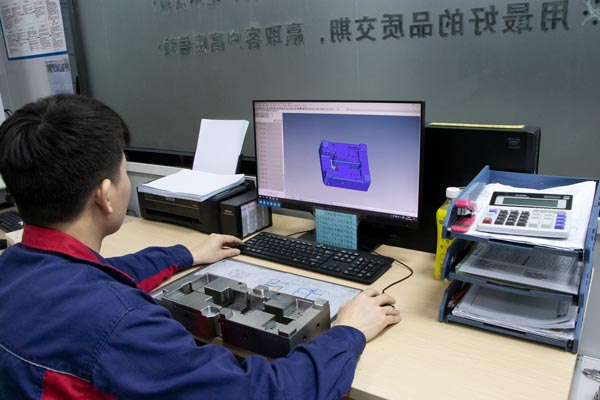
The structural design of the die frame should strive for simplicity and clarity, avoiding overly complex structures that lead to a significant increase in processing difficulty and cost. During the design process, it is necessary to deeply analyze the force conditions of the die and reasonably plan the layout of reinforcing ribs and supporting structures to enhance the rigidity and stability of the die frame. In addition, great attention should be paid to the guiding and positioning accuracy of the die frame to ensure that the die can operate precisely during the working process.
Cooling and Heating Systems
For some forming processes that require strict temperature control, the design of the die frame must fully consider the reasonable layout of cooling or heating systems. By carefully planning the positions of cooling water channels or heating elements, the forming efficiency can be effectively improved, the stability of product quality can be ensured, and the service life of the die can be extended, creating greater value for enterprises.
Safety Protection
The safety of operators must be the top priority in die frame design. For example, comprehensive safety protection devices should be installed on the die frame to prevent operators from accidentally touching the moving parts of the die and avoid accidents. In addition, emergency handling measures for abnormal situations of the die should also be considered, such as setting emergency stop buttons, to ensure that prompt actions can be taken in case of sudden situations to safeguard the safety of personnel and equipment.
Standardized and Modular Design
To improve the manufacturing efficiency of dies and reduce costs, die frame design should actively adopt standardized and modular design concepts. This design approach can not only simplify the processing and assembly processes but also facilitate the maintenance and component replacement of dies, greatly shortening the maintenance cycle of dies and improving production efficiency.
Consideration of Production Processes
Die frame design must be closely integrated with production processes. Designers need to have an in-depth understanding of the requirements and characteristics of production processes to ensure that the die frame can perfectly meet the various needs during the production process. At the same time, the wear and corrosion of the die caused by production processes should also be fully considered, and corresponding protective measures should be taken in advance to extend the service life of the die.
III. Optimization and Innovation Paths for Die Frame Design
With the rapid advancement of technology and the continuous development of industry, die frame design also needs to keep pace with the times and continuously innovate and optimize. For example, using advanced numerical simulation technology to conduct comprehensive force analysis and optimization design of the die frame, identifying potential problems in advance and making improvements; actively applying new materials and new processes to enhance the performance and service life of the die frame, making it more competitive in the fierce market; introducing intelligent technology to achieve automated and intelligent production of dies, improving production efficiency and product quality, and injecting new impetus into the development of enterprises.
IV.結論
The design of tungsten carbide die frames is a complex and meticulous systematic project, requiring a comprehensive and multi-angle consideration of multiple key aspects such as functionality, stability, maintainability, and economy. By reasonably selecting materials, meticulously optimizing structural design, scientifically arranging cooling and heating systems, strengthening safety protection measures, and actively adopting standardized and modular design methods, high-performance and highly stable die frames can be designed, providing solid guarantees for industrial production. At the same time, continuous innovation and optimization of die frame design are also the keys to improving die manufacturing levels, reducing production costs, and enhancing the core competitiveness of enterprises.
FAQ
Q: How to balance performance and cost when designing a tungsten carbide die frame?
A: When designing a tungsten carbide die frame, it is necessary to precisely select the specification of tungsten carbide according to the specific requirements of the product and the characteristics of the production process. For non-critical parts, materials with slightly lower performance but lower cost can be used as alternatives. At the same time, optimize the structural design to reduce unnecessary material usage and enhance performance by reasonably arranging reinforcing ribs, thus achieving a balance between performance and cost.
Q: Will standardized and modular design of die frames limit the customization of dies?
A: Not at all. Standardized and modular design mainly focuses on the common parts of die frames, such as the basic framework and guiding structures. On the premise of meeting general standards, the local parts of the die frame can be customized and adjusted according to the individual needs of different products, ensuring both production efficiency and the ability to meet diversified production requirements.
Q: How to ensure the effectiveness of the cooling and heating systems in die frames?
A: First, according to the shape of the die and the requirements of the forming process, reasonably plan the layout of cooling water channels or heating elements to ensure uniform heat distribution and effective heat transfer. Second, select appropriate cooling media or heating methods and precisely control their flow and temperature. Finally, regularly inspect and maintain the cooling and heating systems during the use of the die to ensure that they are always in good working condition.
Q: How to verify and optimize a die frame after its design is completed?
A: After the design of the die frame is completed, numerical simulation software can be used first to analyze its force conditions, heat transfer, etc., and identify potential problems in advance. Then, make prototypes for actual testing, checking indicators such as the forming effect, product precision, and service life of the die to see if they meet the requirements. Based on the test results, make targeted optimizations and improvements to the structure and materials of the die frame until the best design effect is achieved.
関連記事
- In-depth Analysis of Temperature Control Technology for Tungsten Carbide Dies
- Key Points of Temperature Control Technology for Tungsten Carbide Dies
- Future Development Trends and Technological Innovation Points of Tungsten Carbide Die
- A Comprehensive Analysis of the Heat Treatment Process for Tungsten Carbide Dies



 English
  Deutsch
  Français
  日本語
日本語  한국어
한국어  Español
  Português
  Italiano
  Nederlands
  Русский
  Bahasa Indonesia
  العربية