
Carbide Rings Supplier Guide: How to Select a Partner You Can Rely On
Choosing a carbide rings supplier is a qualification decision, not a purchasing transaction. The right partner is the one that can document the grade it actually used, hold seal-face flatness […]
Choosing a carbide rings supplier is a qualification decision, not a purchasing transaction. The right partner is the one that can document the grade it actually used, hold seal-face flatness and surface finish inside specification, and repeat both batch after batch. Unit price is a secondary metric. Leakage, scrap rate and unplanned line downtime are the primary ones.
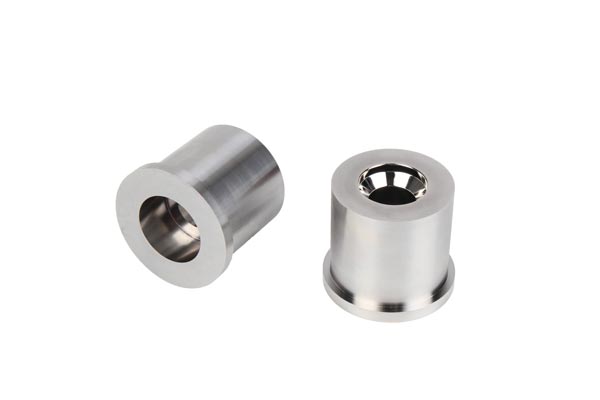
In industrial sourcing, “carbide rings” most often refers to mechanical seal rings, wear rings, bearing rings and valve trim machined from tungsten carbide. Consumer tungsten carbide jewellery rings follow a separate, fashion-driven supply chain and are outside the scope of this guide.
Onze fabriek business: carbide onderdelen, schimmel onderdelen, medische spuitgietmatrijzen, precisie spuitgietmatrijzen, teflon PFA spuitgieten, PFA buismontage. e-mail: [email protected],whatsapp:+8613302615729.
What Carbide Rings Are, and Why the Grade Decides Performance
Tungsten carbide rings are produced by pressing and sintering tungsten carbide powder with a metallic binder, most commonly cobalt, and increasingly nickel for corrosive service. The result is a material with hardness typically in the 88–92 HRA range, high compressive strength and excellent dimensional stability under load, which is why it dominates high-pressure sealing and wear applications.
Performance is governed by two variables that buyers often leave unspecified:
- Binder content. Lower binder content raises hardness and wear resistance but reduces toughness. Higher binder content absorbs impact and thermal shock at the cost of some abrasion resistance.
- Grain size. Submicron and fine-grain grades polish to a mirror finish and resist abrasive wear, making them the usual choice for seal faces. Coarser grades suit heavy-duty wear rings where fracture resistance matters more than finish.
A third factor is chemistry. Carbide is not universally inert. Cobalt binder is attacked by strong acids, certain process fluids and some food and pharmaceutical media, so nickel-binder or advanced binder systems are specified where contamination and corrosion are concerns. Any supplier that treats “carbide” as a single material has not understood the application.
Define the Specification Before You Request a Quote
Vague drawings produce optimistic quotes and disappointing parts. A complete RFQ package should state:
- Dimensional tolerances and the datum scheme, not just nominal dimensions
- Grade designation, binder type and content, and grain size
- Surface finish, expressed as Ra or an equivalent standard
- Flatness, parallelism and squareness requirements
- Bore-to-outer-diameter concentricity and wall-thickness variation
- Edge treatment, chamfers and any lapped or polished faces
- Whether the quote covers blanks, semi-finished or fully finished rings
- Quantity, annual volume and expected repeat orders
- Documentation: material certificate, first article inspection report, certificate of conformance
- Packaging, marking and traceability requirements
Including application data, such as the medium being sealed, operating pressure, shaft speed, temperature range and duty cycle, is what separates a specification from a part number. Suppliers who never ask for it are quoting geometry only.
Seven Checks That Separate Capable Manufacturers from Traders
1. Material traceability. Ask for the powder grade, supplier and lot record, plus the sintering route. A supplier that cannot trace a batch back to its raw material cannot contain a quality escape.
2. In-house grinding and lapping. Carbide is finished with diamond tooling, and seal faces are typically lapped rather than ground. Confirm that the supplier performs this in-house or has a controlled, audited partner. Outsourced lapping is where flatness claims usually break down.
3. Metrology that matches the claim. Flatness is often verified optically against a light band; surface finish requires a profilometer or roughness tester; hardness needs a dedicated tester; crack detection on rings calls for dye penetrant or equivalent. Ask which instruments are used and request sample reports.
4. Application and sealing validation. For seal rings, pressure and leak testing, runout measurement and, where relevant, thermal cycling demonstrate that the part works as a system component rather than merely as a machined disc.
5. Certification and process discipline. ISO 9001 is a baseline. Automotive programmes typically require IATF 16949 with PPAP documentation; medical and semiconductor customers add cleanroom handling and contamination controls. Certificates should be current and scoped to carbide machining.
6. Engineering feedback. A strong supplier returns drawing comments: tolerance stack-ups that cannot be held, finishes that are unnecessary for the function, and grade suggestions that improve life. Silence at the RFQ stage usually signals a order-taker.
7. Capacity, lead time and repeatability. Ask for batch-to-batch capability data on flatness and finish, not a single best-case inspection sheet. Samples and pilot volumes commonly run from one to three weeks, with production batches in the three-to-six week range depending on grade, size and finishing steps; confirm against your own schedule rather than accepting a headline figure.
Total Cost, Not Unit Price
Two quotes for the same ring can differ by thirty percent and still reverse once installed. A ring that leaks at start-up, fails a flatness check at incoming inspection or forces rework on the assembly line costs far more than the price difference. Evaluate total cost of ownership across scrap rate, seal life, changeover time, documentation burden and the engineering hours consumed chasing deviations. Where volumes justify it, buying blanks and finishing in-house can be cheaper than buying finished rings, provided your own lapping capability is genuinely controlled.
Common Red Flags
- No grade certificate, or a grade described only as “tungsten carbide”
- Reluctance to share inspection data, or reports that show only nominal dimensions
- A quote issued without any question about medium, pressure, speed or temperature
- No stated surface finish or flatness value on the drawing response
- Prices far below the market, with material origin left unexplained
- No defined sample or first-article process before volume production
- Inconsistent packaging and marking, which usually mirrors inconsistent process control
A Practical Qualification Sequence
- Issue an RFQ with a full drawing, application data and documentation requirements.
- Review the technical response and any design-for-manufacturing feedback.
- Approve a first article against a signed inspection plan, not a visual check alone.
- Run a pilot batch and verify yield at your own assembly or test station.
- Release volume production with agreed inspection reports and a change-notification clause.
- Audit periodically, and re-qualify after any material, process or site change.
FAQ
What is the difference between carbide rings and tungsten carbide seal rings? “Carbide rings” is the umbrella term for rings machined from tungsten carbide, including seal rings, wear rings and bearing rings. A tungsten carbide seal ring is simply a carbide ring specified for sealing duty, with tighter flatness and surface finish requirements.
Which grade is right for a pump mechanical seal? There is no universal answer. Fine-grain grades with moderate binder content are common for seal faces, and nickel-binder grades are chosen for aggressive chemical service. The correct selection depends on medium, pressure, speed, temperature and the mating face material.
What flatness and surface finish should I specify for seal faces? Seal faces are typically lapped to a flatness within one light band and a surface finish in the region of Ra 0.1–0.2 μm, with tighter values for high-pressure or high-speed duty. Confirm the target with your seal design rather than copying a figure from another application.
Can carbide rings be coated or marked for traceability? Yes. DLC and PVD coatings are used to reduce friction and wear in non-sealing applications, and laser marking is widely used for lot and part identification. Confirm that marking is placed away from functional faces.
How should I verify quality at incoming inspection? Check dimensions against the drawing, hardness on a sample basis, flatness and surface finish on functional faces, and crack detection where specified. Cross-check the certificate of conformance against the lot marking before the parts enter production.
Do lower-cost suppliers save money? Only if they can hold the specification. The savings from a cheaper ring are quickly erased by seal failure, scrap at assembly or a stopped line. Compare total cost of ownership, not quoted piece price.
Conclusie
A reliable carbide rings supplier competes on documented capability: traceable material, controlled lapping, credible metrology and consistent batches. Qualify the process, verify the data, and lock the specification before volume begins. Price negotiation is far easier once the technical ground is settled.

 English
 Deutsch
 Français
 日本語
 한국어
 Español
 Português
 Italiano
 Nederlands
 Русский
 Bahasa Indonesia
 العربية