
The Essential Role of Carbide Wear-Resistant Components in Oilfield Drilling Operations
Carbide wear-resistant components are indispensable in the harsh environments of oil and gas extraction, where extreme pressure, abrasive rock formations, and corrosive fluids demand materials with unmatched hardness and durability. […]
Carbide wear-resistant components are indispensable in the harsh environments of oil and gas extraction, where extreme pressure, abrasive rock formations, and corrosive fluids demand materials with unmatched hardness and durability. Made from sintered tungsten carbide—typically a composite of tungsten carbide particles bonded with cobalt or nickel—these components withstand conditions that rapidly degrade conventional metals, ensuring operational continuity and reducing costly downtime.
Drill Bits and Downhole Tools
Tungsten carbide buttons and inserts form the cutting edges of rotary drill bits, PDC bits, and roller cones used in directional and horizontal drilling. Their extreme hardness (HRA 85–93) enables efficient penetration through basalt, quartzite, and other high-abrasion formations. In Measurement-While-Drilling (MWD) and Logging-While-Drilling (LWD) tools, carbide wear parts protect sensitive sensors and fluid channels from erosion, preserving data integrity and tool longevity under continuous high-velocity flow.
Onze fabriek business: carbide onderdelen, schimmel onderdelen, medische spuitgietmatrijzen, precisie spuitgietmatrijzen, teflon PFA spuitgieten, PFA buismontage. e-mail: [email protected],whatsapp:+8613302615729.
Valve Seats, Seals, and Pump Components
In surface and subsea production systems, carbide is used for valve trim, seat rings, and plunger tips in high-pressure pumps. These components must resist abrasive slurry, hydrogen sulfide corrosion, and cyclic thermal stress. Precision-machined carbide seals maintain tight shut-off under 20,000 PSI conditions, while carbide-coated pump rods minimize wear in sucker rod systems, extending maintenance intervals by up to 300% compared to hardened steel alternatives.
Casing and Tubing Handling Equipment
Forged tungsten carbide components are integrated into casing spiders, pipe clamps, and torque tools used during well construction. These parts grip and rotate heavy tubulars without slippage or surface damage, even in muddy or oily conditions. The material’s resistance to galling and deformation ensures consistent performance across thousands of cycles, critical for safety and efficiency in offshore and ultra-deepwell operations.
Material Science and Failure Mitigation
The service life of carbide components is enhanced through advanced sintering techniques, functionally graded structures, and nanostructured compositions that balance hardness with fracture toughness. Surface treatments such as titanium nitride (TiN) or chromium carbide coatings further improve corrosion resistance. Failures typically arise from impact spalling or binder depletion in high-temperature zones—solutions include optimized cobalt content and grain size control, as validated in geo-engineering research.
Regulatory and Quality Frameworks
While no single ISO standard exclusively governs carbide wear parts, compliance with API 7K for drilling equipment, ISO 9001 for quality systems, and ASTM B322 for surface finish ensures global market access. Every component must be traceable through material certifications, dimensional inspection logs, and process control records—requirements that align with international OEM expectations.
Leveraging Dongguan’s Precision Manufacturing Ecosystem
Headquartered in Chang’an Town, Dongguan—China’s epicenter of precision tooling and CNC machining—Yize Mould benefits from a dense cluster of high-grade carbide suppliers, metrology labs, and specialized heat treatment facilities. This localized infrastructure enables rapid prototyping, tight tolerance control (±0.001 mm), and just-in-time delivery for global oilfield service companies. Proximity to Shenzhen Port and Guangzhou International Airport ensures seamless export logistics to North America, Europe, and the Middle East.
Why Choose Yize Mould?
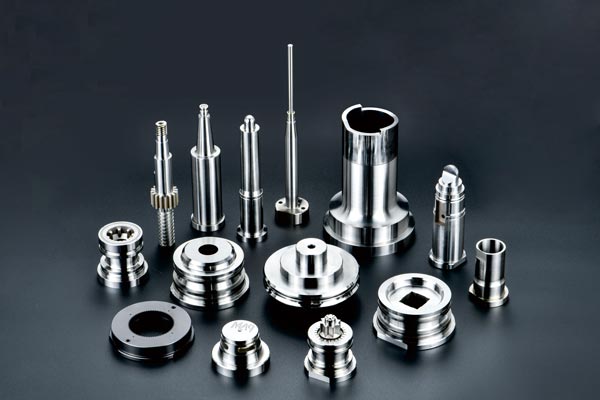
Dongguan Yize Mould Co., Ltd. (Yize Mould), established in 2005 and based in Dongguan’s precision manufacturing hub, is a certified carbide wear resistant components supplier with over 18 years of experience in high-precision machining of tungsten carbide and other hardmetals. We specialize in producing drill bit inserts, valve seats, pump components, and custom wear parts for oilfield applications, with dimensional tolerances of ±0.001 mm and surface finishes down to Ra 0.025. Our production follows international standards including AISI, JIS, and DIN, and all materials are accompanied by certified test reports. With a dedicated engineering team experienced in oilfield component design and a quality system aligned with ISO 9001, we deliver not just parts—but engineered solutions that reduce downtime, extend service life, and meet the rigorous demands of global energy clients.
We don’t just machine carbide—we optimize it for performance, ensuring every component is built to survive the most aggressive downhole environments.
Frequently Asked Questions (FAQ)
Q1: What makes tungsten carbide ideal for oilfield applications?
A: Tungsten carbide offers exceptional hardness, wear resistance, and thermal stability—critical for enduring abrasive rock, high-pressure fluids, and cyclic loading in drilling and production equipment. Its resistance to corrosion and galling outperforms hardened steels in aggressive environments.
Q2: Can you produce custom carbide components for specific oilfield tools?
A: Yes. We specialize in custom-designed carbide parts including non-standard inserts, valve trim, and wear sleeves. We work from your drawings or reverse-engineer existing components to match exact geometry, material grade, and performance criteria.
Q3: What material grades of tungsten carbide do you use?
A: We process standard grades such as YG6, YG8, YG15, and WC-10Co, as well as custom formulations with varying cobalt content and grain sizes to optimize toughness or wear resistance based on application requirements. All materials are sourced with certified material test reports.
Q4: Do you provide documentation for international oilfield audits?
A: Yes. We supply full technical documentation including material certificates, dimensional inspection reports, surface finish records, and process control logs—all formatted to meet the audit requirements of major oilfield service providers and OEMs.
Q5: What is your lead time for prototype and production orders?
A: Prototypes can be delivered in 7–10 days. Production runs of 500–5,000 pieces typically ship within 15–20 days, depending on complexity. Our flexible CNC and sintering lines support rapid turnaround without compromising quality.
 English
  Deutsch
  Français
  日本語
日本語  한국어
한국어  Español
  Português
  Italiano
  Nederlands
  Русский
  Bahasa Indonesia
  العربية