
Tungsten Carbide Die Stress Relief Technology and Its Applications
I. Introduction In key fields such as precision dies and high-speed stamping dies in the manufacturing industry, tungsten carbide dies hold a pivotal position due to their excellent high hardness, […]
I. Введение
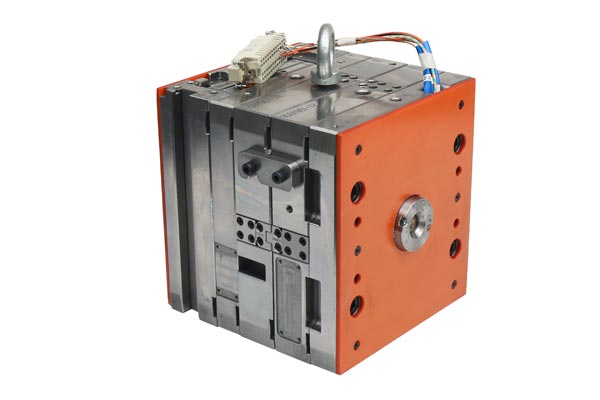
In key fields such as precision dies and high-speed stamping dies in the manufacturing industry, tungsten carbide dies hold a pivotal position due to their excellent high hardness, high strength, and outstanding wear resistance. However, during the manufacturing process of tungsten carbide dies, processes like heat treatment and machining inevitably introduce internal stresses into the dies. These stresses are like hidden “time bombs”. Once triggered, they can lead to serious problems such as deformation and cracking during die use, significantly affecting the service life and machining accuracy of the dies. Therefore, in-depth research and effective application of tungsten carbide die stress relief technology are of crucial strategic importance for improving die quality and extending die service life. This article will comprehensively and in-depth introduce tungsten carbide die stress relief technology and its practical applications.
II. Causes of Stress in Tungsten Carbide Dies
Thermal Treatment Stress
In the heat treatment process of tungsten carbide dies, the non-uniformity of heating and cooling speeds is a key factor in generating thermal stress. This non-uniformity creates a temperature gradient within the material, thereby inducing internal stress. Additionally, phase transformations that occur during heat treatment also cause internal stress in the material, posing potential threats to die performance.
Наш завод занимается: твердосплавные детали, детали пресс-форм, медицинские пресс-формы для литья под давлением, прецизионные пресс-формы для литья под давлением, литье тефлона PFA, фитинги для труб PFA. e-mail: [email protected],whatsapp:+8613302615729.
Machining Stress
During the machining process of tungsten carbide dies, external forces such as cutting forces and grinding forces continuously act on the material, inducing stress within it. Especially when key parameters like cutting speed and feed rate are set unreasonably, significant machining stress is likely to be generated, negatively impacting die quality.
Residual Stress
Tungsten carbide dies undergo multiple heat treatment and machining operations during manufacturing. After these series of processing steps, a certain amount of stress remains within the material. These residual stresses gradually release over time during die use, ultimately leading to problems such as die deformation and cracking, seriously affecting normal die operation.
III. Tungsten Carbide Die Stress Relief Technologies
Thermal Aging Stress Relief Technology
Thermal aging stress relief technology is a traditional and commonly used stress relief method with wide applications in die manufacturing. Its operating principle is to place the tungsten carbide die in a thermal aging furnace and conduct heating treatment to release the internal stress of the die at high temperatures. This method can significantly reduce the residual stress of the die and effectively improve its stability and service life. However, this technology also has certain limitations. For example, the treatment process consumes a large amount of time and energy, and the treatment effect is greatly influenced by factors such as heating temperature and heating time, requiring high operational environment and process control.
Vibratory Stress Relief Technology
Vibratory stress relief technology is an emerging stress relief method with unique advantages. It uses specialized vibratory stress relief equipment to make the tungsten carbide die resonate and uniformly transmits vibratory energy to all parts of the die through this resonance, inducing microscopic plastic deformation within the die and thus achieving stress relief. This method has significant advantages such as short treatment time, low energy consumption, and stable effects, and is especially suitable for large and complex-structured tungsten carbide dies, effectively improving production efficiency and reducing production costs.
Magnetic Treatment Stress Relief Technology
Magnetic treatment stress relief technology is an innovative stress relief means, bringing new solutions to the die manufacturing industry. Its principle is to apply a magnetic field to the tungsten carbide die, reducing the pinning effect of dislocations within the metal, promoting dislocation movement, making the dislocation distribution more uniform, and thereby improving the distribution of residual stress within the metal and reducing the amplitude of residual stress. This method has outstanding advantages such as a simple treatment process, no need for heating, and no damage to the die, but it requires operation on specific equipment and has relatively high requirements for equipment and technology.
Stress-Relief Annealing Technology
Stress-relief annealing technology is a traditional stress relief method with a long history of application in die manufacturing and maintenance. This method reduces the internal stress of the tungsten carbide die through low-temperature heating treatment. During stress-relief annealing, the workpiece is generally slowly heated to a relatively low temperature (e.g., 500 – 650°C for steel) and held for a certain period before being slowly cooled to prevent the generation of new residual stress. This method is suitable for stress relief of various steel materials and machine parts, but the treatment time is relatively long and it has a certain impact on the microstructure and properties of the die, requiring strict control of process parameters.
IV. Applications of Tungsten Carbide Die Stress Relief Technologies
Tungsten carbide die stress relief technologies have wide applications in all aspects of die manufacturing and maintenance. By reasonably using these technologies, the performance and quality of dies can be significantly improved. The following are some specific application scenarios:
Stress Relief During Die Manufacturing
During the manufacturing process of tungsten carbide dies, after processes such as heat treatment and machining, the dies have a large amount of residual stress inside. At this time, using stress relief technologies such as thermal aging and vibratory stress relief to treat the dies can effectively reduce the residual stress of the dies, improve their stability and service life, and provide reliable guarantees for subsequent die use.
Stress Relief During Die Maintenance
For tungsten carbide dies that have already shown problems such as deformation and cracking, using stress relief technologies such as stress-relief annealing and magnetic treatment for repair can restore the original performance and accuracy of the dies. By eliminating the internal stress of the dies and reducing further damage caused by stress concentration, the dies can be put back into use, reducing the production costs of enterprises.
Improving Die Machining Accuracy
By eliminating the internal stress of tungsten carbide dies, the deformation and errors of the dies during machining can be effectively reduced, improving the machining accuracy and stability of the dies. This is crucial for enterprises manufacturing high-precision parts, ensuring that product quality meets strict requirements and enhancing the market competitiveness of enterprises.
Extending Die Service Life
Eliminating the internal stress of tungsten carbide dies can reduce problems such as cracking and deformation caused by stress concentration during die use, thereby significantly extending the service life of the dies. This can not only reduce the die replacement costs of enterprises but also improve production efficiency and reduce production interruptions caused by die failures.
V. Заключение
Tungsten carbide die stress relief technology is a key means of improving die quality and extending die service life. In practical applications, appropriate stress relief technologies should be selected according to the specific conditions of the dies, such as material, structure, and machining process, and scientific and reasonable arrangements should be made in combination with production requirements. By accurately using these technologies, the performance and service life of dies can be maximized, creating greater economic benefits for enterprises.
FAQ
Q: What impacts will different stress relief technologies have on the microstructure of tungsten carbide dies?
A: Thermal aging stress relief technology may cause a certain degree of grain growth in the die’s microstructure, affecting the hardness and toughness of the die. Vibratory stress relief technology has little impact on the die’s microstructure and basically does not change its grain morphology. Magnetic treatment stress relief technology mainly acts on the dislocation distribution within the metal and has little impact on the microstructure. Stress-relief annealing technology at relatively low temperatures has a relatively limited impact on the die’s microstructure, but if the temperature is not well controlled, it may also lead to microstructural changes.
Q: How can we determine whether a tungsten carbide die needs stress relief treatment?
A: You can observe whether the die shows abnormal phenomena such as deformation and cracking during machining or use. If these situations occur, it is likely that there is significant internal stress in the die and stress relief treatment is required. In addition, professional testing equipment such as stress detectors can be used to quantitatively detect the internal stress of the die, and stress relief treatment can be determined according to the test results.
Q: What are the cost differences among various stress relief technologies?
A: Thermal aging stress relief technology consumes a large amount of energy and time and requires significant equipment investment, so the cost is relatively high. Vibratory stress relief technology has moderate equipment costs, short treatment times, and low energy consumption, resulting in relatively low overall costs. Magnetic treatment stress relief technology requires specific equipment, with relatively high equipment costs, but the treatment process is simple and the energy consumption is low, so the long-term use cost is relatively controllable. Stress-relief annealing technology has general equipment costs, but the treatment time is long and the energy consumption is relatively large, with a medium cost level.
Q: What should be noted when machining tungsten carbide dies that have undergone stress relief treatment in subsequent processing?
A: For tungsten carbide dies that have undergone stress relief treatment, during subsequent machining, it is still necessary to pay attention to controlling machining parameters such as cutting speed and feed rate to avoid re-introducing stress due to improper machining. At the same time, appropriate cutting tools and cooling fluids should be reasonably selected to reduce thermal stress and mechanical stress during machining. In addition, the dies should be regularly inspected during the machining process to promptly detect and deal with any potential problems.
Related Posts
- Strategies and Practices for Improving the Processing Efficiency of Tungsten Carbide Dies
- Safety Specifications and Operation Guidelines for the Use of Tungsten Carbide Dies
- Practical Tips for P prolonging the Service Life of Tungsten Carbide Dies
- Manufacturing Process and Optimization Strategies of Tungsten Carbide Die

 English
  Deutsch
  Français
  日本語
日本語  한국어
한국어  Español
  Português
  Italiano
  Nederlands
  Русский
  Bahasa Indonesia
  العربية