

How to Enhance the Performance of Tungsten Carbide Die through Heat Treatment
In the grand landscape of the manufacturing industry, tungsten carbide die occupies a key position with its high strength, excellent wear resistance, and good corrosion resistance. The performance of the […]
In the grand landscape of the manufacturing industry, tungsten carbide die occupies a key position with its high strength, excellent wear resistance, and good corrosion resistance. The performance of the die is like the core gear in a precision machine, directly determining the quality of products and the efficiency of production. To further elevate the performance of tungsten carbide die, heat treatment technology serves as a magical key and becomes an indispensable key link. This article will comprehensively and in-depth analyze how to leverage heat treatment technology to inject powerful impetus into the performance enhancement of tungsten carbide die, providing highly valuable references for the vigorous development of the die manufacturing industry.
Heat Treatment: The “Remodeling Magic” for the Performance of Tungsten Carbide Die
Heat treatment is like a highly skilled craftsman. Through a series of precise operations such as heating, holding, and cooling, it cleverly alters the internal microstructure of the material, thereby achieving the optimization and upgrading of material properties. For tungsten carbide die, the changes brought about by heat treatment are truly remarkable. It can not only significantly improve the hardness and wear resistance of the die, enabling it to remain as solid as a rock when facing high-intensity processing; but also optimize its toughness, fatigue resistance, and corrosion resistance, as if putting on a sturdy armor for the die, allowing it to operate stably for a long time in complex and harsh working environments, greatly extending the service life of the die and significantly improving processing efficiency.
Unser Fabrikgeschäft: Hartmetallteile, Formteile, medizinische Spritzgussformen, Präzisionsspritzgussformen, Teflon-PFA-Spritzguss, PFA-Rohrverschraubungen. E-Mail: [email protected],whatsapp:+8613302615729.
Key Steps in Heat Treatment: Precise Processes Create Excellent Quality
Heating: The First Step to Initiate Performance Transformation
Heating, as the starting link of heat treatment, shoulders the important responsibility of making the material reach the phase transformation temperature, laying the foundation for subsequent microstructural transformations. In the heating process, every detail requires meticulous attention. It is essential to strictly control the heating rate and temperature, just like taming a wild horse. A slight carelessness may lead to overheating or over-burning of the material, damaging its internal structure. At the same time, the uniformity of heating is also of utmost importance. It is like an evenly distributed spring rain, ensuring that all parts of the die can fully absorb heat and achieve consistent performance improvement.
Holding: The Golden Period for Incubating Ideal Microstructures
The holding process is like a patient guardian, allowing the material to stay at the phase transformation temperature for a certain period of time, enabling its internal microstructure to fully transform. The length of the holding time is not arbitrarily determined but depends on the type and thickness of the material, as well as the required degree of microstructural transformation. Only by合理安排 (reasonably arranging) the holding time can we ensure that the die obtains an ideal microstructure, providing solid support for the leap in performance.
Cooling: The Key Decision-Making for the Direction of Performance
The cooling process is undoubtedly one of the most critical links in heat treatment. Its cooling rate and method are like a magic brush, directly outlining the profile of the material’s internal microstructure and properties. For tungsten carbide die, various cooling methods such as oil cooling, water cooling, or air cooling are usually adopted. Each method has its unique advantages and applicable scenarios. Choosing the appropriate cooling method is like tailoring a well-fitting suit for the die, enabling it to obtain ideal hardness and toughness and achieve a perfect balance in performance.
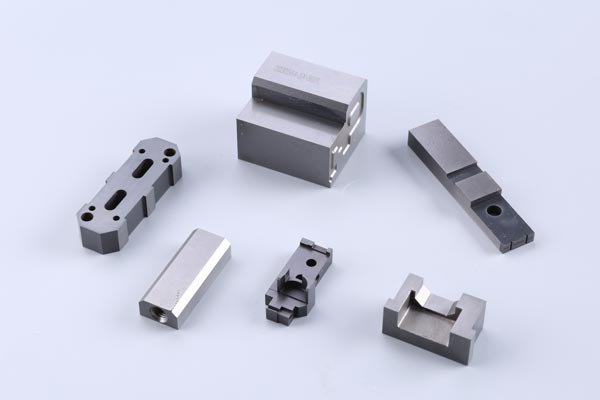
Applications of Heat Treatment Technology: Diversified Strategies to Improve Die Performance
Quenching Treatment: The “Strengthening Agent” for Hardness and Wear Resistance
Quenching treatment is like a rapid magical transformation. Through rapid cooling, it promotes the microstructural transformation of the material into martensite, thereby greatly improving its hardness and wear resistance. For tungsten carbide die, quenching treatment is like injecting powerful energy into it, which can significantly extend the service life of the die and improve processing efficiency. However, the quenching process is also full of challenges. It is necessary to strictly control the temperature and time, just like walking on a tightrope. A slight negligence may lead to excessive internal stress and deformation of the die, affecting its overall performance.
Tempering Treatment: The “Repairer” for Toughness and Fatigue Resistance
Tempering treatment is like giving the quenched die a soothing massage. After quenching, it heats and slowly cools the material, aiming to eliminate the internal stress generated during quenching and improve the toughness and fatigue resistance of the material. For tungsten carbide die, appropriate tempering treatment is like a wise mediator, which can balance its hardness and toughness and prevent the die from brittle fracture during long-term use, ensuring that the die maintains stable and reliable performance during long-term operation.
Surface Strengthening Treatment: The “Protective Shield” for Wear and Corrosion Resistance
In addition to the overall quenching and tempering treatments, surface strengthening treatment of the die is also an effective strategy. Methods such as carburizing and nitriding are like building a solid fortress on the surface of the die, forming a layer of high-hardness compound layer, further improving the wear resistance and corrosion resistance of the die. At the same time, surface strengthening treatment can also reduce the friction coefficient between the die and the processed material, just like applying a layer of lubricant on the surface of the die, improving processing efficiency and making the die operate more smoothly and efficiently during the production process.
Precautions in Heat Treatment: Detail Control Ensures Stable Performance
Precise Control of Temperature and Time: A Rigorous Attitude Achieves Excellent Quality
In the heat treatment process, the control of temperature and time is like the two ends of a precision balance, which is of crucial importance. Excessive or insufficient temperature and inappropriate holding time may lead to a decline in the performance of the die, just like a satellite deviating from its orbit and unable to perform its due functions. Therefore, it is necessary to operate strictly in accordance with the process requirements, just like following strict military discipline, and regularly calibrate and maintain the heat treatment equipment to ensure the accuracy and stability of the equipment.
Prevention of Oxidation and Decarburization: Protective Measures Safeguard the “Appearance” of the Die
In a high-temperature environment, the tungsten carbide die is like a traveler exposed to the scorching sun, prone to reacting with oxygen in the air, resulting in surface oxidation and decarburization. To prevent this phenomenon, a series of protective measures need to be taken, such as using a protective atmosphere or coatings, just like putting up an umbrella for the die to protect its surface cleanliness and stable performance.
Control of Internal Stress and Deformation: Clever Strategies Ensure the “Posture” of the Die
The internal stress and deformation generated during the heat treatment process are the “invisible killers” that affect the performance of the die. To reduce internal stress and prevent deformation, reasonable loading methods and the use of fixtures or supports are required, just like building a sturdy scaffold for the die to ensure its stable shape during the heat treatment process. At the same time, the die should be straightened and trimmed in a timely manner after heat treatment to restore the die to a perfect “posture” and put it into use in the best condition.
Conclusion: Heat Treatment Leads the New Future of the Performance of Tungsten Carbide Die
Heat treatment is undoubtedly one of the key technologies for improving the performance of tungsten carbide die. Through reasonable heat treatment processes, it is like injecting a powerful vitality into the die, which can significantly improve the hardness, wear resistance, toughness, and corrosion resistance of the die. However, the heat treatment process is like a precise dance, requiring strict control of various parameters to ensure the accuracy and consistency of operations. At the same time, customized heat treatment plans should be formulated according to different types of tungsten carbide die and working environments, just like prescribing personalized prescriptions for different patients to achieve the best performance improvement effect. With the continuous progress and innovation of heat treatment technology, it is believed that in the future, the performance of tungsten carbide die will soar like an eagle taking to the skies, achieving further improvement and optimization, and bringing a more brilliant tomorrow to the development of the manufacturing industry.
Verwandte Beiträge
- Enhancing the Performance of Tungsten Carbide Die through Advanced Manufacturing Technologies
- The Impact of the Precision of Tungsten Carbide Die on Machining Quality
- Polishing Techniques for Tungsten Carbide Dies: A Comprehensive Guide and Practical Manual
- Tungsten Carbide Die: An Excellent Choice for High-Strength Working Environments


 English
  Deutsch
  Français
  日本語
日本語  한국어
한국어  Español
  Português
  Italiano
  Nederlands
  Русский
  Bahasa Indonesia
  العربية