
Multidimensional Benefits of Wear-Resistant Coatings for Tungsten Carbide Dies
In the field of die manufacturing, tungsten carbide dies are highly favored for their high hardness, excellent wear resistance, and outstanding thermal stability. However, as modern industry places increasingly stringent […]
In the field of die manufacturing, tungsten carbide dies are highly favored for their high hardness, excellent wear resistance, and outstanding thermal stability. However, as modern industry places increasingly stringent demands on die performance, single tungsten carbide materials are gradually showing shortcomings in meeting the requirements for long-term, efficient, and stable use under certain extreme working conditions. In this context, surface modification of tungsten carbide dies, especially the application of wear-resistant coating technology, has become a crucial means of enhancing die performance and extending their service life. This article will delve into the multiple benefits that wear-resistant coatings bring to tungsten carbide dies from various professional perspectives.
1. Enhancing Die Surface Hardness and Wear Resistance
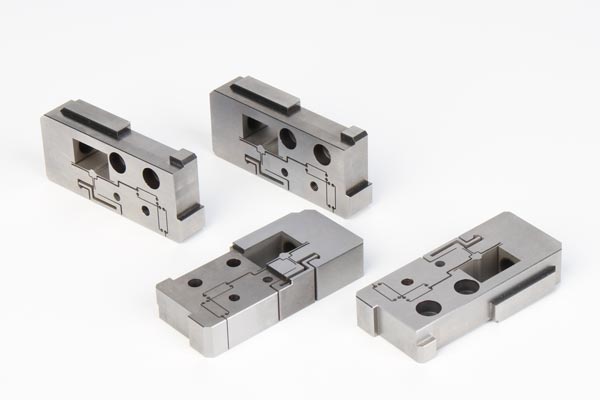
Wear-resistant coatings typically possess extremely high hardness levels, enabling them to form a robust and dense protective layer on the surface of tungsten carbide dies. This protective layer acts as an impenetrable barrier, effectively resisting the friction and wear caused by workpiece materials, thereby significantly reducing the wear rate of the die surface. For tungsten carbide dies, the introduction of wear-resistant coatings is like injecting new vitality, further enhancing their inherent high-hardness characteristics and enabling them to exhibit superior durability in high-load, high-frequency stamping, die-casting, and other processes, and to cope with various complex working conditions with ease.
Unser Fabrikgeschäft: Hartmetallteile, Formteile, medizinische Spritzgussformen, Präzisionsspritzgussformen, Teflon-PFA-Spritzguss, PFA-Rohrverschraubungen. E-Mail: [email protected],whatsapp:+8613302615729.
In addition, wear-resistant coatings often exhibit excellent lubrication properties. This characteristic allows them to lower the friction coefficient between the die and the workpiece, further minimizing wear. The lubrication effect not only helps reduce the running resistance of the die, improving production efficiency, but also effectively decreases the thermal damage to the die material caused by friction-generated heat, ensuring that the die maintains stable performance during long-term operation.
2. Improving Die Corrosion Resistance
In some special industrial processing scenarios, such as those involving corrosive media like acids and alkalis, the surface of dies is highly susceptible to chemical corrosion. This corrosion not only undermines the precision and surface quality of the die but also has a severe impact on its service life. Wear-resistant coatings generally have excellent corrosion resistance and can form a dense protective film on the die surface, effectively isolating the corrosive media from the die substrate and providing comprehensive protection for the die.
By introducing wear-resistant coatings, tungsten carbide dies can maintain higher stability and durability in corrosive environments, greatly expanding their application scope in specific processes and enhancing their applicability and reliability. This provides enterprises with solid guarantees for production under complex working conditions.
3. Optimizing Die Thermal Conductivity
During high-speed and high-temperature processing, a large amount of heat is rapidly generated on the surface of dies. If this heat cannot be dissipated promptly and effectively, it will cause a sharp increase in die temperature and an increase in thermal stress, thereby affecting the precision and service life of the die. Wear-resistant coatings typically have good thermal conductivity and can act as efficient heat conduction channels, rapidly transferring the heat on the die surface to the surrounding environment or cooling system for quick dissipation.
For tungsten carbide dies, the introduction of wear-resistant coatings can effectively improve their overall thermal conductivity, reducing the temperature rise amplitude of the die during operation. This helps maintain the dimensional stability and processing precision of the die, minimizing failure problems such as cracking and deformation caused by thermal stress, and ensuring that the die remains in good working condition during long-term high-temperature operation.
4. Enhancing Die Lubricity and Self-Cleaning Properties
Wear-resistant coatings usually have a low friction coefficient and excellent self-cleaning properties. Their lubricity can significantly reduce the friction between the die and the workpiece, minimizing wear and heat generation, and enabling the die to run more smoothly during operation. The self-cleaning property can prevent the adhesion and accumulation of workpiece materials on the die surface, keeping the die surface clean and smooth and avoiding the impact of material buildup on the normal operation of the die.
For tungsten carbide dies, these characteristics of wear-resistant coatings can further improve their working performance and stability. In stamping, die-casting, and other processes, the die surface can maintain smoother material flow and higher forming precision. At the same time, the self-cleaning property can reduce the die’s downtime for cleaning, improving production efficiency and reducing the operating costs of enterprises.
5. Extending Die Service Life
The multiple benefits of wear-resistant coatings for tungsten carbide dies are ultimately reflected in their ability to significantly extend the die’s service life. Due to the important roles played by wear-resistant coatings in reducing wear, resisting corrosion, improving thermal conductivity, and enhancing lubricity and self-cleaning properties, tungsten carbide dies with wear-resistant coatings can withstand more working cycles and harsher working conditions. This means that the service life of the die is effectively extended, and enterprises do not need to frequently replace dies, thus reducing production costs and maintenance costs.
In addition, the introduction of wear-resistant coatings can also improve the reliability and stability of the die. The coatings improve the surface quality and precision retention ability of the die, enabling it to maintain high forming precision and a low defect rate during long-term use, providing strong support for improving product quality and reducing production costs.
6. Promoting Environmental Protection and Sustainable Development
The application of wear-resistant coating technology also has positive significance for promoting environmental protection and sustainable development. By reducing the wear and failure rate of dies, wear-resistant coatings decrease the waste and environmental pollution caused by frequent die replacement. At the same time, wear-resistant coatings can also reduce the die’s dependence on lubricants and cooling fluids and other chemicals, further minimizing environmental pollution and energy consumption, meeting the requirements of modern industry for green manufacturing.
7. Conclusion
In conclusion, wear-resistant coatings offer multiple significant benefits for tungsten carbide dies. They can enhance the die’s surface hardness and wear resistance, corrosion resistance, and thermal conductivity, as well as improve lubricity and self-cleaning properties, extend the die’s service life, and reduce production and maintenance costs. At the same time, the application of wear-resistant coating technology also helps promote environmental protection and sustainable development, making positive contributions to the long-term development of enterprises and environmental protection in society. Therefore, actively introducing wear-resistant coating technology in the manufacturing and application of tungsten carbide dies has important practical significance and broad application prospects.
FAQ (Frequently Asked Questions)
Q1: Are wear-resistant coatings suitable for all types of tungsten carbide dies?
A1: Although wear-resistant coatings have a wide range of applicability, they are not suitable for all types of tungsten carbide dies. Their application needs to be comprehensively evaluated and selected based on factors such as the specific working conditions of the die, the characteristics of the workpiece material, and the processing technology requirements. For example, for some dies working in special corrosive environments or with extremely high surface precision requirements, specific performance wear-resistant coatings may need to be selected.
Q2: Is the application process of wear-resistant coatings complex? Will it affect the die’s production cycle?
A2: The application process of wear-resistant coatings varies depending on the coating type and application method, but overall, modern wear-resistant coating technology is relatively mature, and the application process has a certain degree of standardization and normalization. With the operation of professional application teams, the application quality and efficiency can be ensured. Under normal circumstances, reasonable application arrangements will not have a significant impact on the die’s production cycle. Instead, the production process can be optimized to shorten the overall manufacturing time of the die.
Q3: What is the service life of wear-resistant coatings? Do they require regular maintenance?
A3: The service life of wear-resistant coatings is influenced by multiple factors, such as coating type, working conditions, and workpiece material. Generally, high-quality wear-resistant coatings can provide long-term protection for dies under normal operating conditions, with a service life of several years or even longer. However, to ensure that the coating performance remains in the best state, it is recommended to regularly inspect and maintain the die, such as detecting the coating thickness and surface quality, and perform necessary repair or re-coating treatments according to the actual situation.
Q4: Will wear-resistant coatings increase the die’s cost? Is it cost-effective in the long run?
A4: The introduction of wear-resistant coating technology will indeed increase the initial manufacturing cost of the die to a certain extent, including coating material costs and application costs. However, in the long run, since wear-resistant coatings can significantly extend the die’s service life, reduce maintenance costs, improve production efficiency, and enhance product quality, a comprehensive calculation shows that they can save a large amount of cost expenditures for enterprises. Therefore, from an economic perspective, applying wear-resistant coating technology to tungsten carbide dies is a very cost-effective investment.
Verwandte Beiträge
- Development and Application of Wear-Resistant Coating Technology for Tungsten Carbide Dies
- Tungsten Carbide Die Frame Design: Principles, Key Points, Optimization, and Innovation
- In-depth Analysis of Temperature Control Technology for Tungsten Carbide Dies
- Key Points of Temperature Control Technology for Tungsten Carbide Dies


 English
  Deutsch
  Français
  日本語
日本語  한국어
한국어  Español
  Português
  Italiano
  Nederlands
  Русский
  Bahasa Indonesia
  العربية