

Special Requirements for Tungsten Carbide Dies in the Aerospace Field
I. Introduction In the aerospace field, the performance requirements for materials are extremely stringent. Tungsten carbide dies, with their high hardness, high wear resistance, high strength, and excellent thermal stability, […]
I. Einleitung
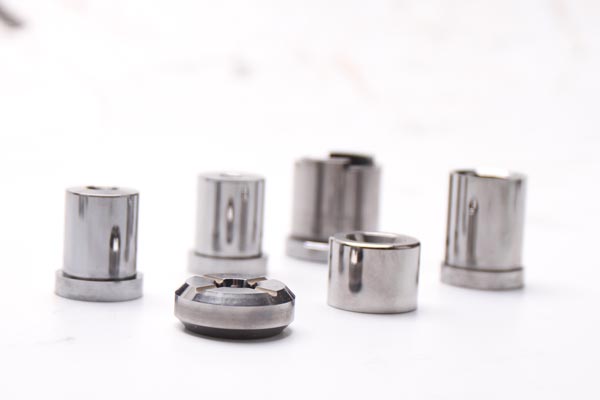
In the aerospace field, the performance requirements for materials are extremely stringent. Tungsten carbide dies, with their high hardness, high wear resistance, high strength, and excellent thermal stability, have become an indispensable key component in aerospace manufacturing. This article will delve into the special requirements for tungsten carbide dies in the aerospace field, analyze the reasons behind these requirements, and elaborate on their practical application scenarios.
II. Special Requirements for Tungsten Carbide Dies in the Aerospace Field
(A) High Strength and High Hardness: A Solid Shield Against Extreme Pressure
The aerospace manufacturing process is like an extreme challenge. Dies are required to withstand extremely high pressures and impact forces, as well as complex temperature changes. It is as if the dies have to stand firm amidst raging storms and scorching heat. Tungsten carbide dies, with their outstanding hardness and strength characteristics, act as brave warriors in this challenge. They can maintain stable operation in such harsh environments, providing a solid guarantee for the precision and efficiency of component manufacturing, ensuring that each component can be precisely formed to meet the high standards of aerospace manufacturing.
Unser Fabrikgeschäft: Hartmetallteile, Formteile, medizinische Spritzgussformen, Präzisionsspritzgussformen, Teflon-PFA-Spritzguss, PFA-Rohrverschraubungen. E-Mail: [email protected],whatsapp:+8613302615729.
(B) Excellent Thermal Stability: An Anchor in High-Temperature Conditions
In the “high-temperature furnace” of aerospace manufacturing, dies not only have to endure high temperatures but also cope with rapid temperature changes. It is like making the dies穿梭 (this Chinese word here seems out of place in English context, if you mean “move through”, it could be “move through flames”) through flames while remaining stable. Tungsten carbide dies possess amazing thermal stability. They can remain as steady as a rock in high temperatures, with their performance unaffected, effectively avoiding die deformation or failure caused by temperature changes. Moreover, their small coefficient of thermal expansion is like putting a precise “corset” on the dies, enabling them to maintain high dimensional accuracy at high temperatures and precisely meet the manufacturing requirements of aerospace components.
(C) Good Corrosion Resistance: A Sturdy Defense Line in Chemical Media
During aerospace manufacturing, dies come into close contact with various chemical media such as acids, alkalis, and salts. These chemical media are like fierce “corrosion monsters” that constantly threaten the performance of the dies. Tungsten carbide dies, however, have good corrosion resistance, like being clad in a sturdy suit of armor. They can hold their ground in these corrosive media, maintaining stable performance and avoiding die failure or performance degradation caused by corrosion, ensuring the smooth progress of the manufacturing process.
(D) High Precision and High Quality: A Precision Craftsman for Creating Ultimate Quality
Aerospace components have extremely demanding requirements for precision and quality. Every detail is crucial for the safety and performance of the entire aircraft. Tungsten carbide dies, with their excellent machinability and dimensional stability, act as precision craftsmen for creating ultimate quality. Through precise die design and manufacturing, they can ensure that the dimensional accuracy and surface quality of components reach extremely high levels, laying a solid foundation for improving the overall performance of aerospace products.
(E) Lightweight Requirement: A Wise Choice for Pursuing Efficiency and Lightness
With the rapid development of aerospace technology, the requirement for lightweight components is increasing day by day. It is like enabling the aircraft to fly higher, faster, and farther while reducing its burden. Tungsten carbide dies, while meeting the requirements of strength and hardness, also need to be as lightweight as possible. Therefore, during the design and manufacturing process, it is necessary to fully consider the material’s density and lightweight technologies. Through clever design and advanced processes, the weight of the dies can be reduced, and production efficiency can be improved, contributing to the lightweight development of aerospace products.
(F) Long Service Life and High Reliability: A Reliable and Long-Lasting Partner
Dies in the aerospace field usually have a long service cycle, which requires tungsten carbide dies to have a long service life and high reliability. They are like loyal and reliable partners, maintaining stable performance throughout long-term use. To achieve this goal, high-quality materials and advanced manufacturing processes need to be used during the manufacturing process to ensure the wear resistance and fatigue resistance of the dies. At the same time, regular maintenance and inspection are required during use to promptly detect and deal with potential problems, keeping the dies in good operating condition.
III. Practical Application Scenarios of Special Requirements for Tungsten Carbide Dies in the Aerospace Field
(A) Engine Component Manufacturing: Precise Shaping of Core Power
In the manufacturing process of aerospace engines, tungsten carbide dies play a crucial role. They are widely used in the manufacturing of key components such as blades and combustion chambers. These components are like the “heart” of the engine, having extremely high requirements for precision and quality, while also having to withstand harsh environments such as high temperatures and high pressures. Tungsten carbide dies, with their high strength, high hardness, excellent thermal stability, and corrosion resistance, act as skilled sculptors, precisely shaping each component to ensure the manufacturing precision and reliability of engine components and providing a strong guarantee for the powerful operation of the aircraft.
(B) Aerospace Structural Component Manufacturing: Careful Construction of a Sturdy Framework
Aerospace structural components such as fuselages and wings are the “skeletons” of the aircraft. They have extremely high requirements for dimensional accuracy and surface quality, while also needing to withstand complex loads and temperature changes. Tungsten carbide dies, like experienced architects, can meet these stringent requirements and carefully construct sturdy and precise structural components. They ensure the manufacturing precision and performance of structural components, providing a solid support for the safe flight of the aircraft.
(C) Aerospace Composite Material Manufacturing: The Magic of Shaping New Materials
With the continuous progress of aerospace technology, the application of composite materials in the aerospace field is becoming increasingly widespread. Tungsten carbide dies play a magical role in the manufacturing process of composite materials. Through precise die design and manufacturing, they can ensure the molding accuracy and performance stability of composite materials, like magic wizards who skillfully blend various materials together to create high-performance composite materials that meet the manufacturing requirements of aerospace products.
IV. Schlussfolgerung
The special requirements for tungsten carbide dies in the aerospace field cover high strength, high hardness, excellent thermal stability, good corrosion resistance, high precision and high quality, lightweight requirements, as well as long service life and high reliability. Behind these requirements lie the complexity of the aerospace manufacturing process and the high requirements for component performance. To meet these requirements, the design and manufacturing process of tungsten carbide dies need to fully consider the optimization of material performance and manufacturing processes, like craftsmen carefully carving artworks, striving for perfection. At the same time, strengthened maintenance and inspection are required during use to ensure the stable operation and long service life of the dies. With the continuous development of aerospace technology, the performance requirements for tungsten carbide dies will also continue to increase. In the future, tungsten carbide dies will undoubtedly play an even more important role in the aerospace field, contributing more to humanity’s journey of exploring the universe.
Verwandte Beiträge
- Tungsten Carbide Die: A Stable Guardian under High Loads
- How to Prevent the Fracture Risk of Tungsten Carbide Dies
- An Effective Approach to Improving the Production Efficiency of Tungsten Carbide Dies
- Special Demands of the Medical Device Industry for Tungsten Carbide Dies and Corresponding Solutions



 English
  Deutsch
  Français
  日本語
日本語  한국어
한국어  Español
  Português
  Italiano
  Nederlands
  Русский
  Bahasa Indonesia
  العربية