

Unlocking the Secrets to Enhancing the Cutting Efficiency of Tungsten Carbide Dies
In the vast landscape of modern manufacturing, tungsten carbide dies hold a pivotal position in various cutting processes due to their high hardness, high strength, and excellent wear resistance. However, […]
In the vast landscape of modern manufacturing, tungsten carbide dies hold a pivotal position in various cutting processes due to their high hardness, high strength, and excellent wear resistance. However, with the intensification of market competition and the rise in production costs, improving cutting efficiency has emerged as a critical challenge for the manufacturing industry. This article will delve into effective strategies for enhancing the cutting efficiency of tungsten carbide dies, providing valuable references for relevant industries.
1. Select High-Performance Tool Materials
The first step in improving cutting efficiency is to choose high-performance tool materials. Although tungsten carbide (hard alloy) itself is a premium tool material, different grades and compositions of tungsten carbide exhibit varying properties. Therefore, when selecting tungsten carbide tools, it is essential to pick the most suitable grade based on specific cutting conditions and workpiece materials. Additionally, coating technology can be employed to further enhance the wear resistance and cutting performance of the tools, acting as a protective shield for efficient cutting.
Unser Fabrikgeschäft: Hartmetallteile, Formteile, medizinische Spritzgussformen, Präzisionsspritzgussformen, Teflon-PFA-Spritzguss, PFA-Rohrverschraubungen. E-Mail: [email protected],whatsapp:+8613302615729.
2. Optimize Tool Geometric Parameters
The geometric parameters of tools play a crucial role in cutting efficiency, functioning like an invisible conductor during the cutting process. By carefully optimizing parameters such as the rake angle, relief angle, and inclination angle of the tool, it is possible to reduce cutting forces and lower cutting temperatures, thereby paving the way for improved cutting efficiency. For instance, appropriately increasing the rake angle can effectively minimize cutting deformation and reduce cutting forces. Similarly, reasonably adjusting the inclination angle can improve chip flow and decrease friction between the tool and the workpiece, making the cutting process smoother and more efficient.
3. Rationally Select Cutting Parameters
Cutting parameters, encompassing cutting speed, feed rate, and depth of cut, form the “golden triangle” for enhancing cutting efficiency. Generally, increasing the cutting speed and feed rate can act as an accelerator, boosting the material removal rate per unit time and thus improving cutting efficiency. However, excessively high cutting speeds and feed rates can be detrimental to the tools, causing accelerated wear or even breakage. Therefore, in practical operations, it is necessary to comprehensively consider factors such as tool performance, workpiece material, and machining requirements to select the most appropriate cutting parameters, achieving a perfect balance between efficiency and tool life.
4. Adopt Advanced Cutting Technologies
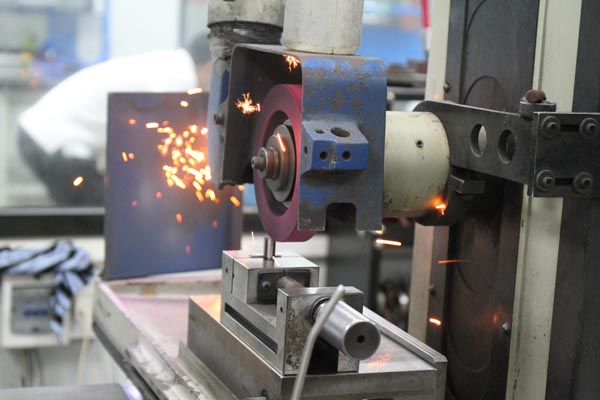
With the rapid advancement of technology, an increasing number of advanced cutting technologies have been introduced into actual production, bringing new opportunities for improving cutting efficiency. High-speed cutting technology can significantly enhance cutting efficiency and shorten machining time with its lightning-fast speed. Dry cutting technology eliminates the use of cutting fluids, reducing costs and minimizing environmental pollution, achieving green and efficient machining. Hard cutting technology enables direct machining of hard materials, eliminating the need for additional heat treatment processes and streamlining the machining workflow. The judicious application of these advanced technologies is bound to bring about a qualitative leap in the cutting efficiency of tungsten carbide dies.
5. Maintain Good Tool Condition
Tool wear and breakage are like stumbling blocks in the cutting process, seriously affecting cutting efficiency. Therefore, regularly inspecting the wear condition of tools and promptly replacing severely worn tools to maintain them in optimal condition is a crucial measure for improving cutting efficiency. Moreover, reasonable tool regrinding and coating treatments can rejuvenate the tools, extending their service life and further enhancing cutting efficiency.
6. Strengthen Process System Rigidity
The rigidity of the process system serves as a stable foundation during the cutting process. Insufficient rigidity of the process system can lead to vibrations and deformations during cutting, severely impacting cutting accuracy and efficiency. Therefore, strengthening the rigidity of machine tools, fixtures, and tools in the process system is like building a solid fortress for the cutting process, ensuring its stability and providing a solid guarantee for efficient cutting.
7. Implement Effective Cooling and Lubrication
The heat and friction generated during the cutting process are like invisible enemies, causing damage to tools and workpieces and affecting cutting efficiency. Therefore, implementing effective cooling and lubrication measures is a secret weapon for improving cutting efficiency. Using appropriate cutting fluids or gas cooling methods can act as a timely rain shower during the cutting process, reducing cutting temperatures and friction coefficients, thereby improving cutting efficiency and extending tool life.
8. Conduct Scientific Production Management and Scheduling
Improving cutting efficiency not only requires technical refinement but also scientific management and scheduling. By reasonably arranging production plans, optimizing production processes, and reducing waste and waiting times during production, it is possible to inject a highly efficient catalyst into the production process, further improving the cutting efficiency of tungsten carbide dies and achieving efficient collaboration in production.
9. Pay Attention to Details for Comprehensive Upgrades
In addition to the above key strategies, some details also deserve attention. Regularly providing skill training and safety education to operators is like equipping them with a wisdom key, enabling them to master advanced cutting technologies and operation methods proficiently, improving production efficiency and safety. Regularly maintaining and servicing machine tools and tools is like conducting a comprehensive physical examination for the equipment, ensuring they are in optimal working condition and reducing downtime due to failures. Encouraging enterprises to engage in technological research and innovation is like lighting an innovation fire, continuously exploring new cutting technologies and materials to adapt to changing market demands and machining requirements. Establishing a sound quality monitoring system is like setting up a solid defense line for product quality, conducting real-time monitoring and feedback on quality issues during the cutting process, and promptly adjusting cutting parameters and process plans to ensure the stability and consistency of product quality.
In conclusion, improving the cutting efficiency of tungsten carbide dies is a comprehensive and systematic project that requires in-depth improvements and optimizations from multiple aspects, including tool material selection, parameter optimization, parameter selection, technological innovation, tool maintenance, rigidity enhancement, cooling and lubrication, management and scheduling, and detail control. The comprehensive application of these measures is bound to significantly enhance the cutting efficiency of tungsten carbide dies, injecting a continuous stream of new impetus into the development of the manufacturing industry and propelling it towards a more efficient, green, and sustainable future




 English
  Deutsch
  Français
  日本語
日本語  한국어
한국어  Español
  Português
  Italiano
  Nederlands
  Русский
  Bahasa Indonesia
  العربية