
Applications and Advantages of Tungsten Carbide Dies in Manufacturing
Introduction In modern manufacturing, dies are essential tools. Their performance directly affects production efficiency, product precision, and cost. Among various die materials, tungsten carbide dies stand out due to their […]
Pendahuluan
In modern manufacturing, dies are essential tools. Their performance directly affects production efficiency, product precision, and cost. Among various die materials, tungsten carbide dies stand out due to their unique properties. This article explores the characteristics, applications, and advantages of tungsten carbide dies in the manufacturing industry.
Key Characteristics of Tungsten Carbide Dies
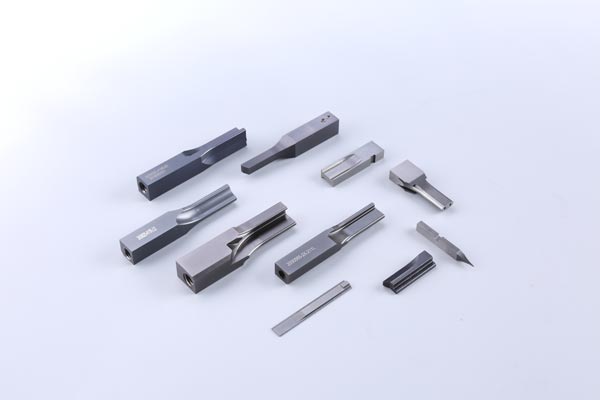
Tungsten carbide dies, also known as cemented carbide dies, are made from a high-speed steel with tungsten as the main alloy element. They offer a range of excellent physical and chemical properties, including high hardness, high strength, high wear resistance, high corrosion resistance, and high thermal stability. These features allow tungsten carbide dies to maintain stable performance under harsh conditions like high pressure and high temperature.
Bisnis pabrik kami: suku cadang karbida, suku cadang cetakan, cetakan injeksi medis, cetakan injeksi presisi, cetakan injeksi PFA teflon, alat kelengkapan tabung PFA. email: [email protected],whatsapp:+8613302615729.
- High Hardness: Tungsten carbide dies can reach a hardness of HRC 60 to 70 or higher. This high hardness helps the die resist cutting forces, impact, and friction during processing, ensuring precision and stability.
- High Strength: These dies have high tensile and yield strength. They can withstand significant pressure and impact, maintaining stable performance under long-term, high-load work.
- High Wear Resistance: Tungsten carbide dies offer excellent wear resistance. They maintain a low wear rate under high-frequency friction, extending the die’s service life and reducing production costs.
- High Corrosion Resistance: They resist corrosion from acids, alkalis, and salts. This makes them suitable for complex working environments.
- High Thermal Stability: With a low thermal expansion coefficient, tungsten carbide dies maintain good dimensional and shape accuracy even at high temperatures.
Applications in Manufacturing
Tungsten carbide dies are widely used across various manufacturing sectors due to their superior performance.
- Automotive Manufacturing: In the automotive industry, these dies are used to produce critical parts like engine and transmission components. These parts require dies that can handle high-temperature, high-pressure cutting and stamping. The high hardness and strength of tungsten carbide make it an ideal choice.
- Electronics Manufacturing: For electronics, tungsten carbide dies are used to make molds for product housings and internal parts, such as those for mobile phones and tablets. These applications demand high precision, wear resistance, and corrosion resistance to ensure product quality.
- Aerospace Manufacturing: In aerospace, these dies are used to produce components for aircraft and rockets. The extreme conditions of high temperature and pressure require dies with exceptional hardness, strength, and thermal stability.
- Medical Device Manufacturing: Tungsten carbide dies are used to create molds for surgical instruments and medical needles. These applications require high precision, wear resistance, and corrosion resistance to ensure the quality and safety of medical devices.
Advantages in Manufacturing
Tungsten carbide dies offer several key advantages in the manufacturing process.
- Improved Product Quality: Their high hardness, strength, and wear resistance allow dies to maintain high precision and stability during processing, leading to better product quality.
- Extended Die Life: The excellent wear and corrosion resistance of tungsten carbide means the dies wear down and corrode less easily, significantly extending their service life.
- Lower Production Costs: Because of their high performance and long life, tungsten carbide dies require less frequent repair and replacement. This reduces overall production costs.
- Higher Production Efficiency: The high precision and stability of these dies ensure consistency in the production process, which boosts overall efficiency.
Kesimpulan
In summary, tungsten carbide dies play a vital role in modern manufacturing. They are widely used in automotive, electronics, aerospace, and medical device industries. As manufacturing continues to evolve and demand for higher product quality grows, the application prospects for tungsten carbide dies will become even broader. Future work should focus on developing new technologies and processes to meet the industry’s demand for high-performance dies.
Frequently Asked Questions (FAQ)
Q1: What is the main difference between a tungsten carbide die and a steel die?
A: The main difference is hardness and wear resistance. Tungsten carbide dies are much harder and last longer than standard steel dies, especially in high-wear applications.
Q2: Is a tungsten carbide die difficult to machine?
A: Yes, due to its extreme hardness, machining a tungsten carbide die requires specialized equipment like diamond grinding tools. This is typically done by the die manufacturer.
Q3: Can a tungsten carbide die be repaired if it is damaged?
A: Repair is possible but often difficult and expensive. Small chips can sometimes be ground out, but major damage usually requires replacing the die insert.
Q4: What is the typical lifespan of a tungsten carbide die?
A: The lifespan varies greatly depending on the application, but it is typically 10 to 20 times longer than a standard steel die in the same application.



 English
  Deutsch
  Français
  日本語
日本語  한국어
한국어  Español
  Português
  Italiano
  Nederlands
  Русский
  Bahasa Indonesia
  العربية