
Carbide vs Steel: A Comprehensive Comparison for Industrial Component Selection
In modern precision manufacturing, the choice between carbide and steel directly determines the service life, processing stability and comprehensive cost of core parts. For scenarios with high wear resistance, high […]
In modern precision manufacturing, the choice between carbide and steel directly determines the service life, processing stability and comprehensive cost of core parts. For scenarios with high wear resistance, high precision and long-term stable operation requirements, more and more manufacturers are replacing traditional steel parts with high-performance carbide components, which brings significant improvements in production efficiency and comprehensive return on investment.
Core Material Property Differences
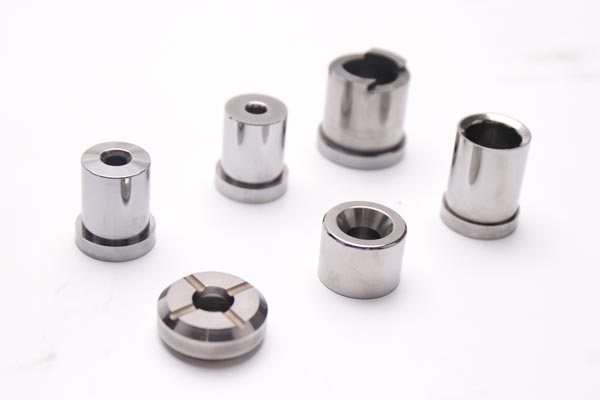
Carbide components are made by sintering high-hardness tungsten carbide powder combined with metal binders, which shows extremely high hardness far exceeding that of ordinary tool steel and high-speed steel. It can maintain stable mechanical properties even in high-temperature working environments above 1000℃, and its wear resistance is 10 to 20 times that of ordinary carbon steel.
Traditional steel materials have excellent toughness and easy processing characteristics, and the procurement cost of single parts is low. However, under long-term high-load friction, impact and high-temperature cutting conditions, steel parts are prone to rapid wear, deformation and edge collapse, resulting in frequent shutdown and replacement.
Bisnis pabrik kami: suku cadang karbida, suku cadang cetakan, cetakan injeksi medis, cetakan injeksi presisi, cetakan injeksi PFA teflon, alat kelengkapan tabung PFA. email: [email protected],whatsapp:+8613302615729.
Application Scenario Matching for Industrial Production
In the field of precision cutting, carbide components can maintain lasting sharpness during high-speed milling, dry cutting and hard material processing, reduce the number of tool changes by more than 70%, and are very suitable for mass production scenarios such as medical mold parts, aerospace precision components and new energy auto parts.
In low-frequency use, low-load impact and non-abrasive working conditions, steel parts still maintain high cost performance, which is suitable for non-core structural components that do not require extreme wear resistance. But when the annual operating hours exceed 2000 hours, the comprehensive use cost of carbide components will be far lower than that of steel parts.
Long-Term Cost and Value Analysis
Although the initial procurement cost of carbide components is higher than that of steel parts, its extremely long service life can greatly reduce the downtime loss caused by frequent part replacement, and reduce the precision deviation of the production line caused by part wear. For large-scale manufacturing enterprises, the use of carbide components can help the production line achieve stable and predictable output, avoid the hidden cost of quality fluctuation caused by frequent replacement of steel parts.
For procurement teams in Dongguan and the Greater Bay Area, selecting localized high-quality carbide component suppliers can further shorten the delivery cycle, obtain faster technical support and after-sales service, and maximize the comprehensive value brought by material upgrading.
FAQ
- Q: What is the main difference between carbide components and steel parts in cutting performance?
A: Carbide components can maintain high hardness at high temperatures, support faster cutting speeds, and have a service life far longer than steel cutting parts, effectively improving processing efficiency. - Q: Can carbide components completely replace all steel industrial parts?
A: No. Steel still has advantages in scenarios requiring extreme toughness, low-frequency use and low initial budget, and the two materials can be selected according to actual working conditions. - Q: What is the break-even point of converting from steel parts to carbide components?
A: When the annual operating hours of the part exceed 2000 hours or the wear loss causes frequent shutdown adjustments, the comprehensive cost of carbide components will be lower than that of steel parts.

 English
  Deutsch
  Français
  日本語
日本語  한국어
한국어  Español
  Português
  Italiano
  Nederlands
  Русский
  Bahasa Indonesia
  العربية