
Custom Carbide Parts Manufacturing Guide
Carbide parts—particularly those made from tungsten carbide (WC-Co)—are indispensable in industries demanding extreme hardness, wear resistance, and thermal stability. As a carbide parts manufacturer, success lies not in volume, but in […]
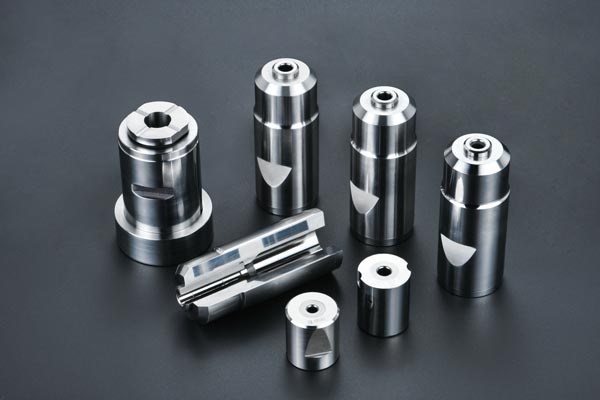
Carbide parts—particularly those made from tungsten carbide (WC-Co)—are indispensable in industries demanding extreme hardness, wear resistance, and thermal stability. As a carbide parts manufacturer, success lies not in volume, but in mastery of powder metallurgy, precision sintering, and post-processing control. This guide outlines the technical framework for producing high-performance custom carbide components, with specific reference to the capabilities of Yize Mould (Dongguan Yize Mould Co., Ltd).
Core Manufacturing Process in Custom Carbide Parts Production
Bisnis pabrik kami: suku cadang karbida, suku cadang cetakan, cetakan injeksi medis, cetakan injeksi presisi, cetakan injeksi PFA teflon, alat kelengkapan tabung PFA. email: [email protected],whatsapp:+8613302615729.
The transformation of tungsten carbide powder into precision-engineered components follows a tightly controlled, multi-stage process designed for microstructural consistency and dimensional accuracy.
The journey begins with powder formulation, where tungsten carbide grains (typically 0.5–5 µm) are blended with a metallic binder—most commonly cobalt—at precise ratios (3–15% by weight). The mixture is homogenized using ball milling to ensure uniform distribution, critical for achieving consistent hardness and fracture toughness.
Next, pressing and shaping occurs via uniaxial or isostatic compaction in hardened steel dies. This step forms the “green compact,” a fragile preform that retains the geometry of the final part. For complex geometries, injection molding using wax or polymer binders enables intricate features such as internal channels or thin walls.
The sintering phase is the most critical. Green compacts are heated in a vacuum or hydrogen atmosphere to 1,350–1,500°C—below the melting point of tungsten carbide but sufficient to induce atomic diffusion. During sintering, the cobalt binder melts and wets the carbide grains, densifying the structure to over 98% theoretical density. Precise temperature profiles and dwell times prevent grain growth, porosity, or distortion.
Post-sintering, precision grinding and finishing are performed using diamond wheels or electrochemical discharge machining (EDM) to achieve tolerances of ±0.005 mm and surface finishes as fine as Ra 0.1 µm. For cutting tools, edge preparation and coating (e.g., TiAlN) may be applied to enhance performance under high-speed cutting.
Each batch is traceable through material certificates, sintering logs, and dimensional inspection records—ensuring compliance with international standards.
Industrial Applications and Performance Requirements
Custom carbide parts are engineered for environments where steel and ceramics fail:
- Cutting Tools: Carbide inserts, end mills, and drill bits for machining hardened steels, titanium, and composites.
- Wear Components: Valve seats, pump sleeves, and extrusion dies exposed to abrasive slurries or high-friction contact.
- Mold Inserts: For plastic injection and die-casting molds that require thermal stability and erosion resistance.
- Mining & Construction: Tungsten carbide-tipped drill bits, saw tips, and wear plates for rock penetration and surface protection.
Performance demands include:
- Kekerasan: 85–93 HRA (Rockwell A scale), approaching diamond.
- Transverse Rupture Strength: 1,800–3,000 MPa to resist fracture under impact.
- Thermal Stability: Retention of hardness up to 800°C without softening.
- Ketahanan Korosi: Critical in chemical processing and marine applications.
These properties are governed by grain size, cobalt content, and sintering quality—each variable meticulously controlled by a qualified carbide parts manufacturer.
Technical Standards and Quality Assurance
Global industries rely on standardized specifications to ensure interchangeability and reliability:
- ISO 4505: Defines classification and testing methods for cemented carbides used in cutting tools.
- ANSI B212.1: Specifies dimensions and tolerances for carbide inserts in machining applications.
- DIN 17340: Outlines material grades and mechanical properties for industrial carbide components.
A reputable carbide parts manufacturer implements a certified quality management system aligned with ISO 9001, with documented controls for:
- Incoming powder analysis (particle size distribution, oxygen content)
- Sintering atmosphere monitoring (oxygen partial pressure, dew point)
- Final inspection via CMM, optical profilometry, and hardness testing (HRA/HRC)
- Batch traceability from raw material to shipment
Compliance is not optional—it is the foundation of trust in mission-critical applications.
Why Choose Yize Mould?
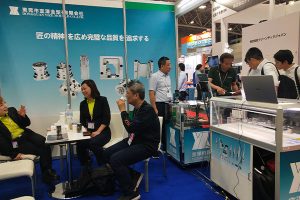
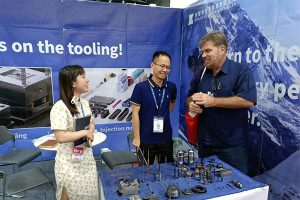
Yize Mould (Dongguan Yize Mould Co., Ltd), established in 2005 and headquartered in Chang’an Town, Dongguan, is a specialized carbide parts manufacturer with over 18 years of experience producing high-performance tungsten carbide components for global industrial clients. We serve sectors including oil & gas, aerospace, medical device manufacturing, and precision tooling by delivering parts with dimensional tolerances of ±0.005 mm, surface finishes down to Ra 0.1 µm, and full compliance with ISO 4505, ANSI B212.1, and DIN 17340.
Our in-house capabilities span the full carbide manufacturing cycle: from powder blending and isostatic pressing to vacuum sintering, diamond grinding, and final inspection. We operate a dedicated carbide sintering furnace with programmable thermal profiles, precision CNC grinders with diamond wheels, and Zeiss CMM systems for 100% dimensional verification. All materials are sourced from certified suppliers, and every production batch is accompanied by material test reports and process documentation under our certified ISO 9001 quality system. With expertise in custom carbide inserts, wear-resistant mold inserts, and micro-precision carbide rods, Yize Mould combines material science rigor with responsive global logistics—delivering not just components, but engineered solutions ready for integration.
Frequently Asked Questions
Q: What types of carbide materials can you produce?
A: We manufacture tungsten carbide grades including YG6, YG8, YG15, YG20, and custom compositions with varying cobalt content (3–15%) and grain sizes (0.5–5 µm). We also produce titanium carbide (TiC)-based alloys and mixed carbide systems upon request.
Q: Do you offer custom shapes and complex geometries?
A: Yes. We specialize in custom carbide parts with intricate features such as internal cooling channels, thin walls (as low as 0.3 mm), and micro-features down to 0.1 mm. Our isostatic pressing and injection molding capabilities enable complex geometries that are unachievable with traditional machining.
Q: What is your minimum order quantity (MOQ) for custom carbide parts?
A: We support prototype runs starting at one piece and scale to high-volume production exceeding 50,000 units annually. There is no enforced MOQ—we tailor tooling and production planning to your project’s scale and timeline.
Q: Can you provide material certifications and test reports?
A: Absolutely. Every shipment includes a material certificate listing composition, density, hardness (HRA), and transverse rupture strength, verified by our in-house lab. We also provide third-party test reports upon request.
Q: How do you ensure consistency across large production runs?
A: We implement statistical process control (SPC) for sintering temperature, pressing pressure, and grinding dimensions. Each batch is tracked via unique lot numbers, and dimensional data is archived for 10 years. We conduct 10% in-process sampling and full CMM inspection on critical features.
Q: Do you offer coating services for carbide parts?
A: Yes. We partner with certified coating specialists to apply TiAlN, TiCN, and CrN coatings via PVD for enhanced wear resistance, reduced friction, and extended tool life. Coating adhesion and thickness are verified per ISO 1456.
Posting Terkait
- Do you know how to Select a Tungsten Carbide Wear Parts Manufacturer
- The Essential Role of Carbide Wear-Resistant Components in Oilfield Drilling Operations
- Factors Influencing Tungsten Carbide Mold Pricing: A Professional Guide for Global Manufacturers
- Why Heat Treatment Matters for Tungsten Carbide Dies

 English
  Deutsch
  Français
  日本語
日本語  한국어
한국어  Español
  Português
  Italiano
  Nederlands
  Русский
  Bahasa Indonesia
  العربية