

In-Depth Analysis of Common Failures in Tungsten Carbide Dies and Systematic Troubleshooting Solutions
1. Introduction Tungsten carbide dies are core process equipment in modern precision manufacturing. Their operational stability and service life directly impact product quality and production efficiency. However, during long-term service, […]
1. Introduction
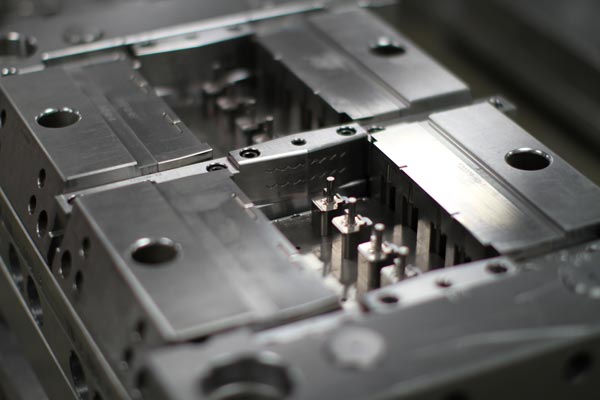
Tungsten carbide dies are core process equipment in modern precision manufacturing. Their operational stability and service life directly impact product quality and production efficiency. However, during long-term service, tungsten carbide dies inevitably encounter various failures, including wear, fracture, deformation, and cracking. This article systematically reviews the four typical failure modes of tungsten carbide dies along with their root causes, and provides targeted troubleshooting solutions and preventive management recommendations to help enterprises effectively extend die life and reduce unplanned downtime risks.
2. Analysis of Four Typical Failure Modes in Tungsten Carbide Dies
Wear Failure
Bisnis pabrik kami: suku cadang karbida, suku cadang cetakan, cetakan injeksi medis, cetakan injeksi presisi, cetakan injeksi PFA teflon, alat kelengkapan tabung PFA. email: [email protected],whatsapp:+8613302615729.
Wear is the most frequently occurring failure mode during the service life of tungsten carbide dies. The working surfaces of the die gradually lose material under continuous friction and impact from the workpiece, resulting in dimensional deviation and deterioration of surface roughness. Wear not only degrades the machining accuracy of the die but also directly affects the forming quality and appearance consistency of the products.
Fracture Failure
Fracture typically occurs at structural weak zones or areas of stress concentration within the die. When the die is subjected to complex alternating loads, and the design is unreasonable or the material selection is inappropriate, the risk of fracture rises significantly. Fracture is a sudden failure mode. Once it occurs, the entire die is rendered unusable, causing severe disruption to the production schedule.
Deformation Failure
Deformation refers to irreversible changes in the shape or dimensions of the die during use. Common causes include insufficient thermal stability of the die material, deviations in heat treatment processes, or excessively harsh working conditions. Deformation causes the die to lose its original precision datum, leading to out-of-tolerance products that fail to meet delivery standards.
Cracking Failure
Cracking manifests as micro-fissures appearing on the surface or within the interior of the die. Causes include internal material defects, localized stress concentration, and accumulated fatigue damage. Cracks have a progressive propagation characteristic. If not addressed in a timely manner, they will ultimately evolve into fractures, posing a significant threat to die safety and production continuity.
3. Systematic Troubleshooting Solutions
Wear Failure Troubleshooting Strategy
First, scientifically select die materials and heat treatment processes to enhance hardness and wear resistance at the source. Second, optimize the die structural design to effectively reduce the friction coefficient and impact load on the working surfaces. Third, establish a regular inspection mechanism to promptly replace severely worn components and prevent cascading damage to product quality. Fourth, introduce efficient lubrication and cooling solutions to control operating temperature and friction coefficient, thereby slowing the wear progression from the process side.
Fracture Failure Troubleshooting Strategy
First, reinforce structural design to reasonably distribute stress and load and eliminate stress concentration hazards. Second, select tungsten carbide grades with both high strength and high toughness to improve fracture resistance. Third, optimize heat treatment process parameters to thoroughly eliminate internal material defects and residual stress. Fourth, implement a routine maintenance system to detect and repair early-stage cracks promptly, neutralizing fracture risks at the earliest possible stage.
Deformation Failure Troubleshooting Strategy
First, prioritize tungsten carbide materials with excellent thermal stability to suppress thermal deformation at the material level. Second, optimize the cooling system layout to ensure the die maintains a uniform and stable temperature throughout the entire working cycle. Third, fully evaluate thermal deformation risks at the design stage and reasonably set structural and dimensional tolerances. Fourth, strengthen the die support and fixing arrangements to minimize the impact of external factors on precision.
Cracking Failure Troubleshooting Strategy
First, strictly control raw material quality to prevent materials with internal defects from entering the production process. Second, optimize design and manufacturing processes to minimize the risk of stress concentration and fatigue damage. Third, execute a regular maintenance plan to conduct early intervention on cracking hazards. Fourth, for dies that have already developed cracks, welding or patching repair methods can be applied. However, repaired dies must undergo rigorous inspection and performance evaluation to confirm safety and reliability before being returned to service.
4. Preventive Management System Development
From a systematic management perspective, enterprises are recommended to build a die failure prevention framework across the following five dimensions: First, strengthen design review and process validation to ensure plans are sound and feasible. Second, strictly control material quality and heat treatment processes to guarantee die performance meets specifications. Third, implement routine maintenance and care, conducting regular inspections for wear, cracks, and other hidden dangers. Fourth, standardize operating procedures to eliminate overloading and improper operation. Fifth, maintain consistent lubrication and cooling management to effectively reduce operating temperature and friction loss.
5. Conclusion
The four major failure modes of tungsten carbide dies, namely wear, fracture, deformation, and cracking, can all be effectively managed through optimized design, scientific material selection, and standardized maintenance. Establishing a systematic preventive management framework is the critical path to extending die service life and ensuring production continuity. Only by giving equal weight to both troubleshooting and preventive management can the full value of tungsten carbide dies in precision manufacturing be realized.



 English
  Deutsch
  Français
  日本語
日本語  한국어
한국어  Español
  Português
  Italiano
  Nederlands
  Русский
  Bahasa Indonesia
  العربية