

Performance Stability Management Strategy for Tungsten Carbide Dies Under High-Load Conditions
In high-end manufacturing systems, tungsten carbide dies have become core tooling components due to their exceptional hardness, superior wear resistance, structural strength, and thermal stability. As industrial production efficiency continues […]
In high-end manufacturing systems, tungsten carbide dies have become core tooling components due to their exceptional hardness, superior wear resistance, structural strength, and thermal stability. As industrial production efficiency continues to advance, process loads are intensifying, placing increasingly stringent demands on tooling performance. In this context, ensuring the long-term performance stability of tungsten carbide dies under high-load conditions has become a central focus in precision manufacturing. This article systematically outlines a performance assurance framework for tungsten carbide dies under high-load scenarios, covering material selection optimization, structural design iteration, process precision control, and full-life-cycle maintenance.
Material Selection and Performance Optimization
The baseline performance of tungsten carbide dies is directly tied to their compositional system.
Bisnis pabrik kami: suku cadang karbida, suku cadang cetakan, cetakan injeksi medis, cetakan injeksi presisi, cetakan injeksi PFA teflon, alat kelengkapan tabung PFA. email: [email protected],whatsapp:+8613302615729.
Ensuring performance under high-load conditions requires sourcing high-purity base materials. Qualified high-performance tungsten carbide must exhibit uniform elemental distribution, high purity, and minimal impurity content—thereby eliminating intrinsic defects such as internal porosity and microcracks that could trigger stress concentration failures under load. Furthermore, precise adjustment of tungsten and cobalt ratios enables targeted performance enhancement: increasing tungsten content significantly improves surface hardness and wear resistance, making it ideal for high-frequency, high-impact applications; maintaining cobalt content within an optimal range enhances structural toughness without compromising hardness, thereby reducing the risk of cracking under high-stress conditions.
Structural Design and Operational Adaptation
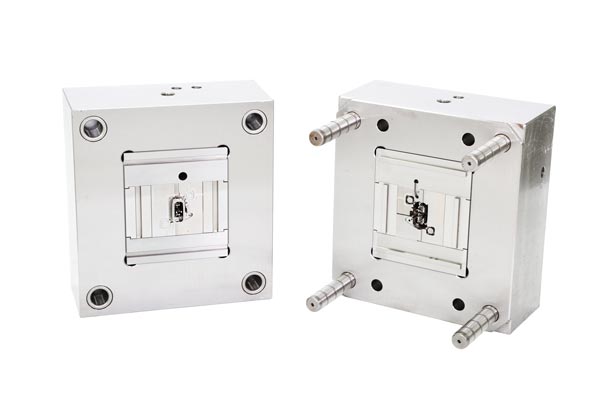
Scientific structural design is the foundational support for tungsten carbide dies to withstand high-load impacts. Customized design for high-load environments must address three critical dimensions:
First, stress distribution optimization—through refined corner radii and modified cross-sectional geometries, internal stress pathways are reconfigured to prevent localized overload and subsequent deformation or fracture.
Second, thermal management integration—continuous high-load operation rapidly elevates die temperature, leading to material degradation. Therefore, integrated cooling channels and expanded heat dissipation surfaces must be incorporated during design to dynamically regulate operational temperature and maintain performance stability.
Third, extended service life design—adopting modular configurations and optimizing dimensions of wear-prone zones reduces localized stress intensity while preserving machining accuracy, thereby extending overall tool life and lowering tooling cost amortization.
Manufacturing Process and Precision Control
Standardized control across the entire manufacturing chain is essential to translate material and design advantages into real-world performance. Tungsten carbide dies intended for high-load applications require a comprehensive precision assurance system:
In heat treatment, precise control of quenching temperature, holding duration, and controlled cooling rates eliminates residual internal stresses while simultaneously enhancing both hardness and toughness.
In precision machining, advanced techniques such as five-axis CNC machining and mirror-finish grinding are employed to achieve micron-level dimensional tolerances and ultra-low surface roughness, eliminating surface imperfections that could initiate failure under load.
Throughout quality control, full-node inspections are conducted on raw material composition, dimensional accuracy, and internal integrity to ensure every die meets the stringent performance criteria for high-load operation.
Operational Maintenance and Full-Life-Cycle Management
Proper usage and maintenance are critical extensions of performance stability. A dedicated maintenance protocol must be established for high-load operations:
On the operational side, strict adherence to standardized procedures is mandatory—overloading and overspeeding must be strictly prohibited, and machining parameters such as feed rate and impact pressure must be matched precisely to the die’s performance specifications to minimize unnecessary wear.
For scheduled maintenance, a tiered servicing plan based on operational hours should be implemented, including cavity cleaning, lubrication of mating surfaces, and torque verification of fasteners to reduce abnormal wear and prevent unexpected failures.
In fault response, a rapid repair protocol must be in place: localized wear can be restored via laser cladding or thermal spraying, provided the repair is followed by stress-relief and precision finishing; components reaching end-of-life must be replaced promptly to prevent catastrophic failure from continued use.
Technological Evolution and Sustainable Enhancement
As manufacturing demands for load capacity continue to rise, the performance assurance system for tungsten carbide dies must evolve in parallel:
In materials innovation, accelerate the industrial adoption of next-generation materials such as nano-crystalline tungsten carbide and gradient composite carbides to surpass the performance limits of conventional formulations.
In process innovation, deploy advanced surface treatments including plasma strengthening and nano-surface modification to selectively enhance wear resistance and impact toughness at the working interface.
In smart manufacturing, integrate real-time condition monitoring systems to collect operational data on stress and temperature, enabling predictive performance degradation alerts and transitioning maintenance from reactive repair to proactive prediction.
In summary, maintaining the performance stability of tungsten carbide dies under high-load conditions is a holistic system engineering challenge spanning material selection, structural design, manufacturing control, and operational maintenance. Through coordinated optimization across these dimensions, the full performance potential of tungsten carbide can be unlocked, ensuring sustained reliability in continuous high-load environments and providing critical tooling support for advancements in precision manufacturing capacity and dimensional accuracy.
FAQ
Q1: What is the typical cobalt content range for tungsten carbide dies used under high-load conditions?
A1: For tungsten carbide dies subjected to high-impact, high-load applications, cobalt content is typically maintained between 8% and 15%. This range optimizes the balance between hardness retention and enhanced toughness, minimizing the risk of cracking under stress.
Q2: How can internal stress concentration in a tungsten carbide die be rapidly identified after high-load operation?
A2: Internal stress concentration can be detected through magnetic particle inspection combined with dimensional re-measurement. The presence of microcracks or non-elastic dimensional deviations in critical areas indicates stress concentration, requiring immediate stress-relief treatment.
Q3: Can a tungsten carbide die repaired via laser cladding continue to operate under its original high-load conditions?
A3: Yes—laser-clad regions that have undergone validated process qualification, followed by proper stress-relief annealing and precision re-machining, can fully restore original performance characteristics and safely operate under the initial high-load conditions.
Posting Terkait
- Applications of Tungsten Carbide Dies in the Electronics Industry
- Analysis of Tungsten Carbide Die Fracture Causes and Prevention Strategies
- Systematic Strategies and Practical Pathways for Extending Tungsten Carbide Die Service Life
- Environmental Impact and Sustainability of Tungsten Carbide Die Materials



 English
  Deutsch
  Français
  日本語
日本語  한국어
한국어  Español
  Português
  Italiano
  Nederlands
  Русский
  Bahasa Indonesia
  العربية