
Carbide vs Ceramic Materials: A Comprehensive Guide to Wear Resistant Materials
In the competitive landscape of modern manufacturing, mining, and heavy industry, selecting the optimal wear resistant materials directly impacts operational efficiency, maintenance costs, and equipment longevity. Among the most widely […]
In the competitive landscape of modern manufacturing, mining, and heavy industry, selecting the optimal wear resistant materials directly impacts operational efficiency, maintenance costs, and equipment longevity. Among the most widely deployed high-performance solutions, carbide and ceramic materials stand out as two dominant choices, each offering distinct advantages tailored to specific operating conditions. This guide provides an in-depth analysis of both material families, comparing their mechanical properties, application suitability, and total cost of ownership to help engineering and procurement teams make informed material selection decisions.
The Growing Demand for Advanced Wear Resistant Materials
Global industrial sectors continue to push the boundaries of equipment performance, driving sustained demand for wear resistant materials that can withstand abrasive, erosive, and high-temperature operating environments. The worldwide wear resistant materials market is projected to expand steadily through 2026 and beyond, with Asia Pacific leading regional growth on the back of infrastructure development, mining expansion, and manufacturing modernization. As downtime costs escalate and production volumes increase, enterprises are shifting from traditional steel components to engineered carbide and ceramic solutions that deliver significantly longer service life and lower total cost of ownership.
当社の工場事業:超硬部品、金型部品、医療用射出成形金型、精密射出成形金型、テフロンPFA射出成形、PFAチューブ継手。電子メール:[email protected],whatsapp:+8613302615729。
Understanding Carbide Materials
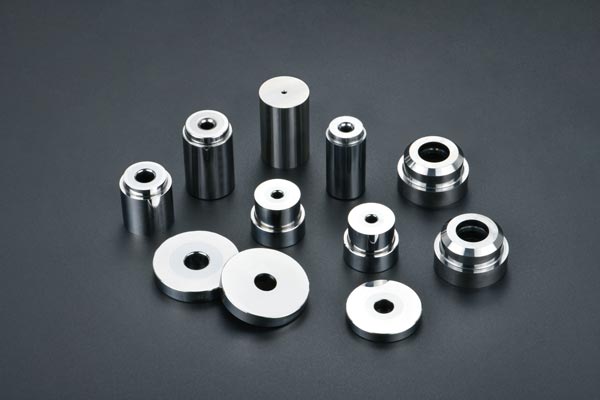
Carbide materials, most commonly tungsten carbide (WC) bonded with cobalt (Co), represent a class of cemented hard metals that combine exceptional hardness with remarkable toughness. The material composition typically consists of 80 to 94 percent tungsten carbide particles sintered with a cobalt binder phase ranging from 6 to 12 percent by weight. This unique microstructure delivers a balanced set of mechanical properties that have made carbide the workhorse of wear resistant applications across industries.
Key Properties of Carbide
Tungsten carbide exhibits hardness values typically ranging from 1,500 to 2,000 HV (Vickers Hardness), translating to approximately HRA 90 or HRC 68–72. Beyond raw hardness, carbide materials demonstrate excellent compressive strength and fracture toughness relative to other ultra-hard materials. The cobalt binder content can be precisely adjusted to tailor performance — lower cobalt grades maximize abrasion resistance, while higher cobalt formulations improve impact resistance and thermal shock tolerance.
Carbide also possesses high thermal conductivity, enabling efficient heat dissipation during cutting and friction-intensive operations. This property helps maintain structural integrity at elevated temperatures up to approximately 800–1,000 degrees Celsius. Additionally, carbide offers good chemical resistance against most cutting fluids and industrial corrosives, further extending its service life in demanding environments.
Primary Applications of Carbide
Carbide components find extensive use across metalworking, mining, construction, and oil and gas sectors. In machining operations, carbide inserts serve as the standard tooling solution for turning, milling, and drilling of steel, cast iron, and non-ferrous metals. In mining and mineral processing, carbide-tipped drill bits, crusher components, and wear liners withstand continuous abrasion from rock and ore. The material is also widely employed in the production of cutting blades for plastic granulation, woodworking, and metal recycling equipment, where impact resistance and durability are paramount.
Understanding Ceramic Materials
Ceramic wear resistant materials encompass a broad family of engineered ceramics, with alumina (Al₂O₃), silicon nitride (Si₃N₄), and silicon carbide (SiC) being the most commercially significant. These inorganic, non-metallic materials are manufactured through advanced sintering processes, resulting in a crystalline structure that delivers exceptional hardness and thermal stability. Advanced ceramic formulations, including whisker-reinforced composites and mixed ceramics with titanium carbide additions, have further expanded the performance envelope of ceramic wear solutions.
Key Properties of Ceramic Materials
Ceramic materials are renowned for their extreme hardness, typically exceeding 2,500 HV and reaching up to 3,000 HV in specialized grades — significantly higher than conventional carbide. This superior hardness translates directly to exceptional wear resistance in continuous, low-impact operating conditions. Ceramics also exhibit remarkable high-temperature stability, maintaining hardness and structural integrity at temperatures ranging from 1,200 to 1,400 degrees Celsius, and in some formulations up to 1,650 degrees Celsius.
The low coefficient of thermal expansion and excellent chemical inertness of ceramics make them ideal for applications involving corrosive media or metal contamination concerns. Silicon carbide ceramics, for instance, are passivated against oxidation and corrosion up to approximately 1,650 degrees Celsius due to a protective silicon dioxide surface layer. In applications requiring metal-free processing environments, such as pharmaceutical or food-grade material handling, ceramics provide an unmatched solution.
However, the principal limitation of ceramic materials is their inherent brittleness. With relatively low fracture toughness and impact resistance compared to carbide, ceramic components are susceptible to chipping and catastrophic failure under mechanical shock or interrupted loading conditions. This constraint defines the boundary conditions where ceramic materials deliver optimal value.
Primary Applications of Ceramic Materials
Ceramic wear components excel in high-speed, continuous-operation scenarios with minimal impact loading. In precision machining, ceramic cutting tools enable cutting speeds three to ten times higher than carbide when processing hardened steels and superalloys. In the automotive sector, silicon carbide ceramic brake discs and bearings provide exceptional performance under high-temperature conditions. The semiconductor industry relies on high-purity ceramics for crucibles and CVD reactor components, while chemical processing plants deploy silicon carbide seals, bearings, and pump components for corrosion resistance. Additional applications include precision granulation blades, wire drawing dies, and thermal spray coatings for wear protection.
Comparative Performance Analysis
Hardness and Wear Resistance
When evaluating wear resistant materials, hardness serves as a primary indicator of abrasion resistance. Ceramic materials consistently outperform carbide in pure hardness metrics, with Vickers hardness values 25 to 50 percent higher than typical tungsten carbide grades. In continuous sliding wear applications with minimal impact, ceramics can deliver 20 to 50 percent longer service life compared to standard carbide. However, real-world wear performance depends on the specific wear mechanism — adhesive, abrasive, or erosive — and the operating conditions. In applications involving impact or interrupted loading, carbide’s superior toughness often results in better overall wear performance despite lower nominal hardness.
Toughness and Impact Resistance
Carbide materials hold a decisive advantage in fracture toughness and impact resistance. The ductile cobalt binder phase in carbide absorbs energy and inhibits crack propagation, enabling the material to withstand mechanical shock, vibration, and interrupted cuts that would cause catastrophic failure in ceramic components. Industry data indicates that carbide offers roughly two to four times the impact resistance of structural ceramics, making it the preferred choice for mining, construction, and heavy machining applications where shock loading is unavoidable.
Thermal Performance
Ceramic materials demonstrate superior high-temperature performance, retaining hardness and dimensional stability at temperatures well above the operational limits of carbide. While carbide begins to soften significantly above 800 degrees Celsius, ceramics maintain structural integrity up to 1,200–1,400 degrees Celsius, enabling substantially higher cutting speeds and operating temperatures. This thermal advantage is particularly valuable in dry machining operations and high-temperature industrial processes. However, carbide’s higher thermal conductivity allows for more effective heat dissipation, which can be advantageous in applications where thermal management is critical.
Chemical Stability and Contamination Resistance
Ceramics offer exceptional chemical inertness and do not react with most workpiece materials, reducing built-up edge formation and eliminating the risk of metal contamination in sensitive processing environments. Carbide, while reasonably chemically stable, can react with certain materials at high temperatures and may introduce metallic elements from the binder phase. For pharmaceutical, medical, food-grade, and high-purity semiconductor applications, ceramics provide a critical advantage in maintaining product purity.
Cost Considerations
The economic evaluation of wear resistant materials requires a total cost of ownership perspective rather than simply comparing upfront purchase prices. Ceramic components generally carry a lower unit cost than carbide in many form factors, but their brittle nature increases the risk of premature failure and replacement costs in suboptimal applications. Carbide typically commands a higher initial investment but delivers longer effective service life in impact-prone environments, resulting in lower cost per unit of production. When comprehensive costs — including material acquisition, replacement frequency, maintenance labor, and production downtime — are factored together, the optimal material choice depends heavily on the specific application profile.
Selecting the Right Material for Your Application
The decision between carbide and ceramic wear resistant materials hinges on a systematic evaluation of operating conditions, performance requirements, and economic factors.
Carbide is the preferred choice when applications involve impact loading, interrupted operations, variable cutting conditions, or the need for versatile, general-purpose wear resistance. It excels in roughing operations, mining and construction equipment, and general machining of diverse materials. The adjustability of carbide grades through variations in cobalt content and grain size further enhances its suitability across a wide spectrum of wear applications.
Ceramic materials are the optimal solution for high-speed, continuous operations with minimal mechanical shock, where extreme hardness and high-temperature stability are critical. They are particularly advantageous for finishing operations on hardened materials, high-temperature processing environments, and applications requiring contamination-free performance. Ceramic components deliver the greatest value when operating conditions are well-controlled, predictable, and free from significant impact loads.
For applications that fall between these profiles, hybrid solutions such as cermet materials — which combine ceramic particles with a metallic binder — can offer an intermediate balance of hardness, toughness, and chemical stability. Additionally, coated carbide technologies, such as chemical vapor deposition and physical vapor deposition coatings, can bridge the performance gap by applying wear-resistant ceramic layers onto a tough carbide substrate.
Future Trends in Wear Resistant Materials
The wear resistant materials industry continues to evolve, driven by advances in materials science, manufacturing technology, and sustainability imperatives. Key trends include the development of nanocomposite ceramics with improved toughness, the introduction of cobalt-free carbide binders to address supply chain and regulatory concerns, and the growing adoption of additive manufacturing for custom wear components.
Sustainability considerations are also reshaping the market, with increasing emphasis on recyclability, energy efficiency in production, and extended component service life as a means of reducing material consumption. The integration of sensor technologies and predictive maintenance systems with wear components is enabling more precise performance monitoring and optimized replacement scheduling.
As global industries continue to demand higher performance and lower operating costs, the boundary between carbide and ceramic materials will continue to blur through composite formulations and hybrid manufacturing approaches. Nonetheless, both material families will remain cornerstones of the wear resistant materials landscape, each serving distinct and complementary roles in industrial applications.
Frequently Asked Questions
Q: Which material lasts longer, carbide or ceramic?
A: In continuous wear applications with minimal impact, ceramic materials typically last longer due to their higher hardness. However, in applications involving shock loading or interrupted operations, carbide generally provides longer service life because of its superior fracture toughness. The answer depends on the specific operating conditions and wear mechanism.
Q: Are ceramic wear parts more expensive than carbide?
A: Unit pricing varies by component type, grade, and supplier. In many applications, ceramic components have a lower upfront cost than carbide, but they carry a higher risk of premature failure in impact-prone environments. A comprehensive total cost of ownership analysis — including replacement frequency, labor, and downtime — is necessary to determine the most economical choice.
Q: Can carbide and ceramic be used together in the same application?
A: Yes, hybrid and composite approaches are common. Coated carbide tools, for example, combine a tough carbide substrate with wear-resistant ceramic coatings to leverage the advantages of both material families. In equipment design, different wear zones may utilize different materials matched to the specific loading conditions of each area.
Q: What are the temperature limits for carbide and ceramic materials?
A: Tungsten carbide typically retains its properties up to approximately 800–1,000 degrees Celsius, above which significant softening occurs. Ceramic materials maintain structural integrity at much higher temperatures, generally between 1,200 and 1,400 degrees Celsius for most structural ceramics, with some silicon carbide formulations stable up to 1,650 degrees Celsius.
Q: How do I choose between carbide and ceramic for my specific application?
A: Evaluate the primary wear mechanism, impact loading severity, operating temperature range, chemical compatibility requirements, and total cost of ownership. As a general guideline, select carbide for impact-prone, variable conditions and ceramics for high-speed, continuous, well-controlled environments with minimal shock loading. Consulting with material engineers and conducting field trials is recommended for critical applications.



 English
  Deutsch
  Français
  日本語
日本語  한국어
한국어  Español
  Português
  Italiano
  Nederlands
  Русский
  Bahasa Indonesia
  العربية