
Prospects for Innovative Technologies in Tungsten Carbide Dies
I. Introduction In the grand landscape of modern manufacturing, tungsten carbide dies hold a pivotal position. The performance and technological level of these dies are like a crucial cog in […]
I.はじめに
In the grand landscape of modern manufacturing, tungsten carbide dies hold a pivotal position. The performance and technological level of these dies are like a crucial cog in a precision gear, directly and profoundly influencing product quality and production efficiency. As the tide of technology surges forward and continuously evolves, tungsten carbide die technology has embarked on a journey of continuous innovation and development. This article will take a forward-looking perspective to conduct an in-depth exploration of the innovative technologies in tungsten carbide dies, precisely analyze the directions and trends of future technological development in this field, and provide the industry with forward-looking and guiding insights.
II. Current Status of Tungsten Carbide Die Technology
Tungsten carbide dies, with their outstanding characteristics such as high hardness that endows them with strong compressive strength, high wear resistance that ensures minimal wear during long-term use, and excellent thermal stability that enables them to maintain stable performance in high-temperature environments, have found wide applications in high-end fields such as automobile manufacturing, electronic equipment production, and aerospace. However, traditional tungsten carbide die manufacturing technology is a double-edged sword. While it has achieved certain results, it also has numerous limitations that cannot be ignored.
当社の工場事業:超硬部品、金型部品、医療用射出成形金型、精密射出成形金型、テフロンPFA射出成形、PFAチューブ継手。電子メール:[email protected],whatsapp:+8613302615729。
On the one hand, tungsten carbide materials are extremely hard, making them extremely difficult to process. They require high-precision and high-tech processing equipment and processes, which undoubtedly increase the complexity and cost of manufacturing. On the other hand, with the rapid development of the manufacturing industry, the market’s performance requirements for dies have become increasingly stringent. High precision, high efficiency, and high stability have become the basic requirements for die manufacturing. However, traditional tungsten carbide dies are gradually finding it difficult to meet these demands and are struggling to keep pace with the rapid development of modern manufacturing. Therefore, innovating tungsten carbide die technology has become an inevitable choice and an urgent need for the industry’s development.
III. Prospects for Innovative Technologies in Tungsten Carbide Dies
1. In-depth Application of Nanotechnology
Nanotechnology, as a cutting-edge technology in today’s scientific and technological field, has brought brand-new opportunities and broad application prospects to tungsten carbide die manufacturing. Through advanced nanotechnology methods, nanoparticles can be precisely added to tungsten carbide materials. These nanoparticles, like tiny “strengthening agents,” can significantly improve the microstructure of the material, thereby enhancing key performance indicators of the die such as hardness, wear resistance, and thermal stability.
At the same time, nanotechnology can also be applied to the nano-coating treatment of die surfaces. This nano-coating has extremely high precision and unique properties, which can further optimize the surface quality of the die, reduce surface roughness, and improve processing accuracy. This enables the die to more precisely shape products during the manufacturing process and meet the requirements of high-precision production.
2. Innovative Application of 3D Printing Technology
3D printing technology, as a revolutionary rapid prototyping technology, has shown great potential and has been widely applied in the field of die manufacturing. With 3D printing technology, designers only need to input the designed die model into the 3D printing equipment, and the equipment can directly print the die by stacking materials layer by layer according to the precise data of the model. This process significantly shortens the traditional cycle of die manufacturing, reduces intermediate links and human intervention, and thus effectively lowers manufacturing costs.
Looking ahead, as 3D printing technology continues to make breakthroughs and innovations, its printing precision and efficiency will be further improved. Higher printing precision can ensure that the dimensional accuracy and surface quality of the die reach higher levels, while higher efficiency means that more dies can be manufactured in a shorter period, bringing more possibilities and competitive advantages to tungsten carbide die manufacturing.
3. Comprehensive Integration of Intelligent Technologies
Intelligent technology is one of the important trends and core driving forces for the development of modern manufacturing. In the field of tungsten carbide die manufacturing, intelligent technology will penetrate all aspects such as die design, manufacturing, and inspection, achieving a full-process intelligent upgrade.
In the die design stage, intelligent technology can enable automated design. Through advanced algorithms and software, the optimal die design scheme can be automatically generated according to the product requirements and performance requirements, greatly improving design efficiency and quality. During the manufacturing process, digital and intelligent monitoring systems can collect production data in real-time, precisely control and adjust the production process, and ensure the precision and stability of die manufacturing. At the same time, intelligent technology also supports remote maintenance and fault diagnosis of dies. Through the Internet of Things technology, the die is connected to the monitoring center to achieve real-time monitoring of the die’s operating status. Once a fault occurs, the system can quickly issue an alarm and provide detailed fault information and solutions, greatly facilitating the use and maintenance of the die, reducing downtime, and improving production efficiency.
4. Continuous Upgrading of High-precision Processing Technologies
High-precision processing technology is one of the key core technologies in tungsten carbide die manufacturing. As the manufacturing industry’s requirements for die precision continue to increase, the application scope of high-precision processing technology will also expand and deepen.
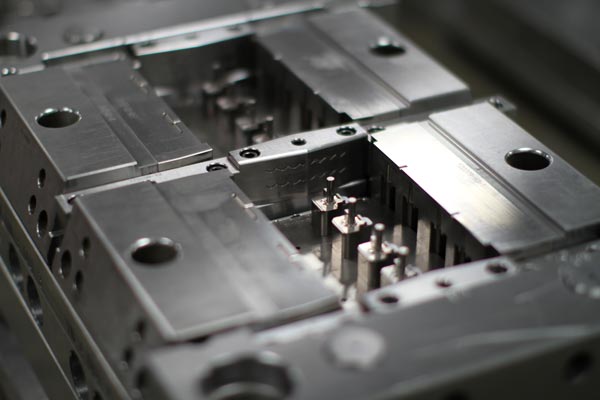
In the future, high-precision processing technology will develop towards a more refined and efficient direction. Laser processing technology, with its characteristics of high energy density, high precision, and non-contact processing, can achieve micron-level processing precision on tungsten carbide dies and is suitable for the manufacturing of dies with complex shapes and high precision requirements. Electrical discharge machining (EDM) technology removes material by the high temperature generated by pulsed discharges between the electrode and the workpiece, enabling it to process various materials with high hardness and toughness, providing strong support for the precision processing of tungsten carbide dies. Ultrasonic machining technology uses the high-frequency vibration of ultrasonic waves to drive the tool to process the workpiece, with advantages such as high processing precision and good surface quality, especially suitable for the processing of micro-holes and complex cavities. The continuous development and improvement of these high-precision processing technologies will elevate the processing precision of tungsten carbide dies to unprecedented heights, and the processing efficiency will also be significantly improved.
5. Widespread Application of Environmental Protection and Energy-saving Technologies
In the context of the current society’s high emphasis on environmental protection and sustainable development, environmental protection and energy-saving technologies have become an important development direction in the field of tungsten carbide die manufacturing. In the future, tungsten carbide die manufacturing will pay more attention to the recycling of materials and the treatment of waste. By establishing a complete material recycling system, waste dies and processing waste can be recycled and reused, reducing resource waste and environmental pollution.
At the same time, in terms of manufacturing processes, more environmentally friendly materials and processes will be actively adopted. For example, choosing low-pollution and biodegradable auxiliary materials to reduce the emission of harmful substances. In terms of energy consumption, energy-saving technologies will be widely applied. Energy-saving machine tools will be used, process parameters will be optimized, and production processes will be reasonably arranged to reduce energy consumption and production costs, achieving green manufacturing and sustainable development.
IV. Impact of Innovative Technologies on Tungsten Carbide Dies
1. Significantly Improve Die Performance
The widespread application of innovative technologies will bring a qualitative leap in the performance improvement of tungsten carbide dies. Nanotechnology improves the hardness, wear resistance, and thermal stability of the die by improving the material’s microstructure and surface coating treatment, thereby extending the die’s service life, reducing the frequency of die replacement, and improving the stability and reliability of production. High-precision processing technology ensures that the dimensional accuracy and surface quality of the die reach higher levels, enabling the die to manufacture more precise and high-quality products and meet the market’s demand for high-end products.
2. Effectively Reduce Manufacturing Costs
The application of innovative technologies will reduce the manufacturing costs of tungsten carbide dies from multiple aspects. 3D printing technology shortens the die manufacturing cycle and reduces material waste and labor costs during the die manufacturing process. Intelligent technology achieves automated die design and digital monitoring of the manufacturing process, improving production efficiency, reducing the error rate and rework rate during production, and thus lowering manufacturing costs. In addition, the application of environmental protection and energy-saving technologies further reduces production costs by recycling materials and optimizing energy consumption, improving the economic benefits of enterprises.
3. Strongly Promote Industrial Upgrading
The application of innovative technologies will become a powerful engine for the industrial upgrading of tungsten carbide dies. With the continuous progress and application of technology, tungsten carbide die manufacturing will gradually achieve automated, digital, and intelligent production. Automated production can improve production efficiency and the consistency of product quality, reducing human intervention and human errors. Digital production can achieve precise control of the production process and data-driven management, providing scientific basis for enterprise decision-making. Intelligent production can achieve remote monitoring and maintenance of dies, improving production flexibility and response speed. These changes will enhance the competitiveness and development level of the entire tungsten carbide die industry and promote the industry to upgrade towards high-end, intelligent, and green directions.
V.結論
The prospects for innovative technologies in tungsten carbide dies have outlined a future picture full of hope and challenges for us. Through the comprehensive application of innovative means such as nanotechnology, 3D printing technology, intelligent technology, high-precision processing technology, and environmental protection and energy-saving technology, the performance of tungsten carbide dies will be significantly improved, manufacturing costs will be effectively reduced, and industrial upgrading will be accelerated.
In the future, with the continuous progress of science and technology and the continuous application of innovative technologies, tungsten carbide dies will play a more important role in the manufacturing industry and become a key force in promoting the high-quality development of the manufacturing industry. At the same time, we also need to maintain keen insight, closely monitor the development trends of new technologies, actively introduce and apply advanced technologies, and continuously promote the innovation and development of tungsten carbide die technology to adapt to market changes and industry development needs and remain invincible in the fierce market competition.
FAQ
Q: Will the application of nanotechnology in tungsten carbide die manufacturing increase the manufacturing cost of the die?
A: In the initial stage, due to the high cost of nanotechnology research and application, it may increase the manufacturing cost of the die to a certain extent. However, in the long run, as nanotechnology continues to mature and be applied on a large scale, its cost will gradually decrease. Moreover, the performance improvements brought by nanotechnology, such as extending service life and improving processing accuracy, can reduce the frequency of die replacement and the scrap rate, thus reducing overall production costs.
Q: Can the strength and durability of tungsten carbide dies manufactured by 3D printing technology meet actual production requirements?
A: Currently, with the continuous development of 3D printing technology, through optimizing the printing process and material selection, the strength and durability of tungsten carbide dies manufactured by 3D printing have been significantly improved. For some dies with high precision requirements and complex shapes, 3D printing technology can manufacture die structures that are difficult to achieve by traditional methods, and under reasonable use and maintenance, they can meet actual production requirements. However, for dies under extreme working conditions, further research and improvement of 3D printing technology are still needed.
Q: Does the application of intelligent technology in tungsten carbide die manufacturing require higher technical skills from operators?
A: The application of intelligent technology does put forward certain new requirements for operators, but it is not higher-difficulty technical requirements. Intelligent systems usually have user-friendly interfaces and operation guides, and operators can master basic operation methods after certain training. Moreover, the main purpose of intelligent technology is to achieve automated and intelligent production, reduce human intervention and operation difficulty, and improve production efficiency and quality stability. Operators are more responsible for monitoring and maintaining the normal operation of intelligent systems rather than performing complex traditional operations.
Q: Will high-precision processing technology be limited by the hardness of the material in tungsten carbide die manufacturing?
A: High-precision processing technology does face certain limitations from material hardness in tungsten carbide die manufacturing, but it is not insurmountable. Currently, significant progress has been made in high-precision processing technologies for high-hardness materials. For example, laser processing and electrical discharge machining can effectively process high-hardness tungsten carbide materials. At the same time, by continuously optimizing processing parameters and improving tool materials and structures, the application effect of high-precision processing technology in tungsten carbide die manufacturing can be further improved, breaking through the limitations of material hardness.
Q: Will the application of environmental protection and energy-saving technologies in tungsten carbide die manufacturing affect the quality and performance of the die?
A: The application of environmental protection and energy-saving technologies will not have a negative impact on the quality and performance of tungsten carbide dies. On the contrary, by using environmentally friendly materials and optimizing manufacturing processes, it can not only reduce environmental pollution but also improve the quality and performance of the die to a certain extent. For example, material recycling can ensure the purity and quality stability of the material; optimizing energy consumption can reduce thermal deformation during processing and improve the dimensional accuracy and surface quality of the die. Therefore, environmental protection and energy-saving technologies and the improvement of die quality and performance are mutually reinforcing
 English
  Deutsch
  Français
  日本語
日本語  한국어
한국어  Español
  Português
  Italiano
  Nederlands
  Русский
  Bahasa Indonesia
  العربية