

The Decisive Impact of Tungsten Carbide Mold Precision on Product Quality
In the modern manufacturing system, molds are the core tooling for mass production of components, and their precision level directly determines the quality performance of end products. In industries with […]
In the modern manufacturing system, molds are the core tooling for mass production of components, and their precision level directly determines the quality performance of end products. In industries with extremely stringent precision requirements such as automotive, electronics, and aerospace, tungsten carbide mold precision has become a key indicator of product quality. This article provides a systematic analysis of the definition of tungsten carbide mold precision, its core influencing factors, and its transmission mechanism to product quality.
1. The Connotation of Tungsten Carbide Mold Precision
Tungsten carbide mold precision refers to the degree of conformity between geometric parameters such as dimensions, shapes, and positions of the mold and design requirements throughout its full lifecycle of manufacturing, assembly, and use. It can be broken down into three levels: manufacturing precision, which is the dimensional, shape, and positional tolerance level achievable during the machining stage; assembly precision, which is the fit and alignment accuracy between components; and service precision, which is the mold’s ability to maintain its initial precision during continuous production. Together, these three levels form the complete evaluation system for mold precision.
O nosso negócio de fábrica: peças de metal duro, peças de molde, moldes de injeção médica, moldes de injeção de precisão, moldagem por injeção de teflon PFA, acessórios para tubos PFA. e-mail: [email protected],whatsapp:+8613302615729.
2. Four Core Factors Influencing Tungsten Carbide Mold Precision
Material factors. The hardness, wear resistance, and deformation resistance of tungsten carbide material are the material foundation for precision. High-quality tungsten carbide maintains geometric stability under high-load, long-cycle operating conditions, thereby providing a guarantee for sustained precision.
Manufacturing process factors. Machining methods, heat treatment protocols, and surface treatment processes all have a direct impact on final precision. An advanced and rational process route can control dimensional errors and geometric deviations to the minimum range.
Design factors. The structural layout, dimensional annotation, and tolerance coordination scheme of the mold determine the upper limit of manufacturing difficulty. Scientific design can reduce the risk of machining error accumulation at the source and enhance precision and stability.
Usage and maintenance factors. Operating parameters such as temperature fluctuations, forming pressure, and lubrication conditions, along with the standardization of daily maintenance, jointly determine the rate of mold precision degradation. Systematic maintenance management can effectively extend the precision retention period.
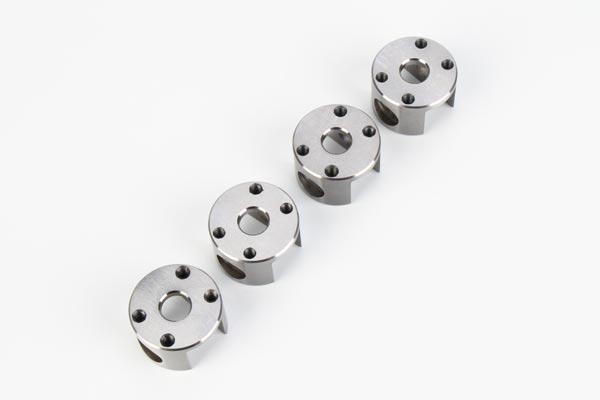
3. Fourfold Transmission of Tungsten Carbide Mold Precision to Product Quality
Product quality. High-precision molds are the prerequisite for high-precision products. When mold precision meets standards, products achieve consistent dimensions and accurate contours; conversely, insufficient precision directly leads to quality defects such as out-of-tolerance dimensional deviations and shape distortion.
Scrap rate. In forming processes such as stamping, mold clearance deviation is the primary cause of defects such as burrs and cracking. Molds with insufficient precision significantly increase the scrap rate, while high-precision molds can fundamentally reduce this loss.
Production cost. An increased scrap rate means direct waste of raw materials and energy, while frequent mold repair or replacement also consumes substantial man-hours and capital. Improving mold precision is an effective path to reducing comprehensive production costs.
Product competitiveness. In market competition driven by both quality and cost, high-precision tungsten carbide molds are the core resource for enterprises to achieve high-quality, low-cost delivery. In high-end manufacturing in particular, their strategic value is irreplaceable.
4. Five Key Measures to Improve Tungsten Carbide Mold Precision
First, strict material selection. Prioritize premium tungsten carbide grades with high hardness, high wear resistance, and outstanding deformation resistance to consolidate the precision foundation at the material level.
Second, process optimization. Introduce advanced equipment and processes such as high-precision CNC machines and laser machining to enhance manufacturing precision and processing efficiency.
Third, scientific design. Plan mold structures and tolerance schemes based on product characteristics to control error sources at the design stage.
Fourth, strengthened maintenance. Establish a regular inspection and preventive maintenance mechanism to promptly address wear and deformation issues and maintain long-term precision stability.
Fifth, precision inspection. Deploy high-precision inspection equipment such as coordinate measuring machines and laser interferometers to quantitatively evaluate mold precision and ensure full-process controllability.
5. Conclusion
Tungsten carbide mold precision is the upstream determining factor of product quality. Through an integrated five-pronged control strategy encompassing material optimization, process upgrading, structural optimization, maintenance strengthening, and inspection deployment, enterprises can significantly improve mold precision and stability, thereby achieving the multiple objectives of reduced scrap rates, cost optimization, and enhanced competitiveness.
FAQ
Q: What precision range is typically required for tungsten carbide molds?
A: The specific tolerance depends on product requirements. Generally, critical dimensional tolerances for precision stamping molds are controlled within plus or minus 0.005 mm, and ultra-high-precision molds can reach plus or minus 0.002 mm. The target value should be determined based on product functional requirements and industry standards.
Q: Can mold precision be restored through repair after degradation?
A: It can be restored to a certain extent, but each repair introduces new risks of error accumulation. A better strategy is to establish a preventive maintenance system that intervenes early when precision begins to degrade, rather than waiting until tolerances are exceeded before repairing.
Q: Why is the impact of design factors on mold precision often underestimated?
A: The design stage determines the upper limit of mold manufacturing difficulty. Unreasonable structural layouts or overly tight tolerance annotations amplify errors during manufacturing, and no matter how advanced the subsequent process is, it cannot fully compensate. Therefore, precision planning at the design stage is critical.
Q: How can you tell if mold precision has begun to affect product quality?
A: When products show a trend of increasing dimensional deviations, rising burr frequency, or a noticeable surge in scrap rate, mold precision should be the first thing to investigate. It is recommended to re-measure critical mold dimensions using a coordinate measuring machine to pinpoint the root cause with data.





 English
  Deutsch
  Français
  日本語
日本語  한국어
한국어  Español
  Português
  Italiano
  Nederlands
  Русский
  Bahasa Indonesia
  العربية