
Carbide Wear Parts Applications: A Complete Guide for Industrial Buyers
ntroduction In industries where downtime, abrasion, and repeated impact can consume equipment budgets, carbide wear parts have become the benchmark for longevity and performance. A reliable carbide wear parts manufacturer […]
ntroduction
In industries where downtime, abrasion, and repeated impact can consume equipment budgets, carbide wear parts have become the benchmark for longevity and performance. A reliable carbide wear parts manufacturer does more than supply components—they engineer solutions that extend service intervals, reduce replacement frequency, and protect the capital investment of downstream equipment. This guide explores the principal applications of carbide wear parts, the material science behind their dominance, and the criteria procurement teams use when qualifying a supplier such as Yize Mould (Dongguan Yize Mould Co., Ltd).
What Are Carbide Wear Parts?
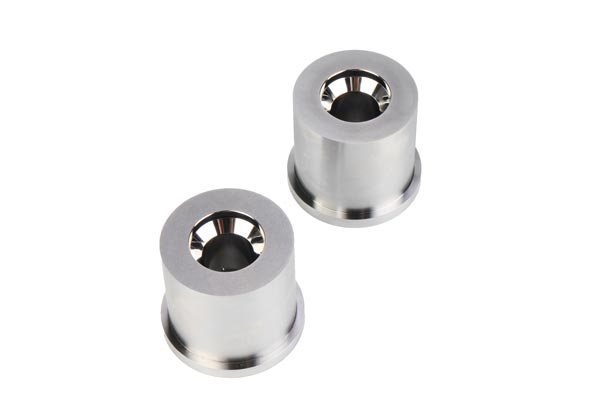
Carbide wear parts are components fabricated primarily from tungsten carbide grains bonded with a metallic cobalt or nickel matrix. The resulting composite—commonly called cemented carbide—combines the hardness of diamond-grade abrasion resistance with the toughness required to survive impact and thermal cycling. Unlike tool steels that soften under sustained friction, carbide retains a Rockwell hardness of 88–93 HRA even at elevated temperatures, making it the default material for nozzles, seals, valve seats, guide rolls, punches, dies, and an array of custom inserts exposed to sliding, erosive, or corrosive contact.
Unser Fabrikgeschäft: Hartmetallteile, Formteile, medizinische Spritzgussformen, Präzisionsspritzgussformen, Teflon-PFA-Spritzguss, PFA-Rohrverschraubungen. E-Mail: [email protected],whatsapp:+8613302615729.
Key Industrial Applications
Oil and Gas Drilling and Production
Downhole tools, jet nozzles, choke beans, valve seats, and flow-line components encounter sand-laden fluids, H₂S, and high-pressure cycling. A qualified carbide wear parts manufacturer grades the cobalt content and grain size so that parts resist both abrasive erosion and sulfide stress cracking, extending run times between workovers.
Mining, Aggregates, and Tunneling
Shotblast nozzles, conveyor chute liners, pick retainers, and slurry pump seals operate under the most severe abrasive conditions in heavy industry. Carbide tips on drilling picks and classifier blades outlast steel equivalents by five to twenty times, directly lowering cost per tonne moved.
Construction and Earthmoving
Bulldozer cutting edges, excavator bucket teeth, asphalt mixer tiles, and soil-compaction wear buttons depend on carbide overlays and solid carbide inserts to resist rock impingement and repeated impact loading.
Metal Forming, Stamping, and Cold Heading
Piercing punches, drawing dies, extrusion mandrels, and cold-heading dies in automotive fastener and wire manufacturing run millions of cycles against high-strength steels. Precision carbide wear parts manufacturer expertise here means tight tolerances, ground surfaces, and grades tuned for galling resistance rather than pure abrasion.
Plastic Packaging, Textile, and Fiber Machinery
Wire guides, slitters, air-jet nozzles, and pelletizer cutter beds experience fine-fiber or polymer abrasion combined with precision alignment. Polished carbide inserts prevent filament scratching and maintain consistent cut quality over long runs.
Food, Pharmaceutical, and Chemical Processing
Ball-check valves, seal faces, and chute liners in sanitary equipment require carbide grades that resist corrosive cleaning agents and avoid material pickup. Advanced manufacturers offer nickel-bonded grades suitable for FDA-contact applications.
Semiconductor and Precision Engineering
Ceramic-metal seals, probe bushings, wafer-handling guide rollers, and EDM wire guides demand sub-micron dimensional stability. Here the choice of carbide wear parts manufacturer is dictated by grinding capability, flatness control, and clean-room finishing rather than raw hardness alone.
Why Carbide Outperforms Conventional Materials
Compared with hardened tool steel, chilled cast iron, or ceramic alone, cemented carbide delivers a balanced combination of hardness (typically 1,400–2,200 HV), compressive strength, and thermal conductivity. It resists adhesive wear, galling, and high-temperature oxidation better than most ferrous alloys, while avoiding the brittle fracture limits of monolithic ceramics. These properties translate directly into fewer changeouts, more stable process tolerances, and lower total cost of ownership.
How to Evaluate a Carbide Wear Parts Manufacturer
Procurement engineers typically shortlist suppliers against four dimensions:
First, material control—certified carbide grades, traceable raw powder, and consistent porosity. Second, manufacturing capability—pressing, sintering, CNC grinding, lapping, and non-destructive inspection under one roof. Third, engineering support—grade selection, prototype iteration, and reverse-engineering from worn samples. Fourth, commercial reliability—lead-time stability, lot-to-lot consistency, and export documentation for international buyers.
A manufacturer that fails any one of these four tends to introduce hidden field failures that negate the price advantage of cheaper carbide parts.
Why Choose Yize Mould?
Dongguan Yize Mould Co., Ltd is a precision carbide wear parts manufacturer serving medical device, semiconductor, optical communication, automotive, and industrial automation clients across North America, Europe, and Southeast Asia. Several reasons make Yize Mould a preferred partner for custom carbide components:
- Grade engineering, not catalog resale. Yize Mould selects and, where needed, custom-formulates tungsten carbide grades based on the customer’s abrasion, impact, corrosion, and dimensional requirements rather than pushing off-the-shelf inserts.
- Tight-tolerance precision. In-house CNC grinding, wire EDM, centerless grinding, and mirror polishing support features down to ±0.002 mm and surface finishes below Ra 0.1, which is essential for semiconductor, medical, and fiber-handling components.
- Full material portfolio. Beyond standard cobalt-bonded carbide, Yize Mould supplies micro-grain carbide, nickel-bonded corrosion-resistant grades, titanium alloy machining, PTFE/PFA precision tubing components, and matched die assemblies.
- From prototype to volume. Engineering teams receive DFM feedback on early drawings, sample lots for field validation, and stable serial production with dimensional inspection reports—coordinate measuring, hardness testing, and metallographic review—shipped with each batch.
- Export-ready documentation. International buyers receive compliant commercial invoices, material certificates, and packaging suited for long ocean freight, reducing customs and receiving friction.
For OEMs that treat wear parts as a strategic lever rather than a consumable, Yize Mould combines machining expertise, English-language engineering communication, and responsiveness that global procurement teams expect from a tier-1 carbide partner.
Frequently Asked Questions
Q1. What is the typical lead time for custom carbide wear parts? Standard catalog items can ship within days. Custom-designed inserts, punches, nozzles, or die components normally require 2–4 weeks for prototyping and 3–6 weeks for serial production, depending on geometry complexity and surface finish requirements.
Q2. How do I choose between cobalt-bonded and nickel-bonded carbide? Cobalt-bonded grades offer the highest toughness and abrasion resistance for general industrial wear parts. Nickel-bonded grades are preferred when corrosion from acidic, saline, or sanitary-cleaning environments is dominant, such as food, pharmaceutical, and chemical service.
Q3. What industries benefit most from switching to carbide? Operations with high abrasive wear, long cycle runs, or stringent dimensional consistency—drilling, mining, metal stamping, wire drawing, textile, semiconductor handling, and medical device manufacturing—see the fastest payback, typically within the first replacement cycle.
Verwandte Beiträge
- Carbide Grinding: The Complete Guide to Precision-Grinding Tungsten Carbide Components
- Carbide EDM Machining: Precision Electrical Discharge Machining for Tungsten Carbide Parts
- CNC Machining Tungsten Carbide: Precision Solutions for Industrial Excellence
- Precision Carbide Machining Process: Advanced Methods and Industrial Standards

 English
 Deutsch
 Français
 日本語
 한국어
 Español
 Português
 Italiano
 Nederlands
 Русский
 Bahasa Indonesia
 العربية