

How to Efficiently Optimize Cutting Force Management for Tungsten Carbide Dies?
In the field of die manufacturing, tungsten carbide dies are widely used in high-precision machining applications due to their exceptional hardness, wear resistance, and toughness. However, the high hardness of tungsten carbide […]
In the field of die manufacturing, Wolframkarbid-Formen are widely used in high-precision machining applications due to their exceptional hardness, wear resistance, and toughness. However, the high hardness of tungsten carbide also presents challenges such as elevated cutting forces, high processing temperatures, and rapid tool wear during machining. Therefore, scientifically adjusting the cutting force for tungsten carbide dies is crucial for improving machining efficiency, ensuring processing quality, and extending tool life. This article systematically explores how to efficiently manage cutting forces from three perspectives: cutting parameter optimization, tool material selection, and cutting fluid application.
1. Precision Optimization of Cutting Parameters
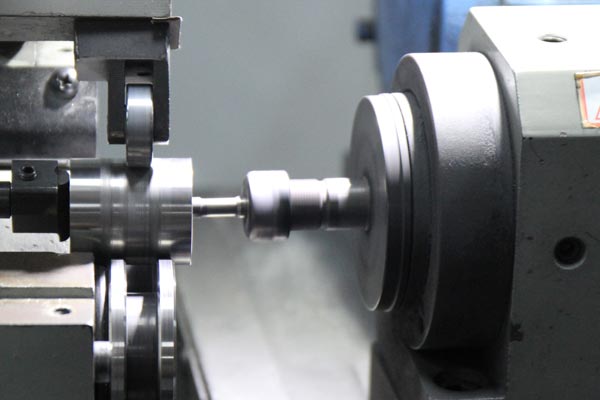
Cutting parameters—including cutting speed, feed rate, and depth of cut—are the primary factors influencing cutting force. For tungsten carbide die machining, optimal parameter selection must consider workpiece material properties, tool performance, and machine tool capabilities.
Unser Fabrikgeschäft: Hartmetallteile, Formteile, medizinische Spritzgussformen, Präzisionsspritzgussformen, Teflon-PFA-Spritzguss, PFA-Rohrverschraubungen. E-Mail: [email protected],whatsapp:+8613302615729.
1.1 Cutting Speed
Cutting speed significantly impacts cutting force. Excessive speed leads to a sharp rise in cutting temperature, accelerating tool wear and increasing cutting force. Conversely, insufficient speed hinders the cutting process, also raising cutting force. For tungsten carbide dies, lower cutting speeds (e.g., 50–100 m/min for carbide tools) are recommended to reduce thermal stress and cutting force. Adjustments should account for tool coating and workpiece hardness.
1.2 Feed Rate
The feed rate directly affects cutting layer thickness and cutting force. High feed rates can induce vibration and exacerbate tool wear, while low feed rates reduce efficiency. For tungsten carbide dies, smaller feed rates (e.g., 0.05–0.2 mm/rev) are advised to balance cutting force and productivity. Light-cutting strategies (e.g., high RPM with low feed) can further optimize the process.
1.3 Depth of Cut
Excessive depth of cut causes non-linear increases in cutting force, risking tool breakage, while insufficient depth may lead to “tool deflection,” compromising accuracy. For tungsten carbide dies, layered cutting with single depths of 0.5–2 mm is recommended, adjusted based on workpiece rigidity.
2. Scientific Selection of Tool Materials
Tool material choice directly affects cutting force and machining outcomes. For tungsten carbide dies’ high hardness, prioritizing wear-resistant, thermally stable materials is essential.
2.1 Carbide Tools
Carbide tools (e.g., YG6X, YG8) offer high hardness and wear resistance, making them a common choice for tungsten carbide die machining. However, their low impact resistance requires careful parameter selection and cutting fluid use. For example, TiAlN-coated carbide tools enhance high-temperature wear resistance and cutting stability.
2.2 High-Speed Steel (HSS) Tools
HSS tools (e.g., M2, M42) suit medium-hardness tungsten carbide materials, particularly when surface quality requirements are moderate. Strict control of cutting speed and feed rate is necessary to prevent thermal softening-induced force spikes.
2.3 Ceramic Tools
Ceramic tools (e.g., Al₂O₃ or Si₃N₄-based) excel in high-speed precision machining due to their extreme hardness and red hardness. However, their brittleness demands small depths of cut (≤0.5 mm), high speeds (≥150 m/min), and high-pressure cooling to avoid thermal cracks or chipping.
3. Intelligent Application of Cutting Fluids
Cutting fluids reduce cutting force, extend tool life, and improve quality through cooling, lubrication, and cleaning. For tungsten carbide die machining, fluid selection and delivery must align with process demands.
3.1 Enhanced Cooling
Cutting heat is a primary driver of force increases. Emulsions or synthetic fluids with high thermal conductivity are recommended, delivered via high-pressure jets (≥3 MPa) to ensure full penetration and cooling efficiency.
3.2 Improved Lubrication
Fluids with extreme-pressure additives (e.g., sulfur, chlorine, phosphorus) form chemical lubricant films at the tool-workpiece interface, reducing friction coefficients. For example:
- Sulfur-based fluids reduce cutting force by 20–30% in heavy-duty cutting.
- Chlorine-based fluids enhance surface finish and tool life in high-speed finishing.
3.3 Optimized Cleaning
Adhered chips cause secondary cutting and tool wear. Water-based or low-viscosity emulsions with strong flow properties effectively flush debris. Regular cleaning of fluid tanks and filters prevents contaminant recycling-induced force fluctuations.
Schlussfolgerung
Efficiently managing cutting forces for tungsten carbide dies requires a holistic approach integrating cutting parameter precision, tool material science, and cutting fluid intelligence. By optimizing speed, feed, and depth; selecting context-appropriate tools; and leveraging advanced fluid strategies, manufacturers can achieve high-efficiency, high-precision machining while minimizing costs and downtime.
FAQs
Q1: How can I quickly assess if cutting parameters are optimized for tungsten carbide die machining?
A1: Monitor cutting force stability, tool wear patterns, and surface finish. If force fluctuations, rapid tool degradation, or surface defects (e.g., chatter marks) occur, adjust parameters (e.g., reduce speed or feed).
Q2: Why do ceramic tools chip easily when machining tungsten carbide dies? How to prevent it?
A2: Ceramic tools’ brittleness makes them sensitive to shock and thermal stress. Prevention strategies include small depths of cut (≤0.5 mm), high speeds (≥150 m/min), high-pressure cooling, and optimized tool geometry (e.g., increased rake/relief angles).
Q3: Is dry machining suitable for tungsten carbide dies? What precautions are needed?
A3: Dry machining avoids fluid-related costs and contamination but is limited to low-hardness materials or short runs. For dry cutting:
- Restrict speed (≤50 m/min) and feed (≤0.1 mm/rev).
- Use high-thermal-conductivity tools (e.g., PCBN).
- Implement forced cooling (e.g., cryogenic air jets) to prevent tool failure from excessive force.
Verwandte Beiträge
- Effective Strategies to Avoid Damage to Tungsten Carbide Dies During Use
- A Comprehensive Analysis of Precision Detection Methods for Tungsten Carbide Dies
- A Professional Guide to Selecting Tungsten Carbide Die Cleaning Agents
- Application and Remarkable Characteristics of Tungsten Carbide Dies in the Electronics Industry




 English
  Deutsch
  Français
  日本語
日本語  한국어
한국어  Español
  Português
  Italiano
  Nederlands
  Русский
  Bahasa Indonesia
  العربية