
Tungsten Carbide Die Coating Technology: Analysis of Functions and Detailed Introduction of Types
In modern industrial fields such as metal processing and plastic molding, tungsten carbide dies occupy a crucial position due to their high hardness, high wear resistance, and excellent thermal shock […]
In modern industrial fields such as metal processing and plastic molding, tungsten carbide dies occupy a crucial position due to their high hardness, high wear resistance, and excellent thermal shock resistance. However, as the industrial development places increasingly stringent requirements on die performance, relying solely on the inherent properties of tungsten carbide materials can no longer meet all the demands. Against this backdrop, tungsten carbide die coating technology has emerged as a key means to enhance die performance and extend its service life. This article will delve into the functions and types of this technology.
Functions of Tungsten Carbide Die Coating Technology
Tungsten carbide die coating technology involves applying one or more layers of special materials onto the die surface to improve its surface properties. Its functions are remarkable and are detailed as follows:
Unser Fabrikgeschäft: Hartmetallteile, Formteile, medizinische Spritzgussformen, Präzisionsspritzgussformen, Teflon-PFA-Spritzguss, PFA-Rohrverschraubungen. E-Mail: [email protected],whatsapp:+8613302615729.
Enhanced Wear Resistance
Coating materials generally possess high hardness and wear resistance, which can effectively reduce the friction coefficient between the die and the workpiece, minimize wear, and thereby extend the die’s service life.
Improved Corrosion Resistance
Coating materials can isolate the die substrate from the external environment, preventing oxidation, corrosion, and other chemical reactions, thus enhancing the die’s corrosion resistance.
Optimized Surface Quality
Coating materials can fill in the tiny defects on the die surface, reduce surface roughness, and improve surface smoothness, thereby enhancing the surface quality of the processed products.
Reduced Processing Temperature
Some coating materials have good thermal conductivity, enabling them to rapidly transfer heat from the die surface to the interior, lower the processing temperature, and reduce the occurrence of thermal deformation and thermal cracks.
Customized Performance Enhancement
Coating technology can customize the die’s performance by adjusting the types and thicknesses of coating materials according to specific requirements, such as increasing hardness or improving lubricity.
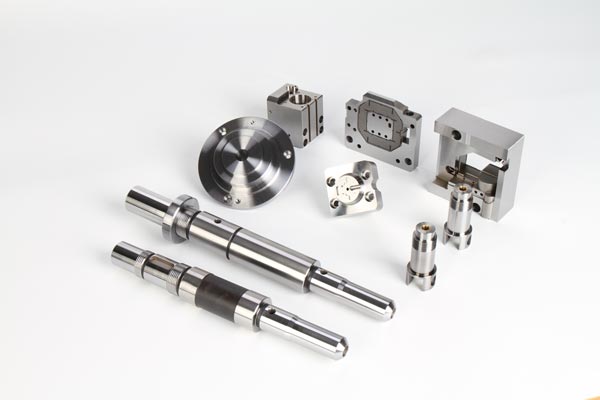
Types of Tungsten Carbide Die Coating Technology
There are numerous types of tungsten carbide die coating technology, which can be roughly classified into the following categories based on different coating materials and process methods:
Physical Vapor Deposition (PVD) Coating Technology
PVD coating technology uses physical methods to evaporate or sputter coating materials onto the die surface, forming one or more layers of thin films. Common PVD coating materials include titanium nitride (TiN), titanium carbonitride (TiCN), and titanium aluminum nitride (TiAlN). This technology offers advantages such as uniform, dense, and strongly bonded coatings, and is widely applied in the surface treatment of tungsten carbide dies.
- Titanium Nitride (TiN) Coating: TiN coatings have high hardness and wear resistance, significantly enhancing the die’s wear performance. Moreover, they exhibit good corrosion resistance and are suitable for various processing environments.
- Titanium Carbonitride (TiCN) Coating: By adding carbon elements to the TiN coating, the hardness and wear resistance of the TiCN coating are further improved. Additionally, it has good lubricating properties, reducing the friction coefficient and wear.
- Titanium Aluminum Nitride (TiAlN) Coating: TiAlN coatings demonstrate excellent stability and oxidation resistance at high temperatures, making them suitable for high-temperature processing environments. They also have high hardness and wear resistance, significantly extending the die’s service life.
Chemical Vapor Deposition (CVD) Coating Technology
CVD coating technology generates one or more layers of thin films on the die surface through chemical reactions. Compared with PVD coating technology, CVD coating technology can form thicker coatings at higher temperatures, making it suitable for applications requiring higher wear and corrosion resistance. Common CVD coating materials include aluminum oxide (Al2O3) and silicon carbide (SiC).
Thermal Spraying Coating Technology
Thermal spraying coating technology involves heating coating materials to a molten or semi-molten state and then spraying them onto the die surface to form a coating. This technology can create relatively thick coatings and is suitable for applications with high requirements for wear and corrosion resistance. Common thermal spraying coating materials include tungsten carbide (WC) and chromium carbide (Cr3C2).
Nano Coating Technology
Nano coating technology is an emerging coating technology that significantly enhances die performance by forming nano-scale coating materials on the die surface. This technology offers advantages such as uniform, dense, and strongly bonded coatings, and can substantially improve the die’s wear resistance, corrosion resistance, and thermal shock resistance without altering the properties of the die substrate.
Schlussfolgerung
Tungsten carbide die coating technology is a vital approach to enhancing die performance and extending its service life. By selecting appropriate coating materials and process methods, the surface properties of dies can be significantly improved, leading to enhanced processing efficiency and product quality. With the continuous development and improvement of coating technology, it is expected that tungsten carbide die coating technology will be widely applied in more fields in the future.
Verwandte Beiträge
- How to Accurately Choose the Cooling Method for Tungsten Carbide Dies
- Tungsten Carbide Die Stress Relief Technology and Its Applications
- Strategies and Practices for Improving the Processing Efficiency of Tungsten Carbide Dies
- Safety Specifications and Operation Guidelines for the Use of Tungsten Carbide Dies


 English
  Deutsch
  Français
  日本語
日本語  한국어
한국어  Español
  Português
  Italiano
  Nederlands
  Русский
  Bahasa Indonesia
  العربية