
Selecting Optimal Wear-Resistant Coatings for Tungsten Carbide Dies
Tungsten carbide dies are indispensable in precision manufacturing due to their exceptional hardness, wear resistance, and thermal stability. However, as industry demands for product consistency and production efficiency intensify, bare […]
Tungsten carbide dies are indispensable in precision manufacturing due to their exceptional hardness, wear resistance, and thermal stability. However, as industry demands for product consistency and production efficiency intensify, bare tungsten carbide substrates increasingly fall short under extreme operational conditions. The strategic application of wear-resistant coatings has emerged as a critical lever to enhance die performance, extend service life, and optimize total cost of ownership.
Wear-resistant coatings function as a protective barrier applied to the die surface, delivering multifaceted benefits:
Bisnis pabrik kami: suku cadang karbida, suku cadang cetakan, cetakan injeksi medis, cetakan injeksi presisi, cetakan injeksi PFA teflon, alat kelengkapan tabung PFA. email: [email protected],whatsapp:+8613302615729.
Enhanced surface hardness and abrasion resistance, minimizing dimensional drift and surface degradation during prolonged use.
Reduced friction coefficients, lowering cutting forces and heat generation, thereby improving machining accuracy and throughput.
Superior corrosion resistance, safeguarding against chemical attack from acidic or alkaline environments encountered in molding and forming processes.
When selecting a coating for tungsten carbide dies, the following criteria must be prioritized:
Wear resistance: Sustained performance under high-frequency, high-load cycles.
Adhesion strength: Robust bonding to the substrate to prevent delamination under thermal and mechanical stress.
Thermal stability: Retention of mechanical properties at elevated operating temperatures.
Chemical inertness: Resistance to oxidation and corrosive media.
Cost-effectiveness: Balanced performance-to-cost ratio aligned with production volume and lifecycle targets.
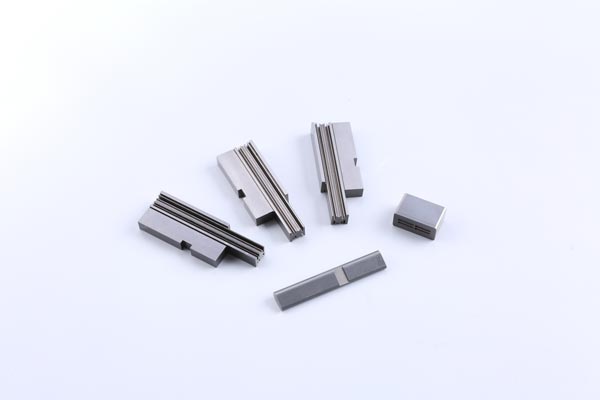
Commonly employed coating materials include:
Titanium Nitride (TiN): Offers excellent wear and corrosion resistance with strong adhesion, but limited to moderate-temperature applications due to lower oxidation resistance.
Chromium Nitride (CrN): Delivers higher hardness and superior thermal stability compared to TiN, with enhanced corrosion resistance—ideal for demanding environments.
Aluminum Oxide (Al₂O₃): Exhibits extreme hardness and thermal resilience under high-pressure, high-temperature conditions; however, its weaker adhesion necessitates advanced deposition techniques.
Aluminum Titanium Nitride (AlTiN): Combines the strengths of TiN and Al₂O₃, providing outstanding hardness, wear resistance, and thermal stability with improved adhesion—suitable for broad industrial applications.
Nano-Composite Coatings: Engineered from synergistic nanoscale constituents, these coatings offer tunable properties—enabling customization for ultra-precision, high-speed, or hybrid-process requirements.
Application guidelines:
For moderate-temperature applications such as plastic injection or die-casting dies, TiN or CrN coatings provide optimal value and performance.
For high-temperature processes including forging and hot extrusion, Al₂O₃ or AlTiN coatings are recommended to maintain integrity under thermal load.
For specialized applications requiring ultra-fine surface finishes or extreme cutting speeds, nano-composite coatings enable tailored performance through material composition tuning.
Critical implementation considerations:
Pre-coating preparation: Surface cleaning, degreasing, and polishing are essential to maximize coating adhesion.
Deposition process control: Parameters such as temperature, pressure, and dwell time must be precisely calibrated to ensure coating uniformity and microstructure integrity.
Post-coating treatment: Thermal stress relief and surface polishing enhance coating hardness and reduce surface roughness, further extending functional life.
Frequently Asked Questions (FAQ)
Q1: What are the primary indicators that a tungsten carbide die requires re-coating?
A: Signs include visible surface wear, increased part dimensional variation, elevated ejection forces, or recurring surface defects in molded components—indicating coating degradation and the need for reapplication.
Q2: How does coating thickness impact die performance and longevity?
A: Optimal thickness balances wear protection with stress management. Too thin: insufficient protection; too thick: risk of delamination due to internal stress. Typical ranges are 2–5 µm, depending on coating type and application.
Q3: Can multiple coating types be applied in layers to enhance performance?
A: Yes, multi-layer or gradient coatings (e.g., CrN/AlTiN) are widely used to combine the advantages of different materials—improving adhesion, toughness, and thermal barrier properties simultaneously.
Q4: Is coating selection influenced by the type of material being molded?
A: Absolutely. Corrosive resins, abrasive fillers, or high-temperature thermoplastics demand coatings with enhanced chemical or thermal resistance—AlTiN or nano-composites are often preferred in such cases.
Posting Terkait
- Professional Business-Style English Revision: Fundamental Principles and Applications of Tungsten Carbide Dies
- Performance Stability Management Strategy for Tungsten Carbide Dies Under High-Load Conditions
- Applications of Tungsten Carbide Dies in the Electronics Industry
- Analysis of Tungsten Carbide Die Fracture Causes and Prevention Strategies


 English
  Deutsch
  Français
  日本語
日本語  한국어
한국어  Español
  Português
  Italiano
  Nederlands
  Русский
  Bahasa Indonesia
  العربية