
Carbide EDM Machining: Precision Manufacturing for High-Performance Carbide Parts
1. Overview of Carbide EDM Machining Carbide EDM machining is a non-traditional precision processing technology that utilizes electrical discharge erosion to shape tungsten carbide parts. As a core manufacturing process […]
1. Overview of Carbide EDM Machining
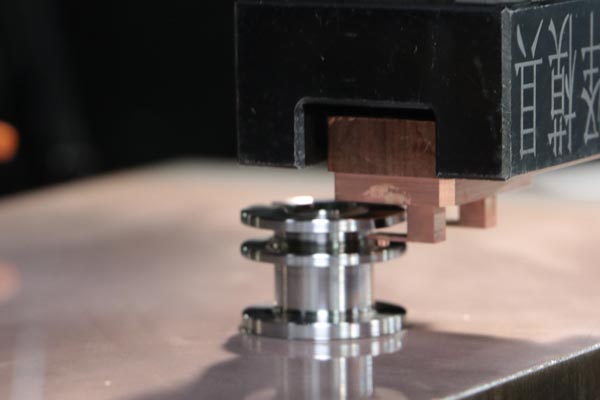
Carbide EDM machining is a non-traditional precision processing technology that utilizes electrical discharge erosion to shape tungsten carbide parts. As a core manufacturing process for carbide EDM machining, it abandons traditional cutting and grinding methods, relying on high-frequency pulse electric sparks to melt and vaporize carbide materials.
Tungsten carbide features ultra-high hardness, wear resistance and high-temperature stability, making it difficult to process with conventional mechanical machining. Carbide EDM machining perfectly solves this pain point, enabling high-precision forming of complex-shaped carbide parts without applying mechanical cutting force. This effectively avoids tool wear, part deformation and surface damage, becoming the preferred process for high-end carbide component manufacturing in precision machinery, mold manufacturing, aerospace and automotive industries.
Bisnis pabrik kami: suku cadang karbida, suku cadang cetakan, cetakan injeksi medis, cetakan injeksi presisi, cetakan injeksi PFA teflon, alat kelengkapan tabung PFA. email: [email protected],whatsapp:+8613302615729.
2. Core Advantages of EDM Machining Carbide Parts
2.1 Ultra-High Machining Precision
Carbide EDM machining achieves micron-level machining accuracy, with dimensional tolerance controllable within ±0.002mm. It can process ultra-thin walls, tiny holes, deep grooves and irregular curved surfaces that cannot be completed by traditional processes. The uniform spark erosion effect ensures consistent part size and excellent repeatability, meeting the strict precision requirements of high-precision molds and precision mechanical parts.
2.2 No Mechanical Deformation & Low Damage
Different from turning, milling and grinding processes that produce extrusion and shear force on workpieces, EDM machining relies purely on electrical energy for material removal. It causes no mechanical stress on carbide parts, completely eliminating deformation, cracking and edge collapse problems common in carbide hard material processing. The processed parts have intact internal material structure and stable mechanical performance.
2.3 Strong Adaptability to Complex Structures
This processing technology has no restrictions on the geometric shape of carbide parts. Whether it is intricate cavity structures, special-shaped contours, or micro precision structures, carbide EDM machining can realize one-time forming. It greatly simplifies the processing flow of complex carbide parts, shortens the production cycle, and improves the yield of customized carbide components.
2.4 Excellent Surface Quality
After professional EDM finishing, carbide parts have smooth surface with low roughness, no burrs and no tool marks. The surface finish can reach industrial high-standard requirements, which reduces subsequent polishing and finishing procedures. It effectively improves the wear resistance and service life of carbide parts in actual working conditions.
3. Typical Application Scenarios of Carbide EDM Machining Parts
Carbide parts processed by EDM machining are widely used in high-precision and high-wear industrial fields. In the mold industry, it is mainly used for processing carbide mold cores, inserts, precision stamping dies and plastic mold accessories. In the mechanical manufacturing field, it produces carbide precision gears, shaft parts, wear-resistant positioning pins and guide components.
In addition, carbide EDM machining parts are also applied in aerospace precision accessories, automotive precision components, medical equipment parts and electronic precision hardware. Relying on the superior performance of carbide materials and high-precision EDM processing technology, these parts maintain stable operation under high load, high temperature and high wear working environments.
4. Key Technical Points of High-Quality Carbide EDM Machining
To ensure the processing quality of carbide parts, standardized technical control is essential in carbide EDM machining. First, it is necessary to match professional EDM equipment with dedicated carbide processing parameters, adjust pulse width, pulse interval and current intensity according to part hardness and structure, to avoid excessive spark erosion causing surface defects.
Second, select high-performance working fluid to ensure stable spark discharge, cool the processing area in real time, and take away erosion residues, which improves processing efficiency and surface finish. Third, implement strict detection procedures, use precision measuring instruments to calibrate part dimensions and surface accuracy after processing, to ensure all indicators meet customer customization standards.
5. FAQ About Carbide EDM Machining
Q1: What is the difference between carbide EDM machining and traditional carbide grinding?
A1: Carbide EDM machining is stress-free processing, suitable for complex micro structures with no deformation, while traditional grinding is mechanical processing, prone to edge collapse and deformation, and limited in processing special-shaped structures. EDM has higher precision for complex carbide parts.
Q2: Can carbide EDM machining process ultra-hard tungsten carbide materials?
A2: Yes. EDM machining is not limited by material hardness, and can efficiently process all types of tungsten carbide, cemented carbide and super-hard alloy materials, which is the core advantage of this technology in hard material processing.
Q3: What is the tolerance range of standard carbide EDM machining parts?
A3: Conventional standard processing tolerance is ±0.005mm, and high-precision customized processing can reach ±0.002mm, fully meeting the precision requirements of molds, precision machinery and other high-end industries.
Q4: What factors affect the surface quality of carbide EDM machining parts?
A4: The main factors include discharge parameters, working fluid performance, electrode material precision and processing stability. Professional parameter debugging and equipment maintenance can effectively improve the surface finish of carbide parts.
 English
  Deutsch
  Français
  日本語
日本語  한국어
한국어  Español
  Português
  Italiano
  Nederlands
  Русский
  Bahasa Indonesia
  العربية