

How to Effectively Improve the Cutting Efficiency of Tungsten Carbide Dies
In the field of die manufacturing, tungsten carbide dies hold a pivotal position in various precision machining scenarios due to their remarkable high hardness, excellent wear resistance, and outstanding thermal […]
In the field of die manufacturing, tungsten carbide dies hold a pivotal position in various precision machining scenarios due to their remarkable high hardness, excellent wear resistance, and outstanding thermal stability. However, with the increasingly fierce market competition and the ever – rising demands for production efficiency and machining accuracy, the cutting efficiency of tungsten carbide dies has become a key factor restricting production benefits and product quality. Cutting efficiency is not only directly related to production costs and machining cycles but also has a profound impact on the final quality and performance of the dies. Therefore, exploring effective methods to improve the cutting efficiency of tungsten carbide dies is of crucial strategic significance for die manufacturing enterprises to enhance their core competitiveness and achieve sustainable development. This article will comprehensively and in – depth discuss how to effectively improve the cutting efficiency of tungsten carbide dies from multiple dimensions, including cutting tool selection, cutting parameter optimization, cooling and lubrication enhancement, process improvement and innovation, precise control of the machining environment, improvement of operators’ skill levels, and continuous monitoring and improvement.
I. Precise Selection of Cutting Tools
Cutting tools are one of the core factors influencing the cutting efficiency of tungsten carbide dies. To improve cutting efficiency, it is essential to carefully select appropriate tool materials and tool structures based on the characteristics of tungsten carbide materials. In terms of tool materials, they should possess extremely high hardness and excellent wear resistance to ensure that the cutting edge remains sharp during the cutting process, effectively reducing the generation of cutting forces. This, in turn, extends the tool life and reduces the frequency of tool replacement, enhancing production continuity. The design of the tool structure should be scientific and reasonable, enabling efficient transmission of cutting forces and minimizing vibrations and noise during the cutting process, thereby ensuring the stability and precision of the cutting operation. Additionally, it is necessary to precisely select the tool type and size according to specific machining requirements to ensure a stable and efficient cutting process and avoid inefficiencies caused by improper tool selection.
La nostra attività in fabbrica: parti in metallo duro, parti di stampi, stampi a iniezione medicali, stampi a iniezione di precisione, stampaggio a iniezione di teflon PFA, raccordi per tubi PFA. e-mail: [email protected],whatsapp:+8613302615729.
II. Scientific Optimization of Cutting Parameters
The reasonable setting of cutting parameters is another key link in improving the cutting efficiency of tungsten carbide dies. Cutting parameters include cutting speed, feed rate, and cutting depth. When determining cutting parameters, it is crucial to fully consider the unique characteristics of tungsten carbide materials and specific machining requirements. Excessive cutting speed may shorten the machining time to some extent, but it will lead to a sharp increase in cutting forces and a significant rise in cutting temperature. This accelerates tool wear, shortens tool life, affects machining quality, and may even cause workpiece deformation or cracking. Conversely, a too – slow cutting speed will directly reduce cutting efficiency and increase production costs. The selection of feed rate and cutting depth also requires careful consideration and flexible adjustment according to actual conditions to achieve the best cutting effect. During the optimization of cutting parameters, advanced methods such as experimental methods and numerical simulations can be comprehensively used. By comparing the cutting effects under different parameter combinations, the optimal cutting parameter combination can be accurately selected to provide strong support for improving cutting efficiency.
III. Strengthening Cooling and Lubrication Effects
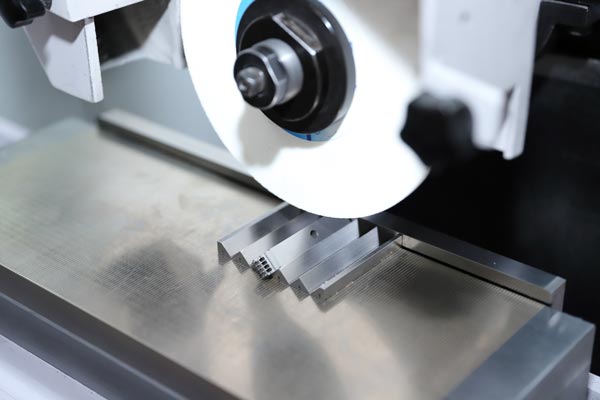
A large amount of heat is generated during the cutting process of tungsten carbide materials. If this heat cannot be dissipated in a timely and effective manner, it will cause serious damage to tool life and machining quality and may even lead to workpiece deformation or cracking. Therefore, strengthening cooling and lubrication is an indispensable and important means to improve the cutting efficiency of tungsten carbide dies. During the cutting process, appropriate cooling fluids or cutting fluids should be reasonably selected to cool and lubricate the cutting area. Cooling fluids can rapidly reduce the cutting temperature and reduce tool wear caused by high temperatures, extending tool life. Cutting fluids can effectively reduce cutting forces and improve the smoothness of the cutting process, thereby enhancing cutting efficiency. When selecting cooling fluids or cutting fluids, it is necessary to fully consider the characteristics of tungsten carbide materials and specific machining requirements. At the same time, the flow rate and spraying method should be precisely controlled to ensure the best cooling and lubrication effects and provide a good environmental guarantee for the cutting process.
IV. Innovative Improvement of Machining Processes
The optimization and innovation of machining processes have a significant impact on improving the cutting efficiency of tungsten carbide dies. To improve cutting efficiency, the following aspects can be used to improve machining processes:
- Rational Planning of Machining Sequences: Based on the structural characteristics and machining requirements of tungsten carbide dies, carefully plan the machining sequences to avoid repeated machining and ineffective machining, reduce unnecessary processes and time waste, and improve overall machining efficiency.
- Optimization of Machining Paths: Using advanced CNC programming technology, optimize the design of machining paths, reduce idle strokes and repeated cutting, and improve the motion efficiency of the tool, thereby enhancing cutting efficiency.
- Introduzione di tecnologie avanzate: Actively pay attention to the dynamic development of cutting – edge technologies in the industry and timely introduce advanced technologies such as high – speed cutting technology and laser machining technology to increase cutting speed and machining accuracy and further tap the potential for improving cutting efficiency.
V. Precise Control of the Machining Environment
The machining environment has a non – negligible impact on the cutting efficiency of tungsten carbide dies. To improve cutting efficiency, it is necessary to precisely control key factors such as the temperature, humidity, and cleanliness of the machining environment. Excessive temperature will cause the cutting fluid to evaporate too quickly, reducing the cooling and lubrication effects. High humidity may cause workpiece rusting or corrosion, affecting die quality. Insufficient cleanliness will generate impurities and pollutants during the cutting process, damaging tool life and affecting machining quality. Therefore, during the machining process, effective environmental control measures should be taken, such as installing air – conditioning equipment to regulate temperature, using dehumidifiers to control humidity, and strengthening workshop cleaning management to ensure that the machining environment is always in the best state and provide a guarantee for the stable and efficient operation of the cutting process.
VI. Improving Operators’ Skill Levels
The skill level of operators is an important factor influencing the cutting efficiency of tungsten carbide dies. A skilled and professional operator can master cutting techniques and methods proficiently, adjust cutting parameters and tool states reasonably according to actual conditions, and deal with various problems that arise during the cutting process in a timely manner, ensuring the stability and efficiency of the cutting process. Therefore, improving the skill level of operators is an important way to improve the cutting efficiency of tungsten carbide dies. Enterprises can help operators continuously improve their skill levels and accumulate rich experience by organizing systematic training, providing practical operation guidance, and encouraging experience sharing and communication, thus providing solid human support for improving cutting efficiency.
VII. Continuous Monitoring and Dynamic Improvement
Improving the cutting efficiency of tungsten carbide dies is a dynamic process of continuous improvement and optimization. In actual production, a complete cutting process monitoring system should be established to continuously collect and analyze various data and information during the cutting process, deeply understand the changing trends and influencing factors of cutting efficiency. Based on the results of these data analyses, targeted improvement measures should be formulated to adjust cutting parameters, optimize machining processes, or improve equipment performance in a timely manner to continuously improve cutting efficiency. At the same time, closely follow the development trends of new technologies and new materials in the industry and actively introduce them into the cutting process to inject new vitality and impetus into improving cutting efficiency.
In conclusion, improving the cutting efficiency of tungsten carbide dies is a systematic and complex project that requires coordinated efforts from multiple aspects, including cutting tool selection, cutting parameter optimization, cooling and lubrication enhancement, process improvement and innovation, precise control of the machining environment, improvement of operators’ skill levels, and continuous monitoring and improvement. By comprehensively applying these effective measures and methods, the cutting efficiency of tungsten carbide dies can be significantly improved, production costs and machining cycles can be effectively reduced, and the quality and performance of the dies can be comprehensively enhanced. This will lay a solid foundation for die manufacturing enterprises to gain an advantage in the fierce market competition and achieve sustainable development.
Messaggi correlati
- Multidimensional Benefits of Wear-Resistant Coatings for Tungsten Carbide Dies
- Development and Application of Wear-Resistant Coating Technology for Tungsten Carbide Dies
- Tungsten Carbide Die Frame Design: Principles, Key Points, Optimization, and Innovation
- In-depth Analysis of Temperature Control Technology for Tungsten Carbide Dies




 English
  Deutsch
  Français
  日本語
日本語  한국어
한국어  Español
  Português
  Italiano
  Nederlands
  Русский
  Bahasa Indonesia
  العربية