

Diagnosing and Preventing Common Failures in Tungsten Carbide Dies
Tungsten carbide dies are widely valued in precision manufacturing for their exceptional hardness, wear resistance, and thermal stability. However, even high-performance materials are susceptible to failure under prolonged stress, improper […]
Tungsten carbide dies are widely valued in precision manufacturing for their exceptional hardness, wear resistance, and thermal stability. However, even high-performance materials are susceptible to failure under prolonged stress, improper handling, or suboptimal design. This guide outlines the most common failure modes of tungsten carbide dies, systematic diagnostic approaches, and proactive mitigation strategies to enhance operational reliability and extend service life.
Common Failure Modes
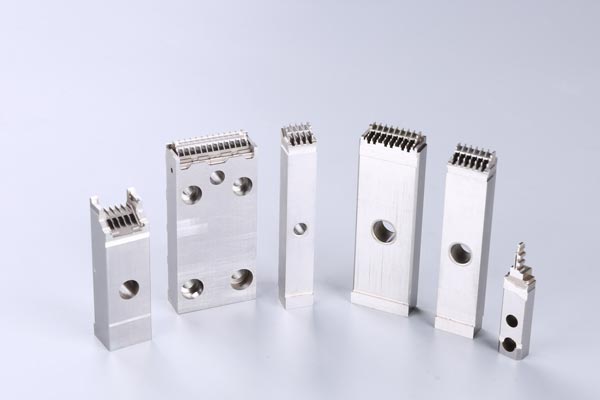
- Chipping or Fracture: Caused by high impact loads and the inherent brittleness of tungsten carbide, chipping often occurs at sharp edges or stress-concentrated zones. Contributing factors include improper die geometry, excessive clamping force, or sudden thermal shock during operation.
- Cracking: Cracks typically develop during cold extrusion or high-pressure forming due to residual stresses, inadequate material toughness, or flawed heat treatment. Cracking may initiate internally and propagate under cyclic loading, leading to catastrophic failure if undetected.
- Surface Wear: Gradual material loss on working surfaces reduces dimensional accuracy and surface finish quality. Wear rate is influenced by abrasive feedstock, insufficient lubrication, and prolonged use without maintenance.
- Deformazione: Under sustained high temperature and pressure, tungsten carbide dies may undergo plastic deformation, especially if operating beyond recommended thermal limits or if cooling is uneven. This results in dimensional drift and compromised part tolerances.
Diagnostic Methods
- Ispezione visiva: Examine the die surface for micro-cracks, spalling, discoloration, or uneven wear patterns. Use magnification tools to detect early-stage defects not visible to the naked eye.
- Acoustic Testing: Tap the die lightly with a non-metallic tool and listen for changes in resonance. A dull or muffled sound may indicate internal delamination or hidden fractures.
- Dimensional Measurement: Employ precision instruments such as micrometers, coordinate measuring machines (CMM), or optical profilometers to verify critical dimensions, roundness, and surface roughness against design specifications.
- Functional Testing: Conduct trial runs under actual production conditions to monitor dimensional consistency, part ejection force, and thermal behavior. Compare output quality against baseline standards to identify performance degradation.
Preventive Measures
- Optimized Die Design: Minimize stress concentrations through rounded corners, uniform wall thickness, and balanced load distribution. Integrate efficient cooling channels to prevent localized overheating.
- Selezione del materiale: Source high-purity tungsten carbide grades with appropriate binder content (typically 6–12% cobalt) to balance hardness and fracture toughness. Verify material certification and grain size consistency.
- Produzione di precisione: Utilize CNC grinding and EDM processes with controlled parameters to avoid surface micro-cracks. Ensure proper deburring and stress-relief treatments post-machining.
- Routine Maintenance: Clean dies after each shift to remove residual material and coolant buildup. Inspect fasteners, alignment components, and cooling lines weekly. Replace worn inserts before they compromise adjacent surfaces.
- Proper Operational Practices: Adhere to recommended press speeds, feed rates, and temperature limits. Avoid dry running or sudden temperature fluctuations. Store dies in controlled environments to prevent corrosion or moisture absorption.
Frequently Asked Questions (FAQ)
Q1: Can tungsten carbide die failures be prevented entirely?
A: While no material is immune to wear or stress, failures can be significantly reduced through proper design, material selection, and disciplined maintenance. Proactive monitoring and scheduled replacement of high-wear components are key to minimizing unplanned downtime.
La nostra attività in fabbrica: parti in metallo duro, parti di stampi, stampi a iniezione medicali, stampi a iniezione di precisione, stampaggio a iniezione di teflon PFA, raccordi per tubi PFA. e-mail: [email protected],whatsapp:+8613302615729.
Q2: How do I know if a crack is surface-deep or structural?
A: Surface cracks are typically visible and shallow, while structural cracks may extend internally. Use dye penetrant testing or ultrasonic inspection for definitive detection. Never continue production if a structural crack is suspected.
Q3: Why is local support in Dongguan critical for tungsten carbide die maintenance?
A: As the heart of China’s mold manufacturing industry, Dongguan offers rapid access to specialized tooling technicians, certified material suppliers, and on-site calibration services. Yize Mould provides 24-hour emergency response across Chang’an, Humen, and Houjie, ensuring minimal production disruption.
Messaggi correlati
- High-Performance Tungsten Carbide Dies for Precision Manufacturing in Dongguan, China
- Safety Guidelines for Tungsten Carbide Dies in Industrial Applications
- Selecting Optimal Tungsten Carbide Mold Materials – Yize Mould’s Strategic Guidance
- Tungsten Carbide Dies: Industrial Applications and Performance Advantages




 English
  Deutsch
  Français
  日本語
日本語  한국어
한국어  Español
  Português
  Italiano
  Nederlands
  Русский
  Bahasa Indonesia
  العربية