

Systematic Management and Best Practices for Daily Maintenance of Tungsten Carbide Dies
Introduction Tungsten carbide dies, renowned for their high hardness, superior wear resistance, and excellent mechanical properties, occupy an irreplaceable position in precision manufacturing. However, prolonged high-load operation and frequent machining […]
Introduzione
Tungsten carbide dies, renowned for their high hardness, superior wear resistance, and excellent mechanical properties, occupy an irreplaceable position in precision manufacturing. However, prolonged high-load operation and frequent machining cycles inevitably lead to die wear, deformation, or damage, directly compromising machining accuracy and service life. Therefore, establishing a scientific and systematic daily maintenance regime is of critical importance for ensuring production efficiency and reducing operational costs. This article provides a comprehensive analysis of the key practices and operational methods for tungsten carbide die maintenance, covering five core dimensions: cleaning, lubrication, inspection, repair, and storage.
1. Cleaning: The First Line of Defense in Maintenance
Cleaning is the foundational step in tungsten carbide die maintenance, directly affecting surface quality and machining stability.
La nostra attività in fabbrica: parti in metallo duro, parti di stampi, stampi a iniezione medicali, stampi a iniezione di precisione, stampaggio a iniezione di teflon PFA, raccordi per tubi PFA. e-mail: [email protected],whatsapp:+8613302615729.
Regarding the selection of cleaning tools, soft lint-free cloths, dedicated soft-bristle brushes, and specialized die cleaners should be used exclusively. Metal scrapers, abrasive pads, or strong acid and alkali chemical solvents are strictly prohibited to prevent scratching the die surface or corroding its precision structure.
The standard cleaning procedure is as follows: first, gently wipe the die surface with a soft cloth to remove dust and oil residues. For stubborn contaminants, a specialized die cleaner may be applied for targeted cleaning. During the process, care must be taken to prevent the cleaner from splashing onto non-working areas of the die, which could cause corrosion or performance degradation.
Cleaning frequency should be dynamically adjusted based on die usage intensity and the production environment. As a general rule, a basic cleaning should be performed after each use to remove surface dust and oil. For dies that are out of service for extended periods, scheduled deep cleaning should be conducted to prevent the accumulation of contaminants that could cause irreversible damage.
2. Lubrication Management: The Core Method for Reducing Friction and Wear
Scientific lubrication management can significantly extend die service life and improve machining consistency.
In terms of lubricant selection, the choice should be based on the die’s actual operating temperature, load conditions, and motion patterns. Lubricants with high-temperature resistance, anti-wear properties, and excellent chemical stability should be prioritized. Conventional greases tend to decompose and lose effectiveness under high-temperature conditions and are therefore unsuitable for tungsten carbide die lubrication.
During lubrication, the lubricant should be applied evenly to the sliding surfaces, mating surfaces, and guide areas of the die to effectively reduce the friction coefficient and wear rate. At the same time, strict control of the application area is required to prevent lubricant overflow onto non-working areas of the die, which could adversely affect product quality.
The lubrication cycle should also be flexibly determined according to usage frequency and environmental conditions. It is generally recommended to complete lubrication before each production run to ensure smooth die operation. For dies that have been idle for extended periods, regular lubrication replenishment is necessary to prevent the lubricant from drying out and causing component seizure.
3. Regular Inspection: The Key Mechanism for Fault Prevention
A systematic inspection regime is an essential safeguard for identifying potential issues early and avoiding unplanned downtime.
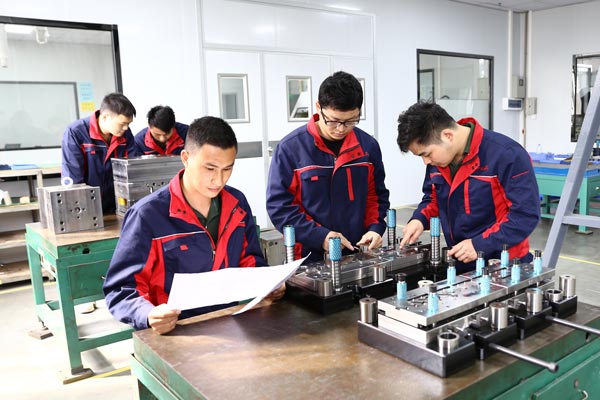
Inspection content should cover the following core items: die dimensional accuracy, surface quality condition, fit clearance, fastener tightness, as well as the operational status of the lubrication and cooling systems. Any abnormality in these indicators may signal potential quality risks or safety concerns.
Professional measuring instruments such as vernier calipers, micrometers, and feeler gauges should be used for inspection to ensure the accuracy and traceability of measurement data. Surface quality can be assessed through visual inspection or with the aid of a magnifying glass. Fit clearance and fastener status can be verified through manual checks or dedicated inspection tools.
The inspection cycle should be aligned with the production rhythm. A quick pre-startup inspection should be completed each time before production begins to confirm the die is in normal condition. For high-frequency dies, a detailed inspection schedule should be established on a weekly or monthly basis to enable early identification and resolution of anomalies.
4. Repair and Treatment: The Cost-Effective Strategy for Extending Die Life
When wear or damage occurs, a scientific repair strategy can effectively restore die performance while controlling costs.
Repair work should strictly follow the principle of “repair before replacement.” This means priority should be given to restoring die performance through repair methods. Replacement should only be considered when repair is not feasible or the repair cost approaches that of a new die, thereby optimizing total lifecycle cost.
Common repair methods include precision welding, grinding, and polishing. For minor wear or surface scratches, grinding and polishing processes can restore surface quality. For larger defects or cracks, precision welding techniques should be employed for structural repair. Throughout the repair process, strict control of dimensional accuracy and surface roughness must be maintained to ensure the repaired die meets production requirements.
The repair cycle should be scheduled based on the extent of damage and production needs. When severe wear, deformation, or structural damage occurs, repair should be arranged immediately. For dies with extended service periods, preventive repair is recommended to eliminate potential risks at an early stage.
5. Standardized Storage: The Final Barrier for Protecting Die Assets
Standardized storage management is a critical link in ensuring long-term die performance stability.
The storage environment should be strictly maintained as dry, ventilated, and dust-free, with protection from direct sunlight and high humidity. At the same time, dies must be kept away from corrosive chemicals and sharp tools to prevent accidental contact that could cause damage.
In terms of storage method, dies should be placed flat or vertically on dedicated racks, avoiding prolonged stacking or tilting. For dies with complex structures or those prone to deformation, dedicated support fixtures should be used to maintain shape stability during static storage.
For dies that will not be used for an extended period, a regular inspection and maintenance schedule should be established, including dehumidification, anti-rust treatment, lubrication replenishment, and accuracy re-verification, to ensure they are ready for immediate return to production.
6. Conclusion
Daily maintenance of tungsten carbide dies is far more than a simple cleaning task. It is a systematic engineering effort encompassing cleaning, lubrication management, regular inspection, repair treatment, and standardized storage. Only by executing every link with diligence can die wear and damage be minimized, machining accuracy be safeguarded, and production efficiency be maximized. Enterprises should integrate die maintenance into a standardized management system to provide a solid foundation for sustained, high-quality production.
FAQ
Q: Can tungsten carbide dies be lubricated with regular machine oil?
A: Not recommended. Regular machine oil tends to oxidize and decompose under high-temperature operating conditions and cannot provide lasting lubrication protection. Specialized die lubricants designed for high-temperature, high-load applications should be used to ensure both lubrication effectiveness and die safety.
Q: Do minor scratches on a die require immediate repair?
A: It depends on the depth and location of the scratches. If the scratches are superficial and do not affect dimensional accuracy or product appearance, they can be restored through polishing. However, if the scratches penetrate the substrate or are located on precision mating surfaces, professional repair should be arranged promptly to prevent the problem from escalating.
Q: How should tungsten carbide dies be stored when not in use for a long period to prevent rust?
A: Dies should be stored in a dry, ventilated environment with anti-rust grease applied to the surface. Regular dehumidification checks should be conducted. It is recommended to replenish lubrication and perform a visual inspection every one to two months to ensure the die is in optimal condition when returned to service.
Messaggi correlati
- Tungsten Carbide Die Precision Inspection: Methods, Standards, and Practical Applications
- How to Scientifically Select the Right Wear-Resistant Coating Materials
- Innovation and Development Trends of Tungsten Carbide Mold Technology
- In-Depth Analysis of Common Failures in Tungsten Carbide Dies and Systematic Troubleshooting Solutions



 English
  Deutsch
  Français
  日本語
日本語  한국어
한국어  Español
  Português
  Italiano
  Nederlands
  Русский
  Bahasa Indonesia
  العربية