

Progress in Temperature Control Technology for Tungsten Carbide Dies
In the vast landscape of modern manufacturing, dies serve as the core tools for product manufacturing, and the temperature control of dies directly impacts the molding quality of products, production […]
In the vast landscape of modern manufacturing, dies serve as the core tools for product manufacturing, and the temperature control of dies directly impacts the molding quality of products, production efficiency, and die lifespan. Tungsten carbide dies, with their characteristics of high hardness, high strength, and excellent wear resistance, occupy a crucial position in the die manufacturing field. As technology continues to advance, significant progress has been made in the temperature control technology for tungsten carbide dies. This article will provide a detailed introduction to the progress in this technology and explore its development trends.
I. Limitations of Traditional Die Temperature Control Technology
Traditional temperature control technology for tungsten carbide dies mainly relies on heating and cooling equipment, such as electric heaters and cooling water systems. It controls the die temperature by adjusting the parameters of these devices. However, this control method has numerous limitations:
당사의 공장 사업: 초경 부품, 금형 부품, 의료용 사출 금형, 정밀 사출 금형, 테플론 PFA 사출 성형, PFA 튜브 피팅. 이메일: [email protected],whatsapp:+8613302615729.
Low Temperature Control Precision
Traditional control methods often struggle to achieve precise control over the die temperature, resulting in unstable product molding quality. This makes it difficult to meet the stringent requirements of high-end manufacturing for product consistency.
Slow Response Speed
The heating and cooling equipment has a relatively slow response speed and cannot quickly adapt to temperature changes during the production process, thereby affecting production efficiency and product quality.
High Energy Consumption
Traditional control methods consume a large amount of energy during the heating and cooling processes, not only increasing the production costs of enterprises but also going against the current concept of energy conservation and emission reduction.
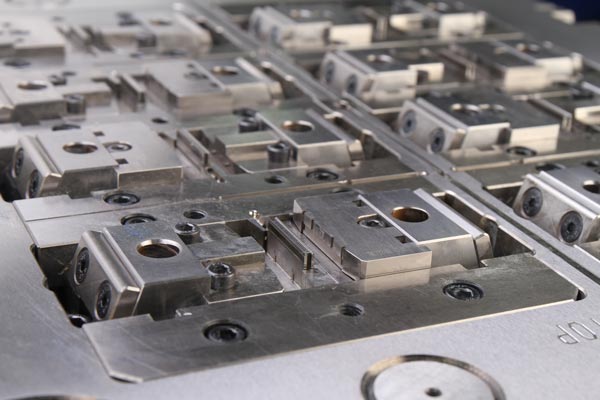
II. Progress in Modern Die Temperature Control Technology
To overcome the limitations of traditional die temperature control technology, significant progress has been made in modern die temperature control technology in recent years, mainly reflected in the following aspects:
Intelligent Control Technology: Ushering in a New Era of Precise Temperature Control
With the rapid development of information technology, intelligent control technology has been widely applied in the field of temperature control for tungsten carbide dies. By introducing advanced sensors, efficient data acquisition systems, and intelligent algorithms, real-time, precise monitoring and automatic adjustment of the die temperature are achieved. The intelligent control system can automatically optimize the parameters of the heating and cooling equipment according to the actual conditions during the production process, ensuring that the die temperature remains within the optimal range at all times and providing a solid guarantee for the high-quality molding of products.
Rapid Heating and Cooling Die Temperature Control Technology: Revolutionizing Product Molding Processes
Rapid heating and cooling die temperature control technology is an innovative die temperature control method that achieves precise control over product molding quality by rapidly switching the die temperature. During the injection molding process, the rapid change in die temperature can significantly improve the fluidity of plastics and effectively reduce product appearance defects such as flow marks and weld lines. This technology has the advantages of fast response speed and high control precision and is particularly suitable for the production of high-precision, high-quality products, offering a new way for the manufacturing industry to improve product quality.
Die Surface Heating Technology: Achieving Precise Local Temperature Control
Die surface heating technology focuses on the precise control of the die surface temperature. By cleverly installing heating elements such as electrothermal films and resistance wires on the die surface, local or overall heating of the die surface can be achieved. This technology has the characteristics of uniform heating and high temperature control precision, which can effectively improve the molding quality of products while shortening the production cycle and enhancing production efficiency.
Die Temperature Uniformity Control Technology: Eliminating Temperature Differences and Improving Quality
Die temperature uniformity control technology aims to ensure uniform temperature distribution across all parts of the die. By optimizing die design and improving heating and cooling systems, uniform control over the die temperature is achieved. This technology can effectively eliminate temperature differences between different parts of the die, reducing the occurrence of product defects such as deformation and cracking and thus significantly improving the molding quality of products and reducing the scrap rate.
III. Future Trends in Temperature Control Technology for Tungsten Carbide Dies
Continuous Increase in Intelligence Level
With the continuous development of artificial intelligence, big data, and other cutting-edge technologies, the intelligence level of temperature control technology for tungsten carbide dies will reach new heights. Future die temperature control systems will have stronger self-learning, optimization, and prediction capabilities, enabling them to automatically adapt to various complex changes during the production process and achieve more precise and efficient control, providing intelligent production solutions for enterprises.
Green and Environmental Protection as the Core Development Direction
Against the backdrop of increasing global environmental awareness, green and environmental protection have become an important development direction for temperature control technology for tungsten carbide dies. Future die temperature control systems will place greater emphasis on requirements such as energy conservation and emission reduction, reducing energy consumption, and minimizing pollution emissions, driving the manufacturing industry to upgrade and transform towards a green, low-carbon, and circular direction and achieving a win-win situation between economic and environmental benefits.
Personalized Demands Leading the Technological Development Trend
As the market continues to develop and consumer demands become increasingly diverse, personalized demands will become the dominant direction for temperature control technology for tungsten carbide dies. Future die temperature control systems will place greater emphasis on meeting the personalized demands of different users and provide customized and personalized solutions to help enterprises enhance their market competitiveness and meet diversified market demands.
Increasingly Obvious Trend of Multi-functional Integration
With the continuous upgrading and transformation of the manufacturing industry, temperature control technology for tungsten carbide dies will show a trend of multi-functional integration. Future die temperature control systems will integrate more functional modules such as quality inspection, fault warning, and remote monitoring, achieving comprehensive and efficient production management and providing one-stop production solutions for enterprises to enhance their overall operational efficiency.
IV. 결론
The continuous progress in temperature control technology for tungsten carbide dies is of great significance for improving product molding quality, enhancing production efficiency, and extending die lifespan. With the continuous innovation of technology, intelligence, green environmental protection, personalized demands, and multi-functional integration will become the main development trends of temperature control technology for tungsten carbide dies. Manufacturing practitioners should closely follow the latest developments in this field, actively promote technological innovation and application, adapt to market demand changes, and enhance the core competitiveness of enterprises to stand out in the fierce market competition.
FAQ
Q1: How does intelligent control technology achieve precise adjustment in the temperature control of tungsten carbide dies?
A1: Intelligent control technology collects real-time die temperature data through sensors and transmits it to the data acquisition system. The intelligent algorithm analyzes and processes the collected data and automatically adjusts the parameters of the heating and cooling equipment, such as heating power and cooling water flow rate, according to the preset temperature range and actual production conditions, thus achieving precise adjustment of the die temperature.
Q2: What types of product production is rapid heating and cooling die temperature control technology suitable for?
A2: Rapid heating and cooling die temperature control technology is suitable for the production of products with high requirements for molding quality and strict appearance precision, such as high-end electronic product housings, precision optical parts, and automotive interior parts. These products have high requirements for the fluidity of plastics during the production process, and rapid heating and cooling technology can effectively improve the fluidity of plastics and enhance product appearance quality.
Q3: What are the advantages of die surface heating technology compared with traditional heating methods?
A3: Die surface heating technology has the advantages of uniform heating and high temperature control precision. Traditional heating methods may lead to uneven temperature distribution inside the die, affecting product molding quality. Die surface heating technology achieves precise local or overall heating of the die surface by installing heating elements on the die surface, making the die temperature more uniform and thus improving product molding quality and production efficiency.
Q4: How can the effective implementation of die temperature uniformity control technology be ensured?
A4: Ensuring the effective implementation of die temperature uniformity control technology requires efforts from multiple aspects. First, optimize die design and reasonably design the structures of the die’s runners and cooling water channels to make the die temperature distribution more uniform. Second, improve the heating and cooling systems, select appropriate heating and cooling equipment, and optimize their layout to ensure that all parts of the die can be uniformly heated and cooled. Finally, monitor the die temperature in real time and adjust the heating and cooling parameters in a timely manner to ensure that the die temperature remains uniform at all times.
Q5: What specific measures will be taken in the future for energy conservation and emission reduction in temperature control technology for tungsten carbide dies?
A5: In the future, temperature control technology for tungsten carbide dies will take a series of specific measures for energy conservation and emission reduction. For example, use efficient heating and cooling equipment to improve energy utilization efficiency; optimize control algorithms to reduce the idle running time of equipment and lower energy consumption; introduce renewable energy sources such as solar energy and geothermal energy to provide clean energy for the die temperature control system; and strengthen equipment maintenance and management to ensure that the equipment is in the best operating condition and reduce energy waste.

 English
  Deutsch
  Français
  日本語
日本語  한국어
한국어  Español
  Português
  Italiano
  Nederlands
  Русский
  Bahasa Indonesia
  العربية