

Tungsten Carbide Die: A Stable Guardian under High Loads
In the booming wave of modern manufacturing, dies, as the core tools for production and manufacturing, directly impact the quality of products and production efficiency. Among numerous die materials, tungsten […]
In the booming wave of modern manufacturing, dies, as the core tools for production and manufacturing, directly impact the quality of products and production efficiency. Among numerous die materials, tungsten carbide dies stand out with their exceptional properties, especially when dealing with high loads and complex working environments, demonstrating extraordinary stability. This article will comprehensively analyze the stability of tungsten carbide dies under high loads, delve into their performance and the key factors influencing stability, and propose practical improvement measures.
I. Tungsten Carbide Die: Characteristics Lay the Foundation for Advantages
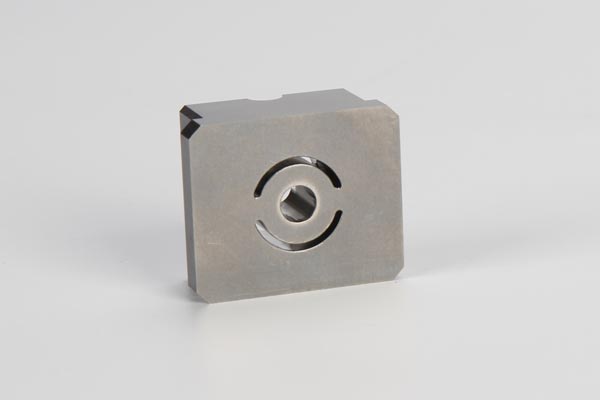
Before exploring the stability of tungsten carbide dies under high loads, it is essential to understand their basic characteristics. Tungsten carbide, a representative of high-end die materials, is mainly composed of tungsten, cobalt, and other alloying elements through careful blending. This unique composition endows tungsten carbide with extremely high hardness, enabling it to remain sharp and resistant to wear when processing hard materials. At the same time, it possesses super high wear resistance, maintaining a low wear rate even under long-term, high-intensity friction, significantly extending the service life of the die.
당사의 공장 사업: 초경 부품, 금형 부품, 의료용 사출 금형, 정밀 사출 금형, 테플론 PFA 사출 성형, PFA 튜브 피팅. 이메일: [email protected],whatsapp:+8613302615729.
Moreover, tungsten carbide also has good thermal stability. In high-temperature environments, its performance remains stable, without softening or deformation due to temperature rise, ensuring normal operation of the die in high-temperature processing scenarios. Additionally, its corrosion resistance is also outstanding, effectively resisting erosion when in contact with corrosive media, preventing die failure or performance degradation caused by corrosion. These excellent characteristics give tungsten carbide dies significant advantages when bearing high loads and working in complex environments.
II. Performance under High Loads: A Multifaceted Display of Stability
(A) High Strength Support: A Solid Backing for Stable Operation
Under high-load conditions, dies need to withstand enormous pressure and impact forces, posing strict requirements on the strength of the die. Tungsten carbide dies, with their high strength, act like a sturdy fortress, effectively resisting the risks of fracture and deformation when subjected to external forces, providing a solid guarantee for the stable operation of the die. Whether it is a large stamping die stamping thick plates or an injection mold injecting plastic melts under high pressure, tungsten carbide dies can ensure the integrity of the die structure and the smooth progress of the production process with their high strength.
(B) Excellent Wear Resistance: A Reliable Guarantee for Long-lasting Precision
Wear is an inevitable problem for dies in high-load working environments. However, the high wear resistance of tungsten carbide dies enables them to maintain a low wear rate during long-term, high-load operation. This means that the dimensional accuracy and surface quality of the die can remain stable for a long time, reducing problems such as die precision degradation and an increase in the defect rate of products caused by wear. For example, in continuous stamping production, after a large number of stamping operations, tungsten carbide stamping dies can still ensure the dimensional accuracy and surface finish of stamped parts, providing strong support for high-quality production.
(C) Good Thermal Stability: A Steadfast Performer in High-temperature Environments
In some high-temperature processing scenarios, such as hot extrusion and hot forging, dies need to work at high temperatures for a long time. Ordinary die materials may soften or deform at high temperatures, leading to a decline in die performance or even failure. Tungsten carbide dies, with their good thermal stability, can maintain stable performance in high-temperature environments, ensuring that the dimensional accuracy and mechanical properties of the die are not affected. This gives tungsten carbide dies a unique advantage in high-temperature processing fields and enables them to meet complex and demanding production requirements.
(D) Corrosion Resistance: A Tough Defender in Harsh Environments
In some special working environments, dies may come into contact with various corrosive media, such as chemical solutions and acid mists. These corrosive media can erode the die, causing surface damage and performance degradation, and even shortening the service life of the die. The corrosion resistance of tungsten carbide dies enables them to maintain stable performance in these harsh environments, effectively resisting the侵害 (the English word “corrosion” is used here to replace the Chinese pinyin for better expression, meaning the same as the original) of corrosion, ensuring the normal operation of the die over a long period and providing a guarantee for the continuity and stability of production.
III. Analysis of Key Factors Influencing Stability
(A) Material Selection: Controlling Stability from the Source
The material selection of tungsten carbide dies plays a decisive role in their stability. High-quality tungsten carbide materials should possess comprehensive properties such as high hardness, high strength, high wear resistance, and good thermal stability. Different tungsten carbide materials prepared with different compositions and processes have significant differences in performance. Therefore, when selecting tungsten carbide materials, it is necessary to fully consider factors such as the specific working environment, load requirements, and operating temperature of the die to ensure that the selected materials can meet the use requirements of the die and lay a solid foundation for the stability of the die from the source.
(B) Design Rationality: Scientifically Planning a Stable Structure
The design rationality of the die is one of the key factors influencing its stability. A reasonable design should comprehensively consider the stress situation, working environment, and use requirements of the die. Through scientific mechanical analysis and simulation calculations, the structural layout of the die is optimized to ensure that the die can bear high loads evenly and avoid stress concentration. In addition, the design should also focus on aspects such as the guidance, positioning, and fixation of the die to improve the assembly accuracy and motion stability of the die, thereby enhancing the overall stability and machining accuracy of the die.
(C) Manufacturing Process: Precisely Creating Stable Quality
The manufacturing process has an important impact on the stability of tungsten carbide dies. High-quality manufacturing processes should ensure the dimensional accuracy, surface quality, and internal organizational structure stability of the die. During the manufacturing process, the control of parameters such as heating temperature, holding time, and cooling rate is crucial. Unreasonable process parameters may lead to problems such as heat treatment deformation and uneven organization of the die, thereby affecting the performance and stability of the die. Therefore, it is necessary to strictly control the manufacturing process, adopt advanced processing equipment and detection methods to ensure that the manufacturing quality of the die meets high standards.
(D) Use and Maintenance: Continuously Ensuring Stable Operation
The use and maintenance are also important links affecting the stability of tungsten carbide dies. During use, operators should strictly follow the operating procedures to avoid overloading or excessive wear of the die. At the same time, production tasks should be reasonably arranged according to the use condition of the die to avoid fatigue damage caused by long-term continuous operation of the die. In addition, regular inspection and maintenance of the die should be carried out to timely detect and deal with potential problems such as surface wear and cracks on the die. Cleaning, lubricating, and rust-proofing the die can effectively extend the service life of the die and ensure that the die is always in good operating condition.
IV. Exploration of Effective Measures to Improve Stability
(A) Optimize Material Selection: Precisely Match Use Requirements
In view of specific working environments and use requirements, conduct an in-depth analysis of factors such as the type of load borne by the die, operating temperature, and corrosive media, and select the most suitable tungsten carbide material. For example, for dies working in high-temperature environments, tungsten carbide materials with good high-temperature stability and oxidation resistance should be selected; for dies in contact with corrosive media, tungsten carbide materials with stronger corrosion resistance should be chosen. By precisely matching materials with use requirements, ensure that the die has sufficient hardness, strength, and wear resistance, providing a material basis for improving stability.
(B) Strengthen Design Review: Ensure Scientific and Reasonable Design
During the die design process, establish a strict design review mechanism and organize professional technical personnel to conduct a comprehensive evaluation and review of the design scheme. Use advanced computer-aided design (CAD) and computer-aided engineering (CAE) technologies to conduct mechanical analysis and simulation simulations on the die structure, predict the stress distribution and deformation of the die under high loads, and timely discover and optimize problems in the design. For key components and important structures, detailed strength calculations and reliability analyses should be carried out to ensure the rationality and feasibility of the design and improve the stability of the die from the design level.
(C) Improve Manufacturing Process: Create High-quality Die Products
Actively introduce advanced manufacturing technologies and equipment, such as high-precision CNC machining centers and electrical discharge machining machines, to improve the manufacturing accuracy and surface quality of tungsten carbide dies. At the same time, strengthen quality control and inspection during the manufacturing process, establish a perfect quality management system, and strictly detect the dimensional accuracy, shape accuracy, and surface roughness of the die to ensure that the manufacturing quality of the die meets standard requirements. In addition, optimize the heat treatment process, precisely control parameters such as heating temperature, holding time, and cooling rate to improve the internal organizational structure of the die and enhance the mechanical properties and stability of the die.
(D) Strengthen Use and Maintenance Management: Extend Die Service Life
Formulate detailed and strict use and maintenance procedures and provide professional training for operators to ensure that they can use and maintain the die correctly. During use, establish die use files to record information such as the use time, number of processed products, and maintenance conditions of the die, providing a basis for die maintenance and management. At the same time, establish a regular inspection and repair system, conduct comprehensive inspections on the die at specified time intervals, and timely detect and deal with problems with the die. For worn or damaged die components, repair or replace them in a timely manner to ensure that the die is always in good operating condition and extend the service life of the die.
V. 결론
In conclusion, tungsten carbide dies demonstrate excellent stability under high loads, thanks to their high strength, high wear resistance, good thermal stability, and corrosion resistance. However, factors such as material selection, design rationality, manufacturing process, and use and maintenance also influence the stability of tungsten carbide dies to varying degrees. By optimizing material selection, strengthening design review, improving manufacturing processes, and strengthening use and maintenance management, we can further enhance the stability of tungsten carbide dies under high loads, providing strong support for the high-quality development of modern manufacturing and promoting the industry to reach new heights.
관련 게시물
- How to Prevent the Fracture Risk of Tungsten Carbide Dies
- An Effective Approach to Improving the Production Efficiency of Tungsten Carbide Dies
- Special Demands of the Medical Device Industry for Tungsten Carbide Dies and Corresponding Solutions
- Selection and Replacement Suggestions for Maintenance Parts of Tungsten Carbide Dies




 English
  Deutsch
  Français
  日本語
日本語  한국어
한국어  Español
  Português
  Italiano
  Nederlands
  Русский
  Bahasa Indonesia
  العربية