
A Comprehensive Overview of Nickel Carbide Die Parts Machining
In modern industrial manufacturing, mold material selection is vital, impacting product quality, efficiency, and cost. Nickel carbide, with its exceptional properties, has become a top choice, especially for injection molding […]
- Info
In modern industrial manufacturing, mold material selection is vital, impacting product quality, efficiency, and cost. Nickel carbide, with its exceptional properties, has become a top choice, especially for injection molding high-purity fluoroplastics like PFA and PVDF, reducing black spots in products. As a high-performance engineering material, its outstanding hardness, wear resistance, corrosion resistance, and high-temperature stability make it indispensable in mold manufacturing.
Material Composition and Structure
Nickel carbide is a composite with nickel as the matrix, incorporating hard phases like tungsten carbide and titanium carbide. This unique structure gives it excellent mechanical properties and chemical stability. The hard phases enhance hardness and wear resistance, while the nickel matrix provides ductility and toughness. So, it can perform well in harsh environments with high temperatures, corrosive substances, and mechanical stresses.
Our factory business: carbide parts, mold parts, medical injection molds, precision injection molds, teflon PFA injection molding, PFA tube fittings. email: [email protected],whatsapp:+8613302615729.
Diverse Application Areas
Nickel carbide finds wide use across industries. In electronics, it’s used for precision electronic component molds because it maintains dimensional accuracy over time, ensuring consistent component quality. In aerospace, its high-temperature performance and stability make it ideal for engine component molds, which face extreme conditions during operation. In the chemical industry, its excellent corrosion resistance enables the manufacture of various chemical forming molds that can withstand a range of corrosive chemicals, ensuring mold longevity and reliability.
Advantages as a Mold Material
Nickel carbide offers several distinct advantages:
- Excellent Wear Resistance: This property ensures a long mold life, reducing replacement frequency and downtime. In high-volume production, it lowers costs and improves efficiency by minimizing wear-related defects.
- Outstanding Dimensional Stability: It guarantees processing accuracy by maintaining precise dimensions during injection molding. This reduces the risk of product defects like warping or incorrect dimensions, ensuring consistent quality.
- Good Heat Treatment Performance: It allows easy hardness adjustment through heat treatment. Depending on application requirements, the hardness can be tailored to balance wear resistance and toughness, making it suitable for a wide range of molding tasks.
- Excellent Corrosion Resistance: Suitable for various working environments, especially those with corrosive substances. In chemical processing, it reduces the need for frequent mold maintenance or replacement, saving costs and improving efficiency.
- Outstanding High-Temperature Strength: Applicable to high-temperature forming processes, it maintains structural integrity and performance when processing high-temperature plastics or metal components, ensuring part quality.
Drawbacks as a Mold Material
Despite its advantages, nickel carbide has significant drawbacks. The raw material is expensive, directly increasing manufacturing costs. Processing it is as difficult as tungsten carbide, with grinding, EDM, and wire EDM taking 3 – 5 times longer than ordinary mold steel. This adds to costs and extends production lead times, which may not suit tight-deadline applications.
Custom Machining Capabilities
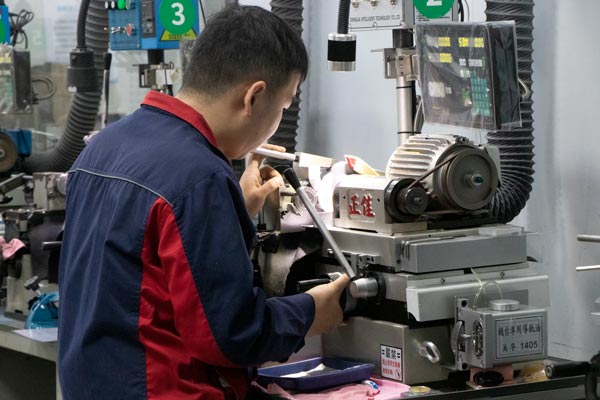
Modern precision processing technologies enable custom machining of nickel carbide dies to meet customer requirements. Advanced processes like EDM and precision grinding are crucial. EDM uses electrical discharges to create intricate features and fine details with high accuracy. Precision grinding achieves tight tolerances and smooth surface finishes, ensuring customized dies meet specialized industry needs, whether for unique electronic component molds or complex aerospace engine part molds.
Future Prospects
With industry development, nickel carbide molds are set to be more widely used in smart manufacturing. Smart manufacturing integrates IoT, AI, and big data analytics into production. IoT sensors in nickel carbide molds can monitor performance in real-time, providing data for predictive maintenance and process optimization. AI algorithms can analyze this data to identify potential issues before production disruptions occur, improving reliability and efficiency. Thus, nickel carbide molds will drive the industry towards a more intelligent and sustainable future.
In conclusion, nickel carbide die parts custom machining is a significant advancement in mold manufacturing. Its unique properties, diverse applications, and custom machining capabilities make it valuable in modern industry. Despite drawbacks, its advantages outweigh limitations, and its future in smart manufacturing is promising. As the industry evolves, nickel carbide will remain a key mold-making material, contributing to more efficient, precise, and sustainable manufacturing.
 English
  Deutsch
  Français
  日本語
日本語  한국어
한국어  Español
  Português
  Italiano
  Nederlands
  Русский
  Bahasa Indonesia
  العربية