

Core Strategies and Practical Techniques for Improving Tungsten Carbide Die Machining Efficiency
1. Introduction Tungsten carbide dies, with their exceptional hardness, wear resistance, and service life, have become irreplaceable core tooling in modern industrial manufacturing. The machining efficiency of tungsten carbide dies […]
1. Introduction
Tungsten carbide dies, with their exceptional hardness, wear resistance, and service life, have become irreplaceable core tooling in modern industrial manufacturing. The machining efficiency of tungsten carbide dies directly impacts a company’s delivery cycle, production cost, and market competitiveness. In the current context of cost reduction and efficiency enhancement across the manufacturing industry, how to systematically improve tungsten carbide die machining efficiency has become a critical challenge that many manufacturing enterprises urgently need to address. This article provides an in-depth analysis of core strategies and practical techniques for improving machining efficiency from four key dimensions: process optimization, equipment configuration, material management, and personnel management.
2. Process Optimization: The Primary Driver of Efficiency Improvement
Scientifically Plan the Process Flow
La nostra attività in fabbrica: parti in metallo duro, parti di stampi, stampi a iniezione medicali, stampi a iniezione di precisione, stampaggio a iniezione di teflon PFA, raccordi per tubi PFA. e-mail: [email protected],whatsapp:+8613302615729.
Rational process flow design is the foundation for improving machining efficiency. When developing a machining plan, it is essential to fully evaluate the material characteristics, structural complexity, and precision requirements of the tungsten carbide die, and accordingly design a scientific and efficient processing route. By streamlining redundant operations and reducing repetitive clamping, the machining cycle can be effectively shortened and overall costs can be reduced.
Precisely Set Process Parameters
The precise control of process parameters is of critical importance to both the quality and efficiency of tungsten carbide die machining. During the machining process, key parameters such as cutting speed, feed rate, and depth of cut should be reasonably set based on the actual conditions and machining requirements of the die. Precise parameter control can significantly reduce the defect rate, effectively ensure machining accuracy, and achieve a win-win outcome between efficiency and quality.
Actively Introduce Advanced Machining Technologies
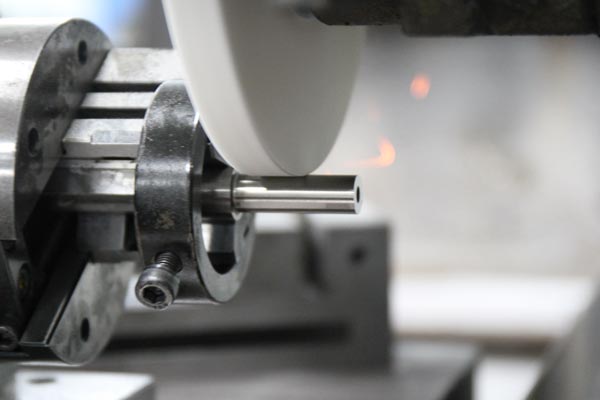
With the continuous evolution of manufacturing technology, advanced machining processes such as high-speed cutting, laser precision machining, and electrical discharge machining have become increasingly mature. High-speed cutting can substantially increase the machining rate, while laser machining enables high-precision, rapid cutting and micro-hole operations. Enterprises should proactively monitor and adopt cutting-edge machining technologies to drive efficiency gains through technological upgrades.
3. Equipment Selection and Management: The Hardware Foundation for Efficiency Improvement
Select High-Performance Machining Equipment
High-performance machining equipment is the material foundation for ensuring tungsten carbide die machining efficiency. When selecting equipment, priority should be given to assessing the machining accuracy, operational stability, and durability of the machine, while also favoring equipment with a higher degree of intelligence and automation to minimize manual intervention and enhance overall machining performance.
Standardize Equipment Usage and Maintenance
The standardized use and regular maintenance of equipment are equally critical. Enterprises should establish a comprehensive equipment management system, select cutting tools and inspection instruments that match the material properties, and strictly implement scheduled inspection, maintenance, and repair plans. This ensures that equipment remains in optimal operating condition at all times, fundamentally safeguarding consistent machining efficiency.
4. Material Handling: Controlling Efficiency from the Source
Strictly Select High-Quality Raw Materials
High-quality raw materials are the prerequisite for efficient machining. When selecting materials, key performance indicators such as hardness, toughness, and wear resistance should be carefully evaluated, while also ensuring batch-to-batch consistency and reliability of the material, thereby reducing machining risks at the source.
Standardize Material Pre-Treatment Procedures
In the material pre-treatment stage, heat treatment process parameters including heating temperature, holding time, and cooling rate should be strictly controlled to ensure the material achieves ideal machining performance. At the same time, appropriate surface treatment processes can effectively enhance the material’s wear resistance and machinability.
5. Personnel Management: The Soft Power Support for Efficiency Improvement
Continuously Enhance Employee Skill Levels
The technical competence of operators directly affects machining efficiency and product quality. Enterprises should establish a regular skills training mechanism to promote continuous learning and mastery of new technologies and processes by employees, thereby achieving higher machining accuracy and efficiency in actual operations.
Establish a Scientific Incentive Mechanism
A well-designed incentive mechanism can effectively stimulate employee motivation and creativity. Through performance-based rewards, technical promotion pathways, and other means, employees can be encouraged to actively participate in technological innovation and process improvement. At the same time, attention should be paid to the working environment and employee benefits to enhance satisfaction and loyalty.
Strengthen Team Collaboration
Efficient team collaboration is an important guarantee for improving tungsten carbide die machining efficiency. Enterprises should invest in team building and the cultivation of a collaborative spirit, strengthening communication and cooperation among employees. Through effective teamwork, the strengths of each individual can be fully leveraged to form a synergistic force that drives overall efficiency improvement.
6. Summary
Improving tungsten carbide die machining efficiency is a systematic endeavor that requires coordinated efforts across multiple dimensions, including process optimization, equipment management, material control, and personnel management. Only by organically integrating technological upgrades, equipment assurance, material control, and talent development can enterprises achieve a qualitative leap in machining efficiency, providing solid support for sustainable business growth.
Messaggi correlati
- Systematic Management and Best Practices for Daily Maintenance of Tungsten Carbide Dies
- Tungsten Carbide Die Precision Inspection: Methods, Standards, and Practical Applications
- How to Scientifically Select the Right Wear-Resistant Coating Materials
- Innovation and Development Trends of Tungsten Carbide Mold Technology



 English
  Deutsch
  Français
  日本語
日本語  한국어
한국어  Español
  Português
  Italiano
  Nederlands
  Русский
  Bahasa Indonesia
  العربية